🌬️
📊
🌦️
⚛️ KNOW SECONDARY · AGES 12–18

PHYSICS

⚛️ From Newton's Apple to Quantum Weirdness!

📖 350 Topics 🆓 FREE + PRO ⏱️ 5 min per comic 🧠 Quiz included
🌍
ANCIENT
Thinkers guess air has weight
🧪
1643
Torricelli builds mercury barometer
🔵
1654
Magdeburg hemispheres demo
🗺️
1800s
Weather maps track pressure
🛰️
TODAY
Satellites watch global pressure
🌬️ ATMOSPHERIC PRESSURE
TOPIC 30 · PHYSICS · BAROMETERS · SUCTION · WEATHER
PAGE 1 OF 5, THE OCEAN OF AIR
WEIGHT OF THE SKY
Comic panel about atmospheric pressure: Weight Of The Sky, educational kids illustration
LIVING AT THE BOTTOM OF AN AIR OCEAN
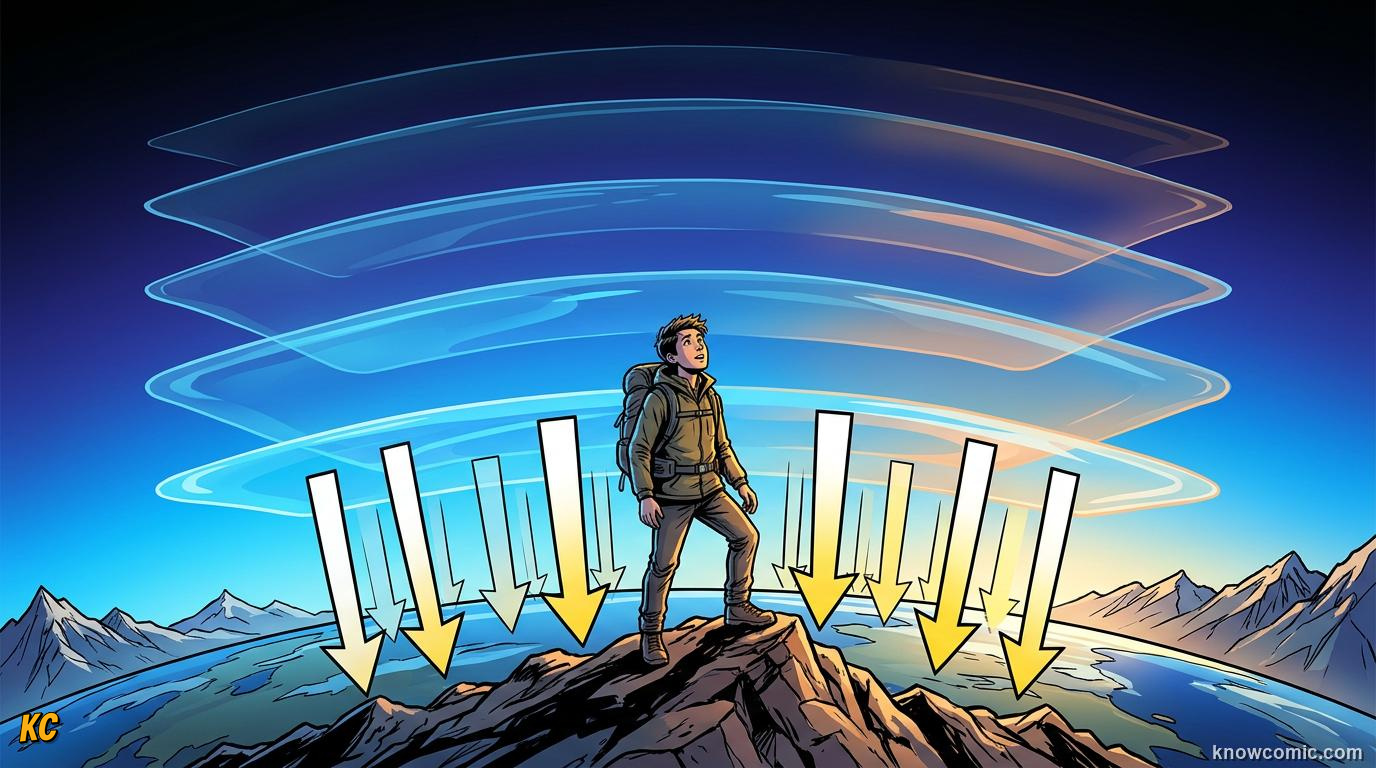
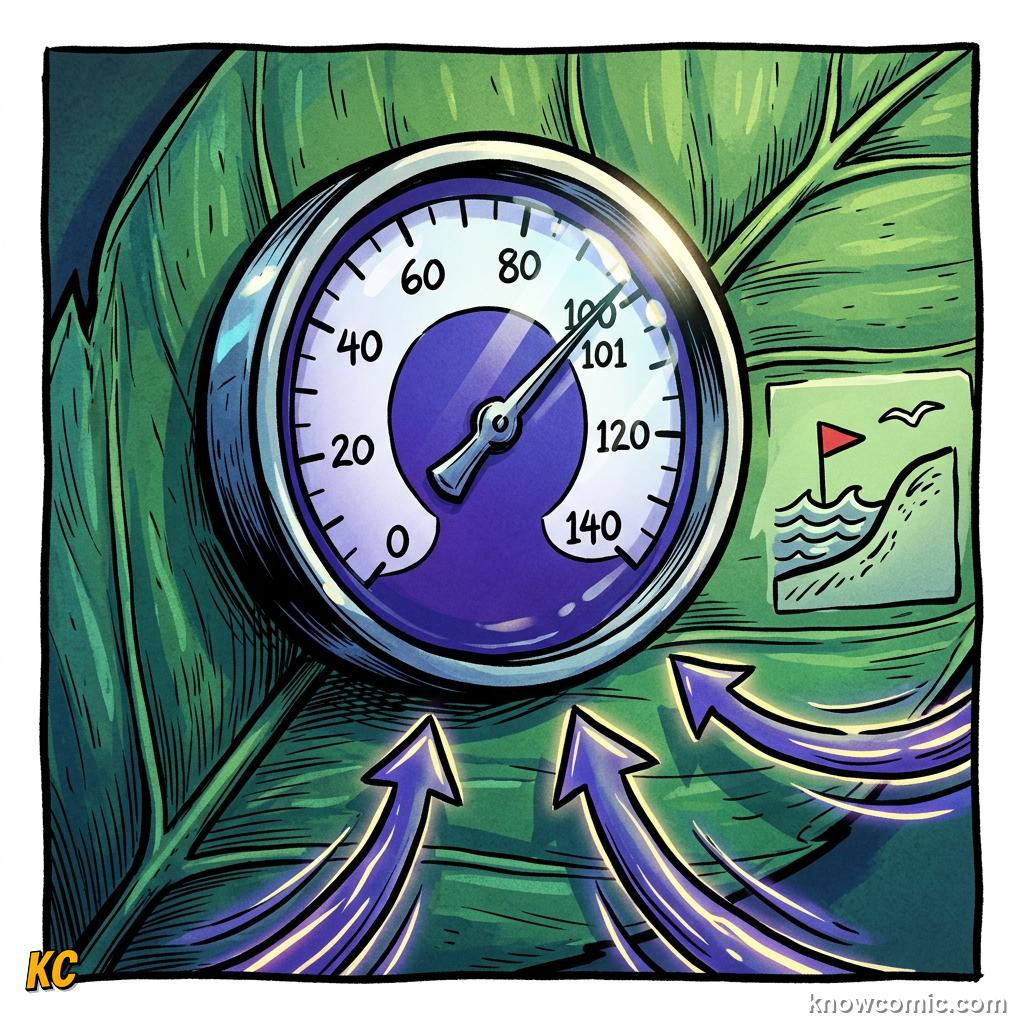
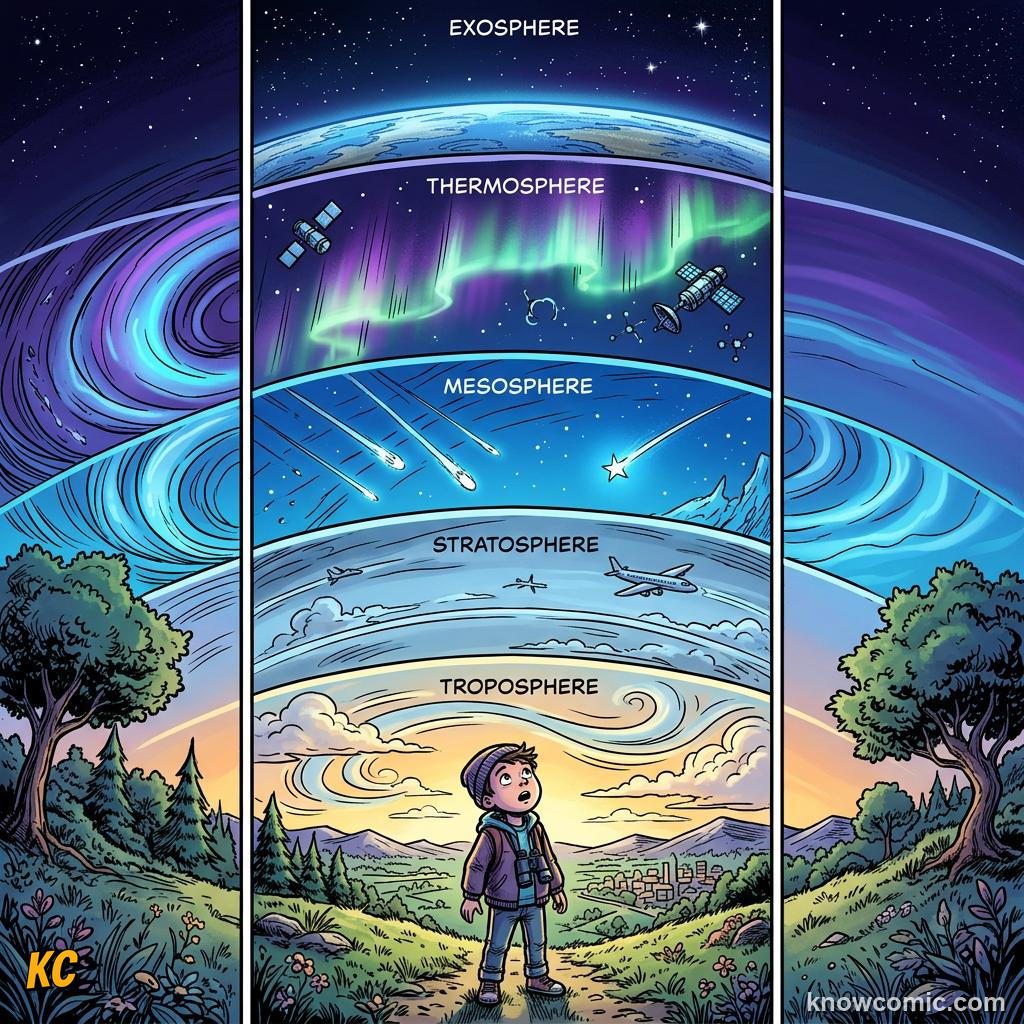
Earth is wrapped in a thick blanket of air many kilometres high. That air has mass, and gravity pulls it downward. The result is atmospheric pressure: a huge force pressing on every surface at sea level. Standard atmospheric pressure is about 101 kilopascals (kPa), roughly 101,000 newtons per square metre. That is like having about 10 tonnes of air pushing on every square metre of ground. You do not get crushed because the pressure pushes equally in all directions and the air inside your body balances the push from outside. We truly live at the bottom of an invisible ocean of air.
⚡ DID YOU KNOW?
At sea level, atmospheric pressure is about 101 kPa. Climb a high mountain and there is less air above you, so pressure drops. On Mount Everest the pressure is only about one third of sea level.
PRESS!
101 kPa
Comic panel about atmospheric pressure: Living At The Bottom Of An Air Ocean, 101 Kpa, educational kids illustration
📊 ~101 kPa at sea level
⬇️ Gravity pulls air downward
⚖️ Pressure acts in every direction
INVISIBLE OCEAN
Comic panel about atmospheric pressure: Invisible Ocean, educational kids illustration
🌊 Kilometres of air above you
🏔️ Less air = lower pressure up high
🫁 Your lungs match outside pressure
PAGE 2 OF 5, MEASURING THE AIR
BAROMETERS
Comic panel about atmospheric pressure: Barometers, educational kids illustration
HOW WE MEASURE ATMOSPHERIC PRESSURE
You cannot weigh the sky with bathroom scales, but a barometer can measure how hard the atmosphere pushes. In 1643, Italian scientist Evangelista Torricelli invented the mercury barometer: a glass tube filled with mercury, turned upside down in a dish. The atmosphere pushes on the dish and holds the mercury column up to about 760 millimetres at sea level. Today many barometers use a sealed metal box that squashes slightly when pressure rises. Weather stations and ships carry barometers because even a small pressure change, just a few kilopascals, can signal a coming storm or a sunny spell.
🧪 TORRICELLI'S TUBE
A mercury barometer at sea level shows a column about 760 mm high. That height is not random: it matches the standard air pressure of roughly 101 kPa pushing on the mercury pool.
MEASURE!
MERCURY
Comic panel about atmospheric pressure: How We Measure Atmospheric Pressure, Mercury, educational kids illustration
🧪 Glass tube + mercury dish
📏 ~760 mm column at sea level
🔬 Classic lab instrument
ANEROID
Comic panel about atmospheric pressure: Aneroid, educational kids illustration
📦 Metal box flexes with pressure
🏠 Common on wall barometers
✈️ Portable for pilots and hikers
UNITS
Comic panel about atmospheric pressure: Units, educational kids illustration
📊 kPa, hPa, or mm of mercury
🌡️ Pressure linked to altitude
📡 Digital sensors everywhere
PAGE 3 OF 5, THE POWER OF SUCTION
SUCTION CUP
Comic panel about atmospheric pressure: Suction Cup, educational kids illustration
🔵 Push cup, trap air inside
💨 Pump removes air = lower pressure
⬇️ Outside air pushes cup to wall
STRAW TRICK
Comic panel about atmospheric pressure: Straw Trick, educational kids illustration
🥤 You lower pressure in your mouth
🌬️ Atmosphere pushes drink upward
❌ You are not "pulling" with suction
NOT A REAL FORCE
Comic panel about atmospheric pressure: Not A Real Force, educational kids illustration
SUCTION IS PUSH FROM OUTSIDE
People talk about "sucking" a drink through a straw or "suction" holding a rubber cup on glass, but suction is not a magical inward force. When you remove air from a space, the pressure inside drops. The higher pressure of the atmosphere outside then pushes inward. A suction cup sticks because you squeeze out air and the outside air presses the rubber against the surface. In 1654, Otto von Guericke showed the power of air pressure with the Magdeburg hemispheres: two hollow brass halves sealed together, air pumped out, and teams of horses could not pull them apart. The atmosphere was doing the holding.
🔵 KEY IDEA
Suction means lower pressure inside a space. The atmosphere outside, at about 101 kPa, pushes inward. No invisible "pull" force is needed.
PUSH!
PAGE 4 OF 5, PRESSURE AND WEATHER
HIGHS AND LOWS
Comic panel about atmospheric pressure: Suction Is Push From Outside, Highs And Lows, educational kids illustration
HOW PRESSURE BUILDS THE WEATHER
The atmosphere is never perfectly uniform. Some regions have higher pressure than average, marked H on weather maps, and others have lower pressure, marked L. In a high-pressure zone, dense air sinks, warms as it descends, and clouds often break apart, bringing clear skies and calm, dry weather. In a low-pressure zone, air rises, cools, and water vapour condenses into clouds and rain. Wind blows because air moves from high pressure toward low pressure, trying to balance the difference. Even a change of a few kilopascals across a country can drive storms, sea breezes, and the daily forecast on your phone.
🗺️ ISOBARS
Weather maps draw isobars, lines connecting places with equal pressure. Lines packed close together mean strong winds. Highs and lows spin the global weather machine.
STORM!
HIGH (H)
Comic panel about atmospheric pressure: How Pressure Builds The Weather, High (H), educational kids illustration
☀️ Sinking dry air
🌤️ Clear skies common
📈 Pressure above average
LOW (L)
Comic panel about atmospheric pressure: Low (L), educational kids illustration
🌧️ Rising moist air
☁️ Clouds and storms form
📉 Pressure below average
WIND
Comic panel about atmospheric pressure: Wind, educational kids illustration
💨 Air flows high to low pressure
🌀 Spinning Earth curves wind paths
📡 Barometers track every shift
PAGE 5 OF 5, THE AIR WE DEPEND ON
EVERYWHERE AROUND YOU
Comic panel about atmospheric pressure: Everywhere Around You, educational kids illustration
PRESSURE SHAPES DAILY LIFE
Atmospheric pressure is one of the quiet forces that runs the planet. It lets barometers warn pilots and sailors, explains why suction cups and straws work, and drives the highs and lows that build our weather. From Torricelli's mercury tube to modern satellites scanning the globe, humans have learned to read the weight of the air. Next time you check a forecast or stick a cup to a window, remember: you are feeling the push of an entire ocean of air, about 101 kPa at sea level, constantly pressing and shifting around our spinning world.
AIR!
REAL WORLD
Comic panel about atmospheric pressure: Pressure Shapes Daily Life, Real World, educational kids illustration
✈️ Planes watch cabin pressure
🏔️ Altitude sickness = less oxygen
🌊 Ear popping on fast lifts
REMEMBER
🌬️ KEY FACTS
Sea-level pressure is about 101 kPa. Barometers measure it with mercury or metal boxes. Suction is outside air pushing when inside pressure drops. High pressure brings clearer weather; low pressure brings clouds and storms. Wind flows from high to low pressure.
✅ ~101 kPa at sea level
✅ Barometers read air weight
✅ Suction = outside push
✅ H and L drive the weather
🧠 QUIZ TIME!
ATMOSPHERIC PRESSURE · 5 QUESTIONS
QUESTION 01
What is the approximate atmospheric pressure at sea level?
QUESTION 02
What does a barometer measure?
QUESTION 03
Why does a suction cup stick to a smooth wall?
QUESTION 04
What weather is usually linked to a high-pressure (H) zone?
QUESTION 05
What happens in a low-pressure (L) zone?
0/5
LOADING...
← TOPIC 29 📋 ALL TOPICS TOPIC 31 →