🌀 OSCILLATORS & SPRINGS
PAGE 1 OF 5, THE MOTION BATTERY
STRETCH AND SNAP
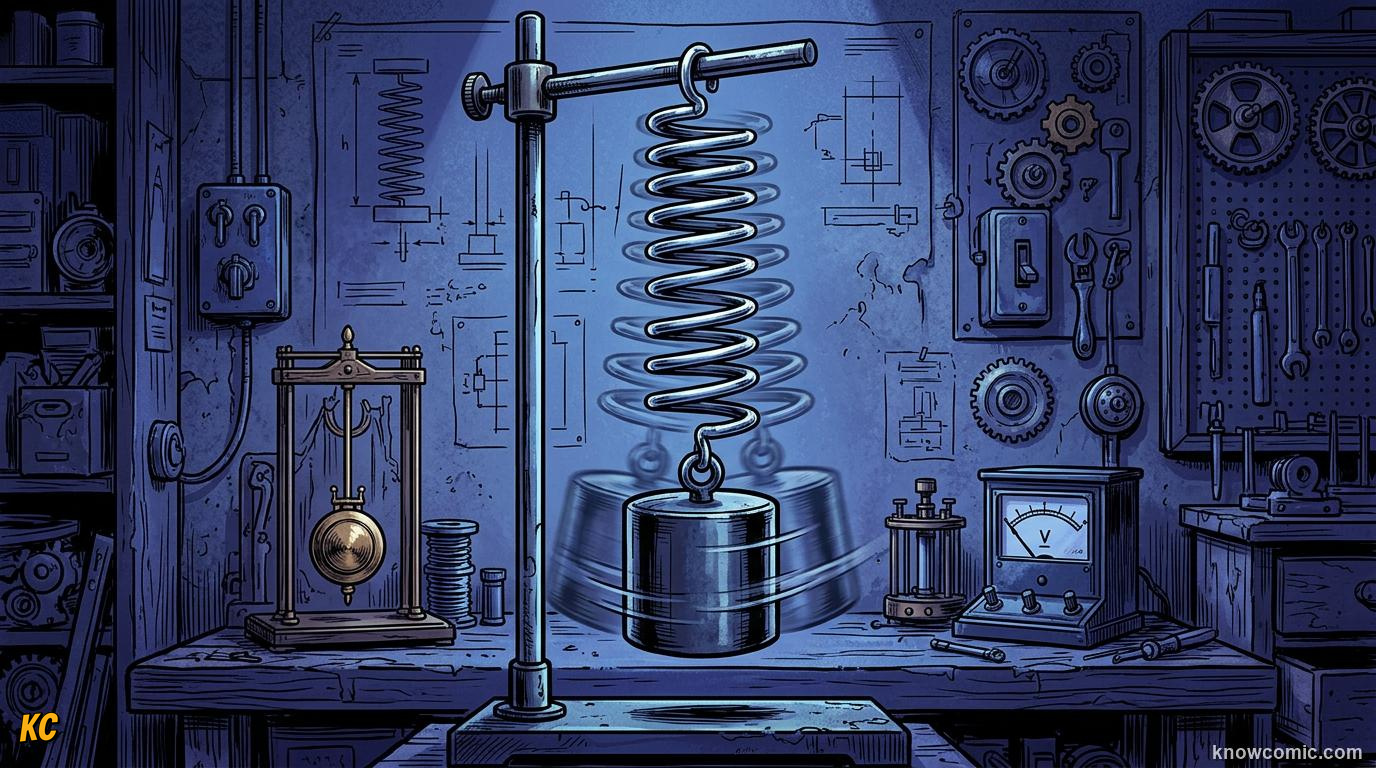
A SPRING IS A BATTERY FOR MOTION
Pull a coil spring and it fights back. Release it and the stored stretch turns into motion. Compress it and the same thing happens in reverse. A spring stores elastic potential energy in its coils, then hands that energy to a mass as kinetic energy when it snaps toward its natural length. That back-and-forth swap is the heart of oscillation: a repeating cycle of stretch, speed, stretch the other way, and speed again. Clocks, car suspensions, trampolines, and guitar strings all rely on this timed dance between tension and motion.
🔋 ENERGY STORE
Elastic potential energy in an ideal spring is (1/2)kx², where k is the spring constant and x is how far the spring is stretched or compressed from its rest length.
BOUNCE!
STRETCH
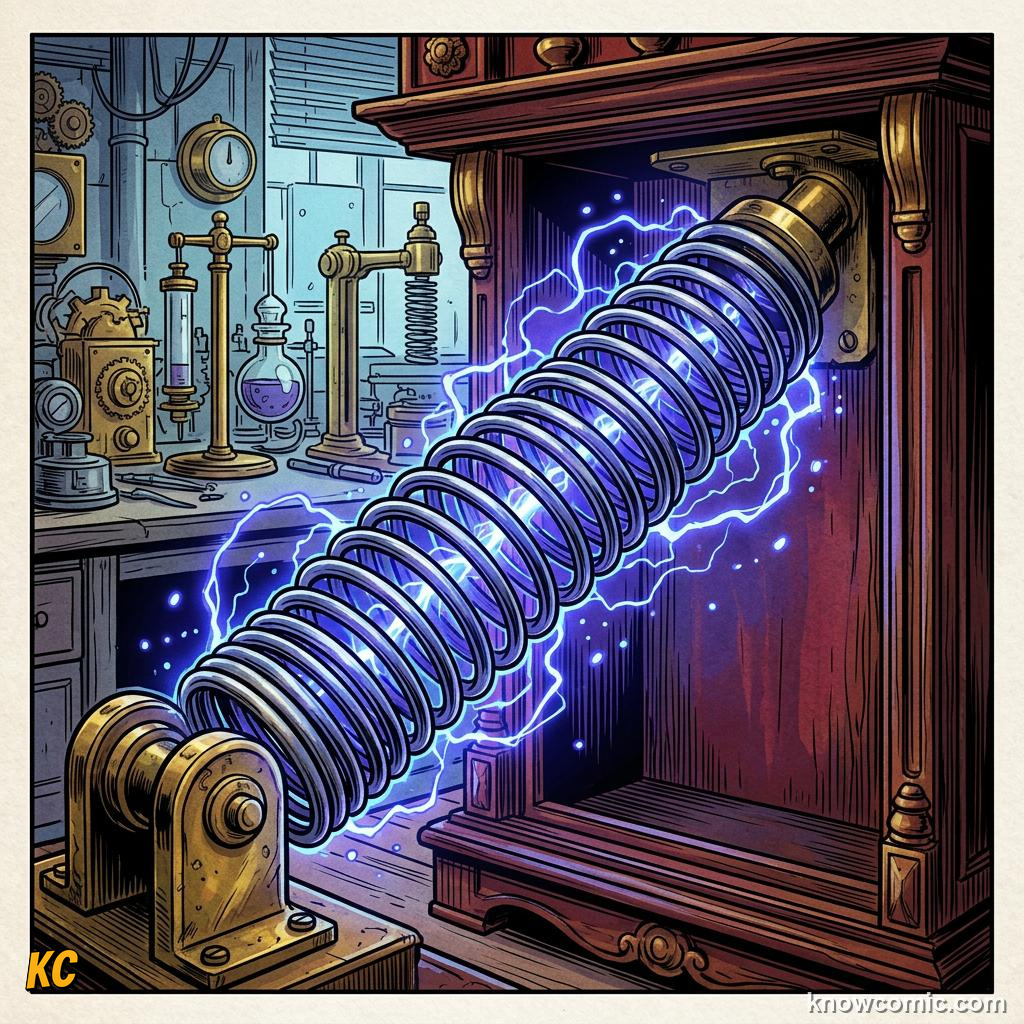
🧲 Coils store elastic potential energy
📏 Farther stretch means more stored energy
✋ You do work on the spring to load it
📏 Farther stretch means more stored energy
✋ You do work on the spring to load it
RELEASE
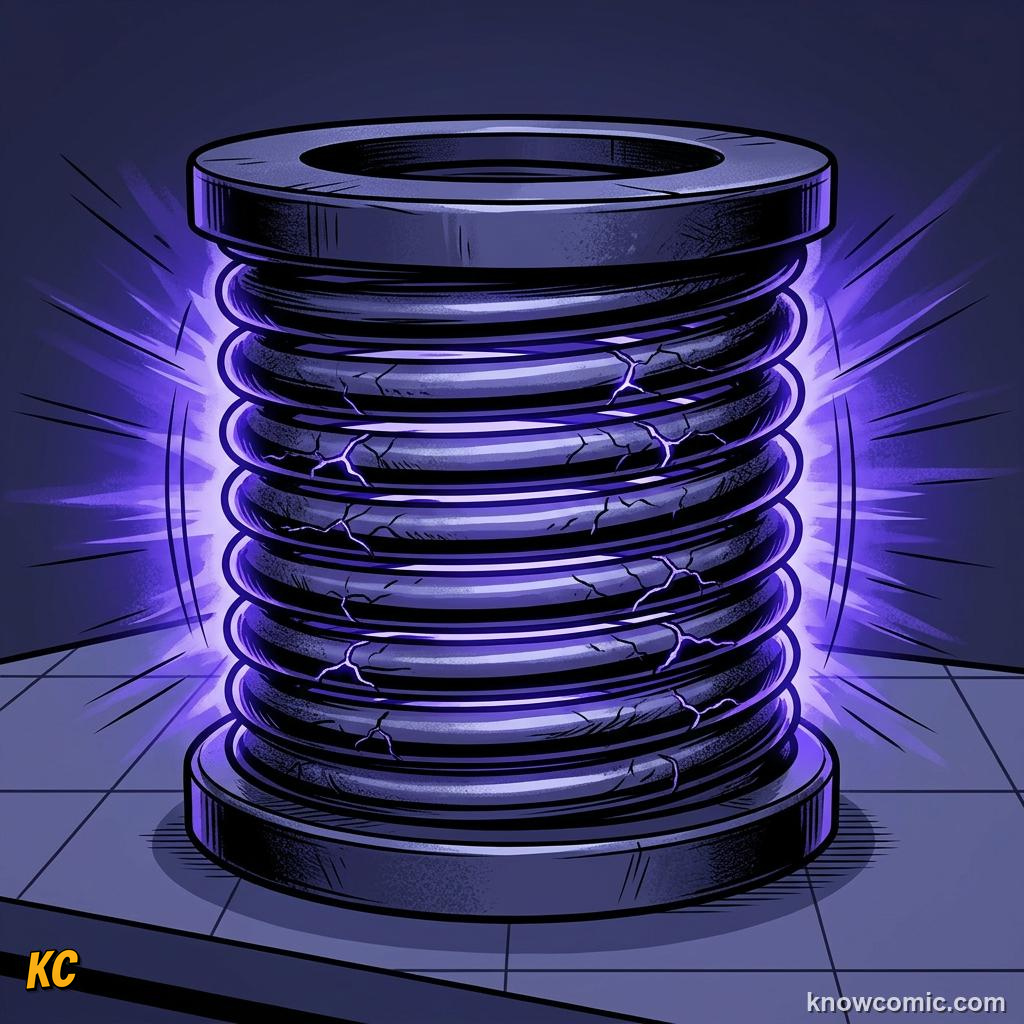
🚀 Potential energy becomes kinetic energy
🌀 Mass races through the equilibrium point
🔁 Then overshoots and stores energy again
🌀 Mass races through the equilibrium point
🔁 Then overshoots and stores energy again