⏱️
🕰️
⚖️
⚛️ KNOW SECONDARY · AGES 12–18

PHYSICS

⚛️ From Newton's Apple to Quantum Weirdness!

📖 350 Topics 🆓 FREE + PRO ⏱️ 5 min per comic 🧠 Quiz included
🕯️
GALILEO
Swing keeps a steady beat
📏
LENGTH
Period depends on string length
🕰️
CLOCKS
Huygens builds pendulum clocks
🎵
BEAT
Metronomes keep musical time
🌍
TODAY
Foucault shows Earth turns
⏱️ THE PENDULUM PRINCIPLE
TOPIC 40 · PHYSICS · CLOCKS · TIME · SWING
PAGE 1 OF 5, THE STEADY SWING
A SIMPLE SWING
Comic panel about the pendulum principle: A Simple Swing, educational kids illustration
NATURE'S METRONOME
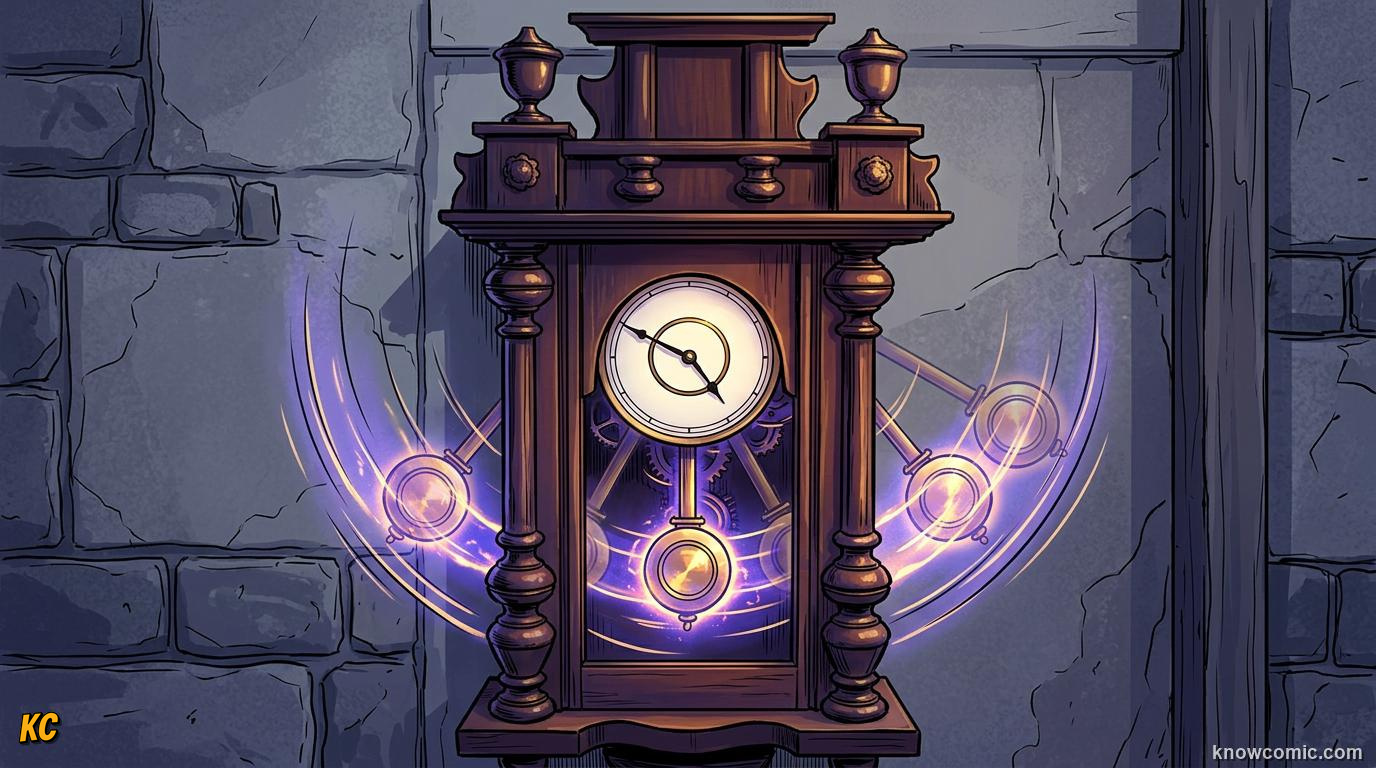
A pendulum is a weight hanging from a string or rod that can swing freely under gravity. Pull it to one side and let go, and it arcs back and forth. The time for one full trip out and back is called the period. For small swings, that period is surprisingly steady. It does not depend on how heavy the bob is, and it barely changes if you start the swing a little wider or a little narrower. What matters most is the length of the string and the strength of gravity. That reliable beat is why pendulums became the heart of accurate clocks for centuries.
⚡ PERIOD
Period means the time for one complete swing cycle. A shorter string ticks faster. A longer string ticks slower.
TICK!
WHAT MATTERS
Comic panel about the pendulum principle: Nature'S Metronome, What Matters, educational kids illustration
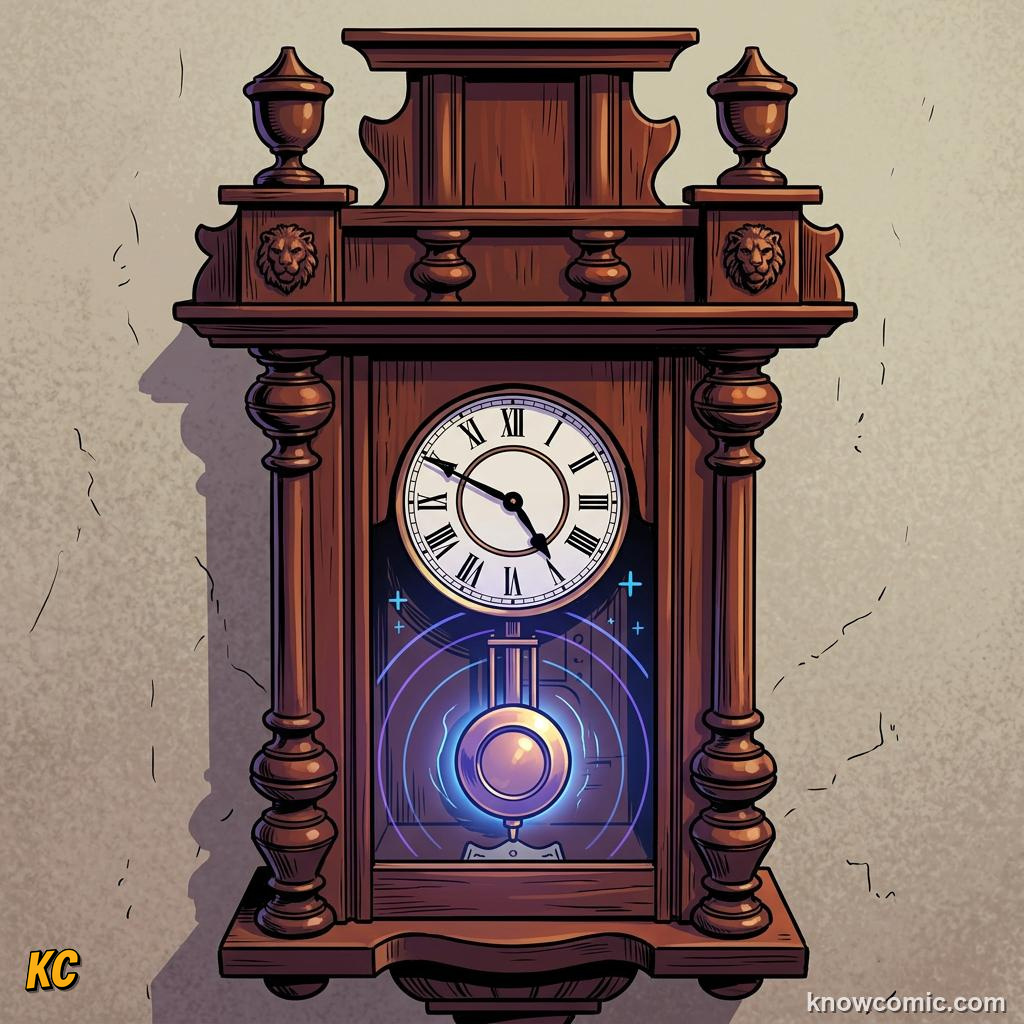
📏 Length sets the beat for small swings
🌍 Gravity (g) also affects the period
⚖️ Mass of the bob does not matter
WHAT DOES NOT
Comic panel about the pendulum principle: What Does Not, educational kids illustration
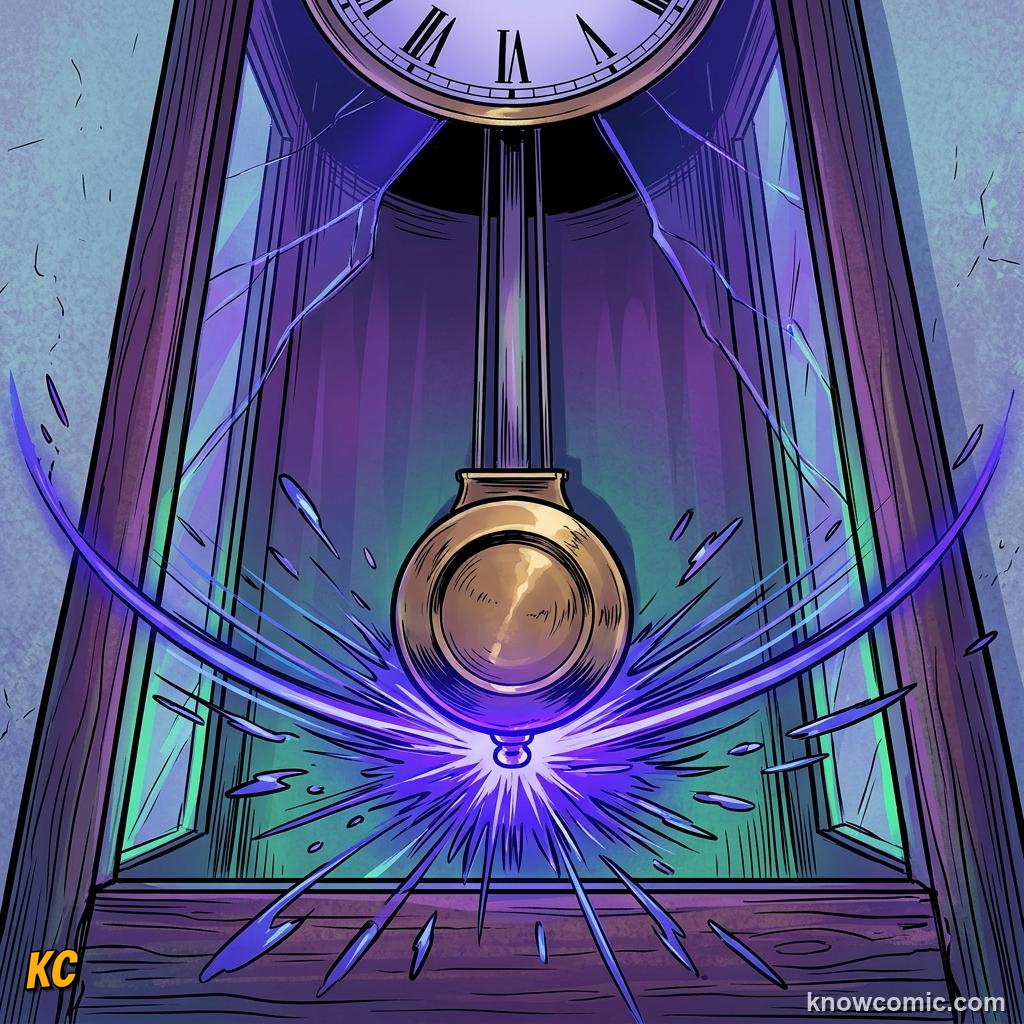
🪨 Heavy and light bobs keep the same time
📐 Small angle changes barely shift the period
💨 Air drag slows it, but the rule still guides clocks
PAGE 2 OF 5, GALILEO'S INSIGHT
THE STEADY BEAT
Comic panel about the pendulum principle: The Steady Beat, educational kids illustration
GALILEO WATCHES THE SWING
In the late 1500s, Galileo Galilei studied swinging lamps and pendulums. He noticed that for small swings, the time of each beat stayed nearly the same even when the swing got a little smaller as air slowed it down. That near-constant period is called isochronism. Galileo did not invent the pendulum clock, but he saw that a swinging weight could mark equal intervals of time. Later scientists turned that idea into a formula: for small angles, the period is about 2π times the square root of length divided by g. Lengthen the string and the clock slows. Shorten it and the clock speeds up.
🕯️ ISOCHRONISM
For small angles, period is almost independent of amplitude. That is why a pendulum can keep time even as friction slowly reduces the swing.
BEAT!
SMALL ANGLES
Comic panel about the pendulum principle: Galileo Watches The Swing, Small Angles, educational kids illustration
📐 Rule works best for small swings
⏱️ Period stays nearly constant
⚠️ Huge swings change the timing
LENGTH RULE
Comic panel about the pendulum principle: Length Rule, educational kids illustration
📏 T ≈ 2π√(L/g) for small angles
🐢 Longer L means a slower period
🐇 Shorter L means a faster period
NOT MASS
Comic panel about the pendulum principle: Not Mass, educational kids illustration
⚖️ Mass cancels out of the formula
🪨 Steel and wood bobs match in time
🔬 Gravity and length set the pace
PAGE 3 OF 5, CLOCKS THAT TICK
HUYGENS
Comic panel about the pendulum principle: Huygens, educational kids illustration
🕰️ First practical pendulum clock, 1656
🇳🇱 Christiaan Huygens in the Netherlands
⏱️ Far more accurate than older clocks
SECONDS
Comic panel about the pendulum principle: Seconds, educational kids illustration
📏 About one meter for a one-second beat
🔧 Adjust length to fine-tune the rate
🏛️ Town clocks and observatories used them
TIMEKEEPING REVOLUTION
Comic panel about the pendulum principle: Timekeeping Revolution, educational kids illustration
FROM SWING TO CLOCKWORK
In 1656, Dutch scientist Christiaan Huygens built the first practical pendulum clock. Older clocks used verge escapements and were often wrong by many minutes a day. A pendulum, driven by a small push from the clock's escapement, kept a much steadier rhythm. Clockmakers could set the period by choosing the rod length. A pendulum about one meter long has a period near two seconds for a full cycle, so each half-swing is about one second. That link between length and time let humans measure seconds with new precision and changed navigation, science, and daily life.
🕰️ PRECISION
Pendulum clocks were the most accurate timekeepers for nearly 300 years, until quartz and atomic clocks took over in the 20th century.
CLOCK!
PAGE 4 OF 5, BEATS AND EARTH
MORE THAN CLOCKS
Comic panel about the pendulum principle: From Swing To Clockwork, More Than Clocks, educational kids illustration
METRONOMES AND FOUCAULT
Musicians use metronomes to keep a steady tempo. Many classic metronomes are inverted pendulums: a weight slides on a rod, and moving it changes the effective length, which changes the beat. The same length rule that runs a clock runs a practice room. Pendulums can also reveal Earth's rotation. In 1851, Léon Foucault hung a long, heavy pendulum in Paris. As Earth turned beneath it, the swing plane slowly rotated relative to the floor. A Foucault pendulum does not prove the period formula, but it shows that a free swing keeps its plane in space while the planet turns under it.
🌍 FOUCAULT
At the North Pole the swing plane would appear to rotate once per day. At the equator the effect vanishes. Mid-latitudes show a slower, partial turn.
SWING!
METRONOME
Comic panel about the pendulum principle: Metronomes And Foucault, educational kids illustration
🎵 Sliding weight changes the tempo
📏 Effective length sets the period
🎹 Same physics as a clock pendulum
EARTH TURNS
Comic panel about the pendulum principle: Earth Turns, educational kids illustration
🌍 Floor rotates under the swing plane
🏛️ Famous demos in museums worldwide
🔬 Direct evidence Earth is spinning
LONG SWING
Comic panel about the pendulum principle: Long Swing, educational kids illustration
📏 Long wire, heavy bob, slow period
⏳ Hours to see a clear plane shift
🧭 Direction of turn depends on latitude
PAGE 5 OF 5, THE BIG IDEA
THE FULL PICTURE
Comic panel about the pendulum principle: The Full Picture, educational kids illustration
LENGTH SETS THE BEAT
A pendulum is gravity's timer. For small swings, the period depends mainly on length and g, not on the mass of the bob. Galileo saw the steady beat. Huygens turned it into clocks that could measure seconds. Metronomes still use the same idea to keep music in time. Foucault's long pendulum even lets Earth itself become part of the show. Whenever you see a grandfather clock or a museum swing, remember: the string's length is writing the rhythm, and gravity is the drummer.
TIME!
EVERYDAY LINKS
Comic panel about the pendulum principle: Length Sets The Beat, Everyday Links, educational kids illustration
🕰️ Grandfather clocks use long pendulums
🎵 Metronomes set practice tempo
🏛️ Museum Foucault pendulums turn slowly
REMEMBER
⏱️ KEY FACTS
For small angles, period depends on length and g, not mass. Galileo studied the steady swing. Huygens built the first practical pendulum clock in 1656. Metronomes and Foucault pendulums use the same swing physics.
✅ Period depends mainly on length and g
✅ Mass of the bob does not set the beat
✅ Pendulum clocks measured seconds precisely
✅ Foucault's swing shows Earth rotating
🧠 QUIZ TIME!
THE PENDULUM PRINCIPLE · 5 QUESTIONS
QUESTION 01
For small swings, what mainly determines a pendulum's period?
QUESTION 02
If you replace a light pendulum bob with a much heavier one (same length, small swings), what happens to the period?
QUESTION 03
Who built the first practical pendulum clock?
QUESTION 04
How does a classic metronome change its tempo?
QUESTION 05
What does a Foucault pendulum demonstrate?
0/5
LOADING...
← TOPIC 39 📋 ALL TOPICS TOPIC 41 →