📖 350 Topics🆓 FREE + PRO⏱️ 5 min per comic🧠 Quiz included
⚖️
CENTER
Find the center of mass
→
📐
BASE
COM must stay over the base
→
🧱
STABLE
Wide, low shapes resist tipping
→
🏛️
PISA
Lean stays inside the foundation
→
💥
TOPPLE
Torque tips past the edge
🏛️ STABILITY & TOPPLING
TOPIC 41 · PHYSICS · BASE · CENTER · EQUILIBRIUM
PAGE 1 OF 5, THE BALANCE RULE
CENTER OF MASS
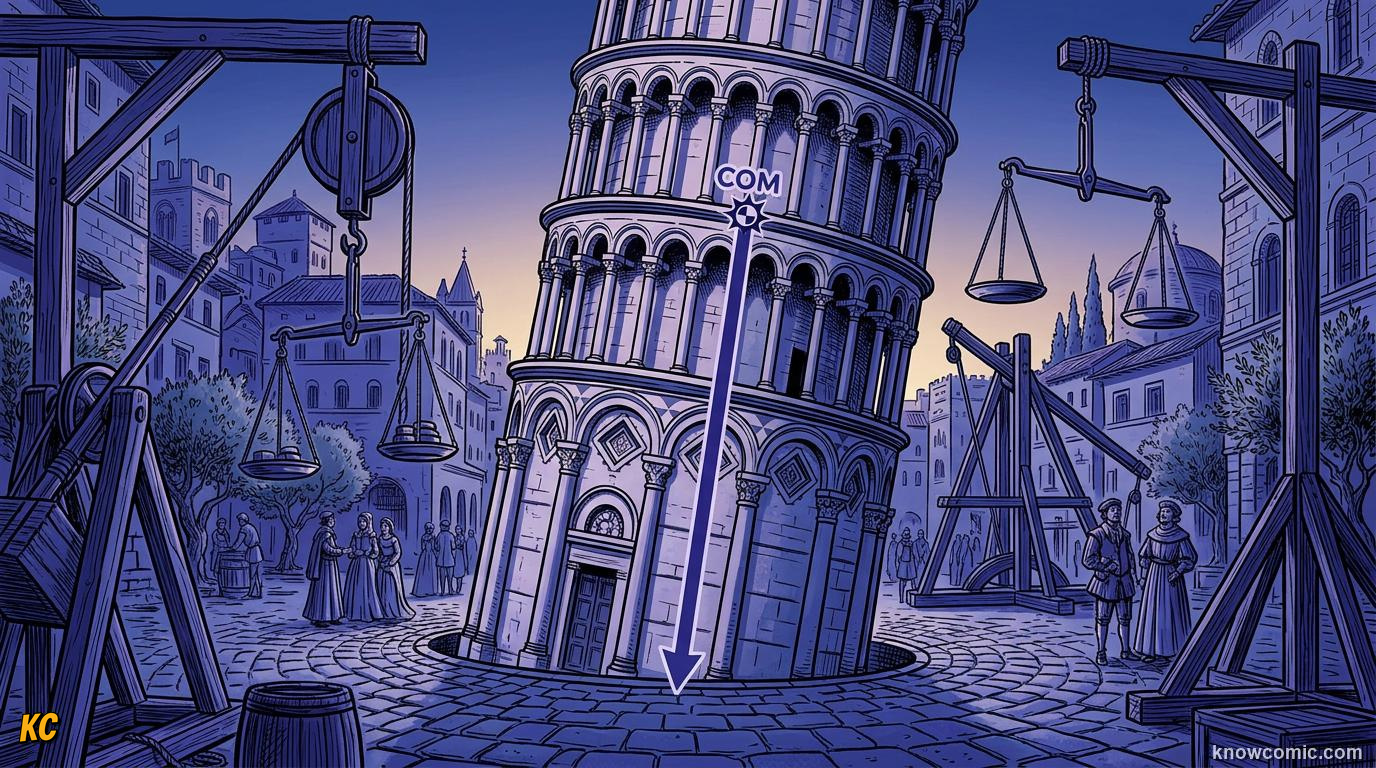
WHERE THE WEIGHT ACTS
Every object has a center of mass, the average position of all its mass. Gravity pulls as if all the weight acts at that single point. For an object resting on a surface, draw a vertical line straight down from the center of mass. If that line lands inside the base of support, the object stays upright. If the line falls outside the base, gravity produces a tipping torque and the object topples. That simple geometric rule explains why a wide stool is hard to tip and why a tall, skinny vase tips so easily.
⚖️ EQUILIBRIUM
Stable equilibrium means a small tilt still leaves the center of mass over the base, so the object settles back. Unstable means a small tilt sends the center of mass past the edge.
BALANCE!
SAFE ZONE
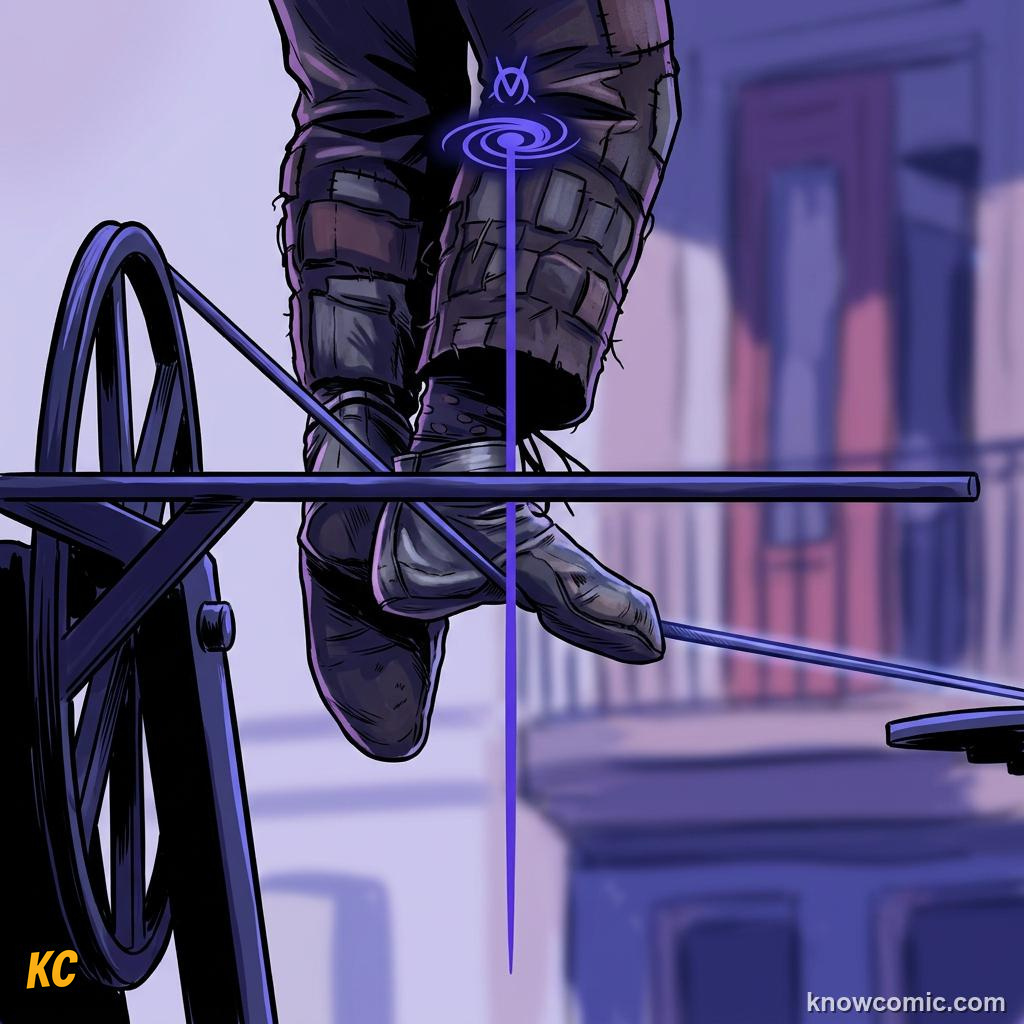
📐 Vertical line from COM hits the base
✅ Object stays upright
🧱 Support forces balance the weight
DANGER ZONE
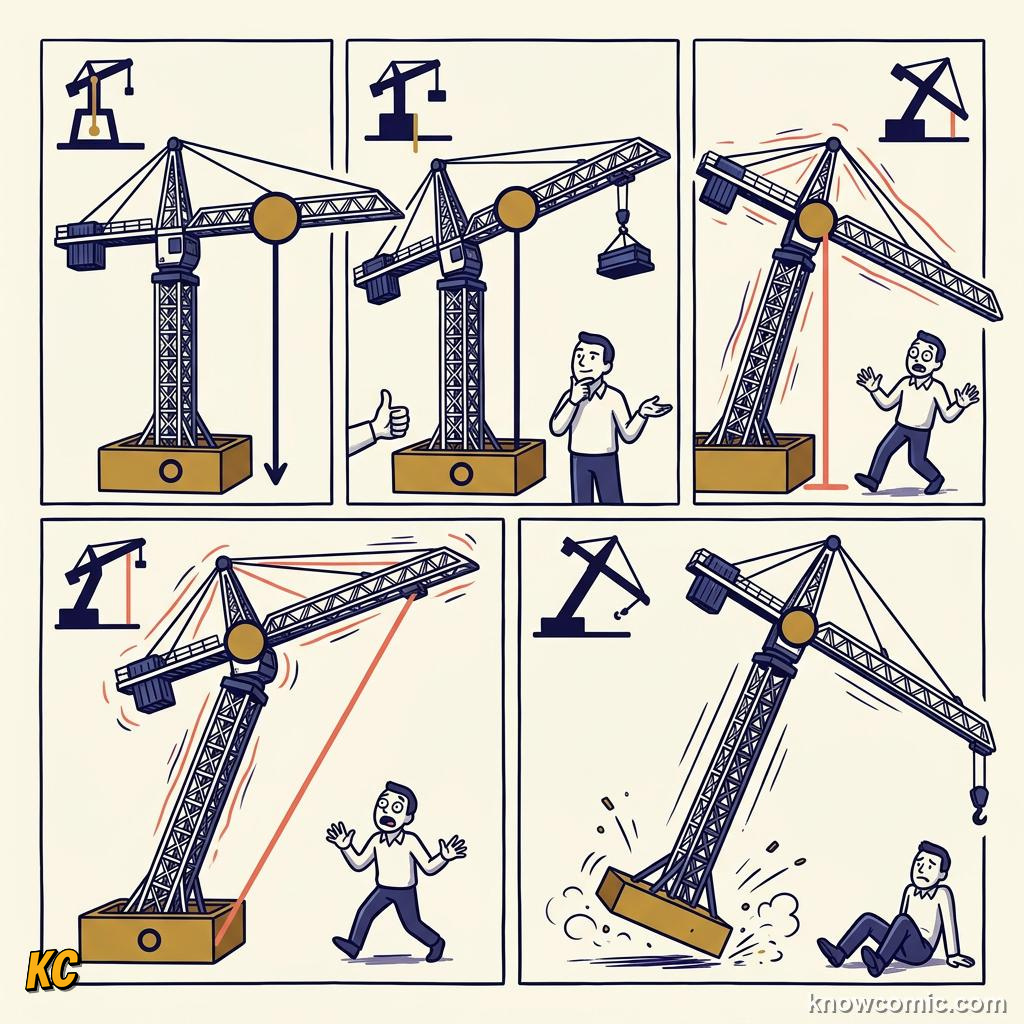
⚠️ COM line falls outside the base
💥 Gravity torque tips the object
📉 It rotates over the contact edge
PAGE 2 OF 5, WIDE AND LOW
SHAPE MATTERS
WHY LOW AND WIDE WINS
A wide base gives the center of mass more room to move sideways before its vertical line leaves the support area. A low center of mass means you must tilt the object through a larger angle before that line reaches the edge. Race cars sit low and wide for the same reason a sumo stance is hard to tip: the geometry protects balance. Tall, narrow objects have a high center of mass and a small base, so a small lean is enough to put the weight line outside the footprint. Designers use this rule for furniture, vehicles, and buildings.
🧱 STABILITY
Wider base and lower center of mass both increase stability. Either change makes it harder for a tilt to move the weight line past the edge.
WIDE!
WIDE BASE
📐 More room before COM leaves the base
🪑 Four-legged stools resist tipping
🚗 Cars use a wide track for grip and balance
LOW COM
⬇️ Weight sits closer to the ground
📐 Needs a bigger tilt to tip over
🏎️ Race cars keep mass low on purpose
TALL AND THIN
📏 High COM, small footprint
⚠️ Small lean can cause a topple
🏺 Tall vases tip more easily
PAGE 3 OF 5, THE LEANING TOWER
THE LEAN
🏛️ Soft soil made the tower settle unevenly
📐 It leans about four degrees today
🔧 Engineers reduced the lean in the 1990s–2000s
STILL SAFE
⚖️ COM still projects over the foundation
✅ Weight line stays inside the base
🧱 That is why it has not fallen
PISA'S SECRET
WHY PISA STAYS UP
The Leaning Tower of Pisa looks ready to fall, yet it has stood for centuries. Soft ground under one side made it settle unevenly as it was built in the Middle Ages. The tower leans, but its center of mass still sits so that a vertical line from that point lands inside the foundation. Gravity's pull therefore stays within the base of support, and the structure remains in equilibrium. Engineers later removed soil and added supports to reduce the lean and keep that weight line safely inside the footprint. The tower is famous for leaning, but physics says it is still balanced.
🏛️ PISA
If the lean grew so far that the center of mass projected outside the foundation, toppling torque would win and the tower would fall. Stabilization work keeps it on the safe side of that line.
LEAN!
PAGE 4 OF 5, TOPPLING TORQUE
THE TIPPING EDGE
WHEN TORQUE WINS
Torque is a turning effect: force times the perpendicular distance from a pivot. When you tilt an object, the contact edge on the low side becomes a pivot. Gravity still pulls down at the center of mass. As long as that pull is on the base side of the pivot, the torque rotates the object back toward upright. Once the center of mass moves past the pivot edge, gravity's torque flips direction and accelerates the topple. A push, a gust of wind, or a soft foundation can start the lean. The geometry of base and center of mass decides whether the object recovers or falls.
💥 TORQUE
Toppling is not magic. It is gravity applying a torque about the edge of the base once the center of mass has crossed that edge.
TIP!
PIVOT EDGE
📐 Object rotates about the contact edge
⬇️ Weight acts at the center of mass
🔄 Torque direction decides recover or fall
RECOVER
✅ COM still on the base side of the edge
↩️ Gravity torque pulls it upright again
🧱 Stable after a small push
TOPPLE
⚠️ COM crosses past the pivot edge
💥 Torque flips and speeds the fall
📉 Object rotates onto its side
PAGE 5 OF 5, THE BIG IDEA
THE FULL PICTURE
STAY OVER THE BASE
Stability is geometry plus gravity. Keep the center of mass so its vertical line falls inside the base, and the object stands. Widen the base or lower the center of mass, and you buy a bigger safety margin against tipping. The Leaning Tower of Pisa still obeys that rule: it leans, but its weight line remains over the foundation. When the center of mass crosses the edge, toppling torque takes over and the fall begins. From furniture to skyscrapers, the same balance rule decides what stays up and what comes down.
STAND!
EVERYDAY LINKS
🚌 Buses keep a low, wide stance
🪜 Ladders need a wide base angle
🧍 Spreading your feet improves balance
REMEMBER
🏛️ KEY FACTS
An object stands when its center of mass stays over the base. Wide, low shapes are more stable. Pisa still has its COM over the foundation. Toppling happens when gravity's torque acts past the pivot edge.
✅ COM must stay over the base
✅ Wide and low means more stable
✅ Pisa leans but remains balanced
✅ Toppling is torque past the edge
🧠 QUIZ TIME!
STABILITY & TOPPLING · 5 QUESTIONS
QUESTION 01
When does a resting object stay upright?
QUESTION 02
Why is a wide, low object usually more stable?
QUESTION 03
Why has the Leaning Tower of Pisa not fallen?
QUESTION 04
What happens when the center of mass moves past the pivot edge?
QUESTION 05
Which change would make a tall vase harder to tip?