🌍
☀️
🍎
🪐 KNOW PRIMARY · AGES 6–11

PLANETS &
ASTRONOMY

🌍 Falling Toward the Sun, But Never Hitting It!

📖 200 Topics 🆓 FREE + PRO ⏱️ 5 min per comic 🧠 Quiz included
🍎
GRAVITY
Pull between masses
➡️
MOTION
Sideways speed
🔄
ORBIT
Fall and miss forever
📜
NEWTON
1687 insight
TODAY
Every planet balanced
🌍 GRAVITY & ORBIT
TOPIC 11 · PLANETS & ASTRONOMY · THE SOLAR SYSTEM
PAGE 1 OF 5 — THE INVISIBLE TUG
PULL
Comic panel about gravity: why planets stay in orbit: Pull, educational kids illustration
GRAVITY IS EVERYWHERE
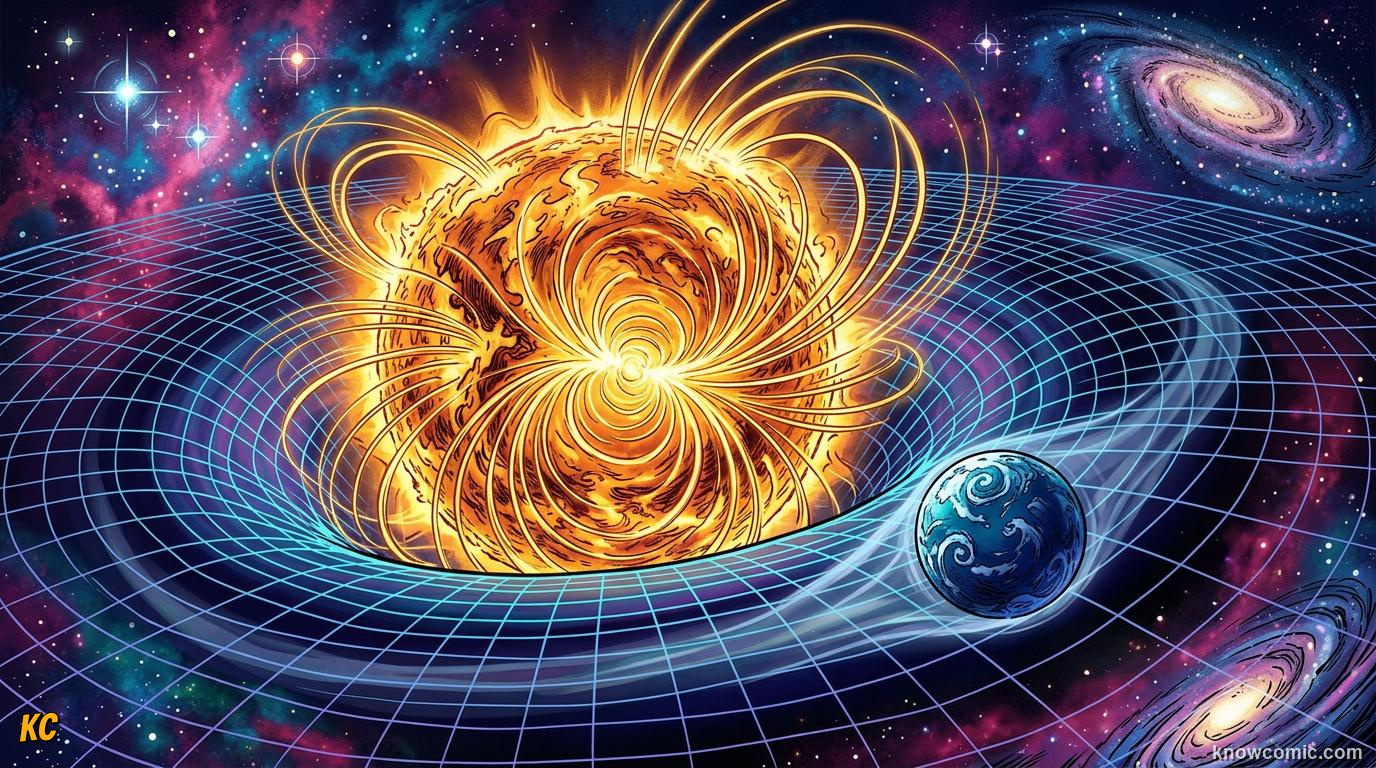
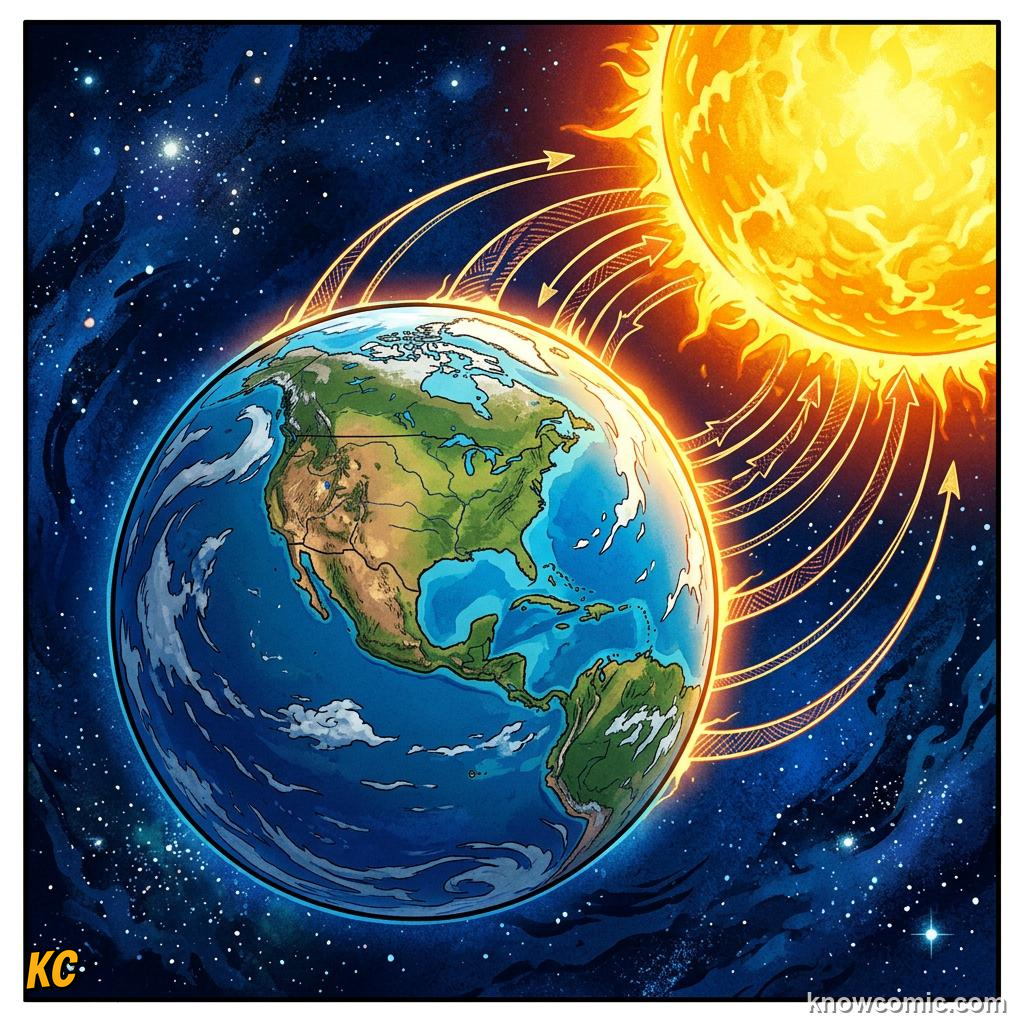
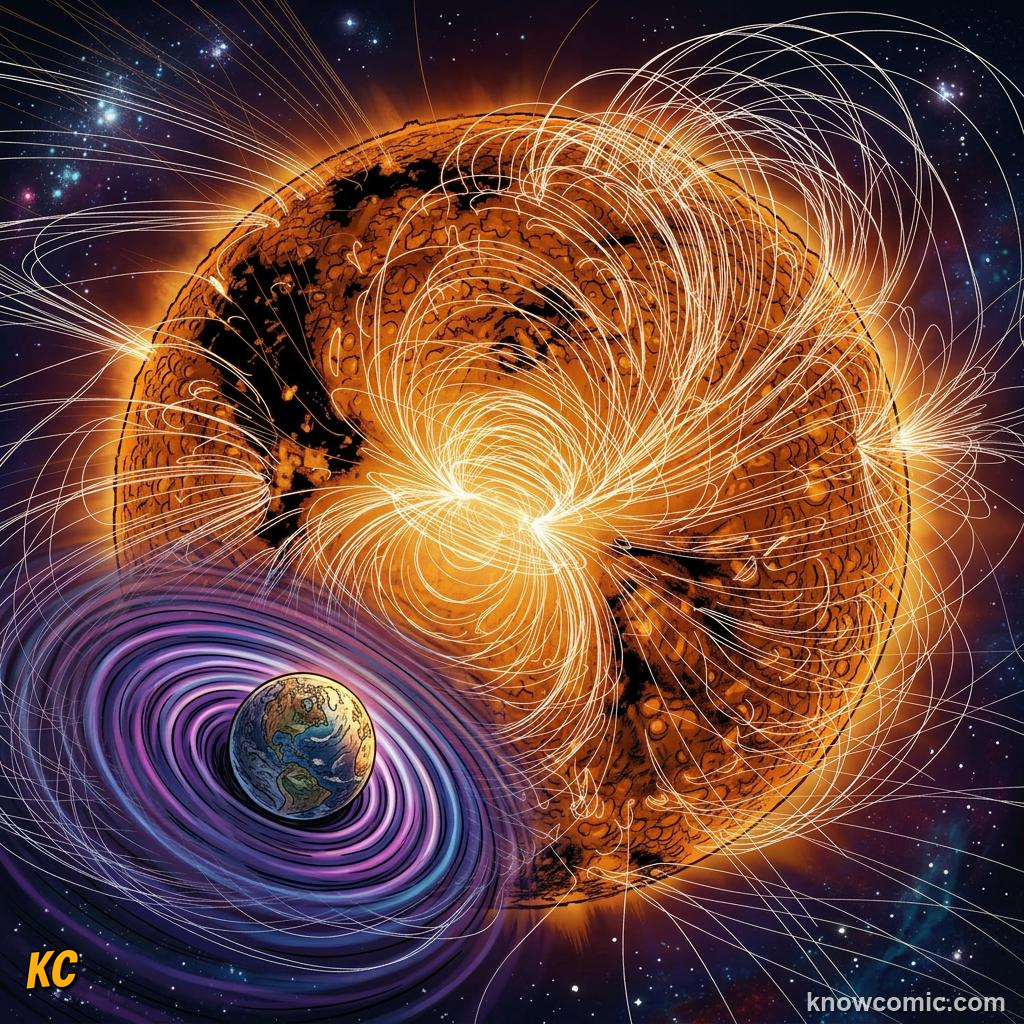
Gravity is the attraction between objects that have mass. The more mass, the stronger the pull. Earth pulls you down so you do not float away. The Sun, being vastly more massive, pulls on every planet. Gravity works across empty space. You cannot see it, but it shapes the whole solar system. Without gravity, planets would fly off in straight lines and the Sun would not hold its family of worlds together.
🍎 MASS
Isaac Newton showed that gravity depends on mass and distance. Big objects pull harder.
PULL!
SUN
Comic panel about gravity: why planets stay in orbit: Gravity Is Everywhere, Sun, educational kids illustration
☀️ Most mass in the system
🪐 Pulls every planet inward
YOU
Comic panel about gravity: why planets stay in orbit: You, educational kids illustration
🌍 Earth pulls you down
🔗 Works through empty space
PAGE 2 OF 5 — FALLING FOREVER
MISS THE SUN
Comic panel about gravity: why planets stay in orbit: Miss The Sun, educational kids illustration
ORBIT IS CONTINUOUS FALL
Here is the surprising idea: a planet in orbit is always falling toward the Sun. But it is also moving sideways very fast. While gravity pulls it inward, the planet's forward motion carries it forward. The path curves into an orbit instead of a crash. Newton compared it to firing a cannon from a tall mountain. Too slow and the ball hits the ground. Just right and it falls around the Earth forever.
🎯 CURVE
Orbit happens when sideways speed is high enough that the planet keeps missing what it falls toward.
FALL!
SIDEWAYS
Comic panel about gravity: why planets stay in orbit: Orbit Is Continuous Fall, Sideways, educational kids illustration
➡️ Forward motion never stops
⬇️ Gravity pulls inward
BALANCE
Comic panel about gravity: why planets stay in orbit: Orbit Is Continuous Fall, Balance, educational kids illustration
⚖️ Together they make a curve
🔄 Fall without landing
CANNON
Comic panel about gravity: why planets stay in orbit: Cannon, educational kids illustration
💭 Newton's thought experiment
🌍 Speed sets the path
PAGE 3 OF 5 — SPEED AND DISTANCE
MERCURY
Comic panel about gravity: why planets stay in orbit: Mercury, educational kids illustration
⚡ Fastest planet loop
🔴 Closest to the Sun
NEPTUNE
Comic panel about gravity: why planets stay in orbit: Neptune, educational kids illustration
🐢 Slow distant orbit
🔵 Weakest pull out there
CLOSE OR FAR
Comic panel about gravity: why planets stay in orbit: Close Or Far, educational kids illustration
DIFFERENT ORBITS, DIFFERENT FEEL
Mercury whizzes around the Sun in about 88 days because it is close and feels a strong pull. Neptune crawls through a year lasting about 165 Earth years because it is far out and the Sun's tug is weaker there. Closer planets must move faster to stay in orbit. Farther planets move slower but still enough to keep falling around the Sun instead of drifting away or crashing in.
🏃 FAST
Closer orbits need higher sideways speed to balance stronger solar gravity.
SPEED!
PAGE 4 OF 5 — NEWTON'S BIG IDEA
1687
Comic panel about gravity: why planets stay in orbit: Different Orbits, Different Feel, 1687, educational kids illustration
GRAVITY RULES THE COSMOS
Isaac Newton published his law of universal gravitation in 1687. He explained that every mass attracts every other mass. The Sun and planets obey the same rules as an apple falling from a tree. Gravity weakens with distance, which is why distant planets feel a gentler pull. Newton's math let astronomers predict where planets would be. Orbits were no longer mysterious circles in the sky. They were physics in motion.
📜 1687
Newton's Principia explained gravity and motion, connecting Earthly falls to planetary orbits.
NEWTON!
SAME LAW
Comic panel about gravity: why planets stay in orbit: Gravity Rules The Cosmos, Same Law, educational kids illustration
🍎 Apple and planet follow rules
📐 Math predicts orbits
DISTANCE
Comic panel about gravity: why planets stay in orbit: Gravity Rules The Cosmos, Distance, educational kids illustration
📉 Pull weakens farther out
🔭 Explains planet speeds
LEGACY
Comic panel about gravity: why planets stay in orbit: Legacy, educational kids illustration
🌍 Foundation of modern astronomy
🚀 Still used for spaceflight
PAGE 5 OF 5 — ORBITAL BALANCE
STAY IN PATH
Comic panel about gravity: why planets stay in orbit: Stay In Path, educational kids illustration
GRAVITY PLUS MOTION
Planets stay in orbit because gravity pulls them toward the Sun while sideways motion makes them miss it. Too little speed and they would fall in. Too much speed and they could escape. Every stable orbit is a careful balance. Newton showed this with math and imagination. Look at the night sky and you are watching worlds forever falling, forever missing, forever circling our star.
ORBIT!
THINK
Comic panel about gravity: why planets stay in orbit: Gravity Plus Motion, Think, educational kids illustration
🌍 ISS falls around Earth too
🛰️ Satellites use the same idea
REMEMBER
🪐 KEY FACTS
Gravity pulls inward. Forward motion carries a planet sideways. Together they create orbit. Newton explained this in 1687.
⬇️ Planets constantly fall toward the Sun
➡️ Sideways speed makes them miss
⚖️ Balance creates stable orbit
🧠 QUIZ TIME!
GRAVITY & ORBIT · 5 QUESTIONS
QUESTION 01
What is an orbit?
QUESTION 02
What does gravity depend on?
QUESTION 03
Why must closer planets move faster in orbit?
QUESTION 04
Who explained gravity and orbits with math in 1687?
QUESTION 05
What would happen if a planet's sideways speed were too low?
0/5
LOADING...
💬 REACTIONS & COMMENTS
No comments yet, be the first!
← TOPIC 10 📋 ALL TOPICS TOPIC 12 →