🌍 Why Summer and Winter Swap Between North and South!
📖 200 Topics🆓 FREE + PRO⏱️ 5 min per comic🧠 Quiz included
📐
TILT
Axis angled 23.5°
→
☀️
DIRECT
Sunlight angle changes
→
🎄
SOLSTICE
Longest and shortest days
→
⚖️
EQUINOX
Equal day and night
→
✨
TODAY
Opposite seasons each pole
🌍 SEASONS & TILT
TOPIC 15 · PLANETS & ASTRONOMY · THE SOLAR SYSTEM
PAGE 1 OF 5 — THE TILT
23.5 DEGREES
EARTH LEANS AS IT SPINS
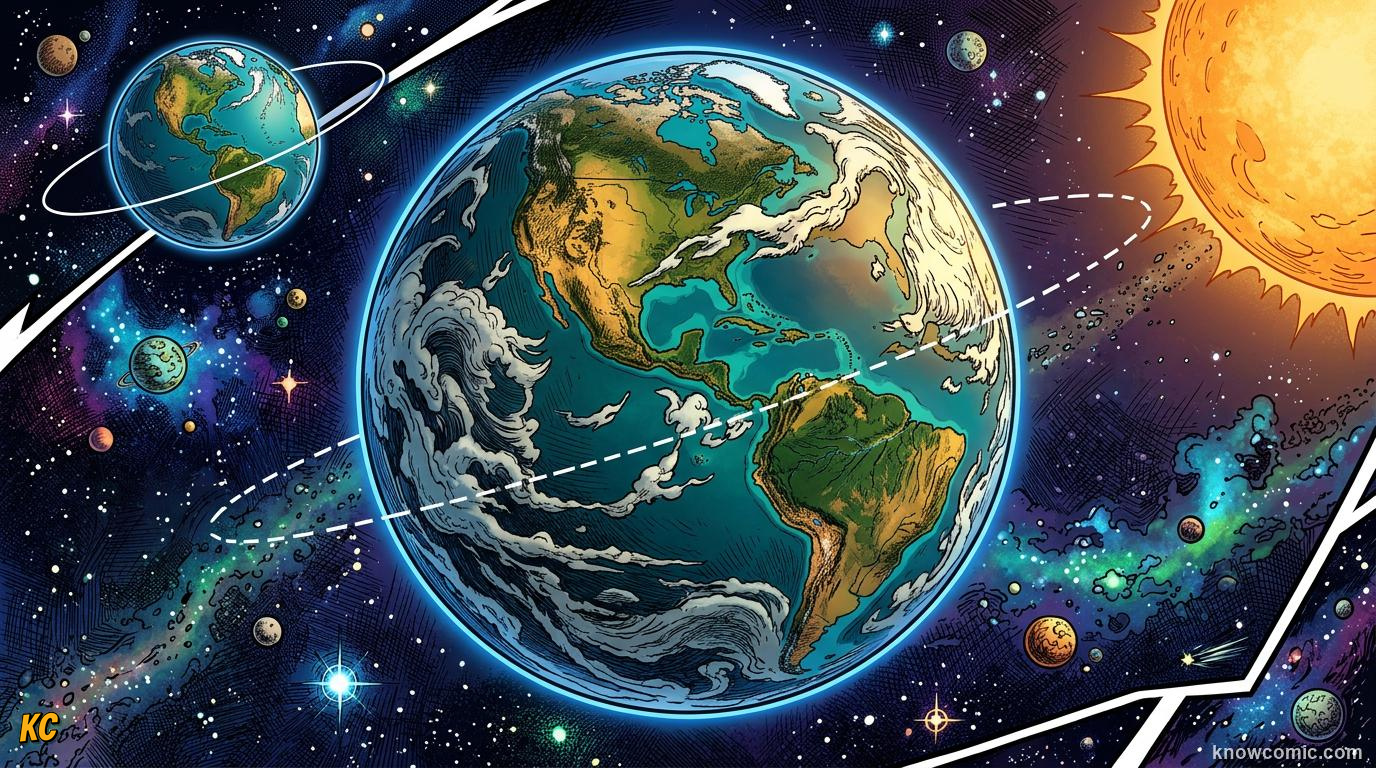
Earth does not spin perfectly upright. Its rotation axis is tilted about 23.5 degrees compared to its path around the Sun. That lean stays pointing roughly the same direction in space as Earth orbits. Because of the tilt, different parts of the planet receive more direct sunlight at different times of year. This tilt is the main reason we have seasons, not because Earth moves dramatically closer or farther from the Sun.
📐 TILT
Earth's axis tilt is about 23.5 degrees. That angle is the key driver of seasonal changes around the world.
TILT!
AXIS
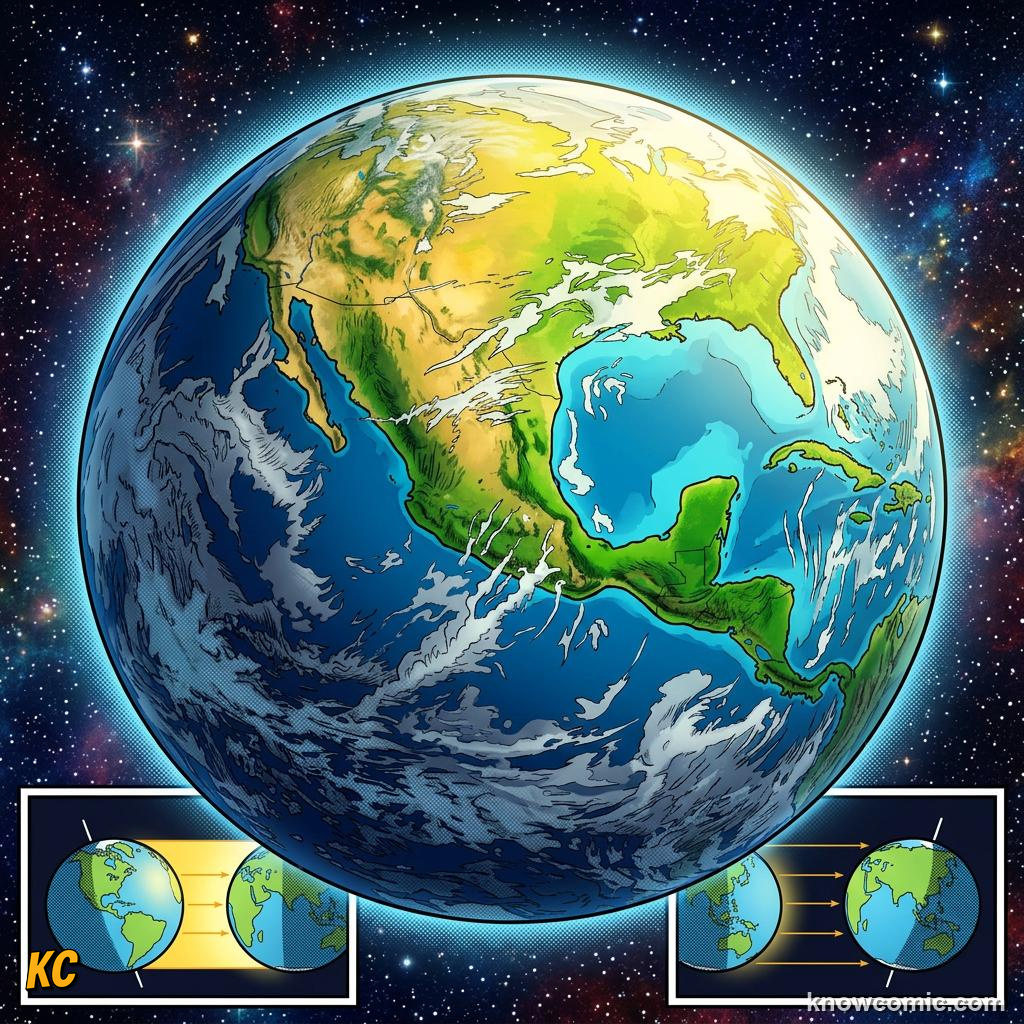
🌍 Earth leans as it orbits 🧭 Tilt direction stays steady
NOT DISTANCE
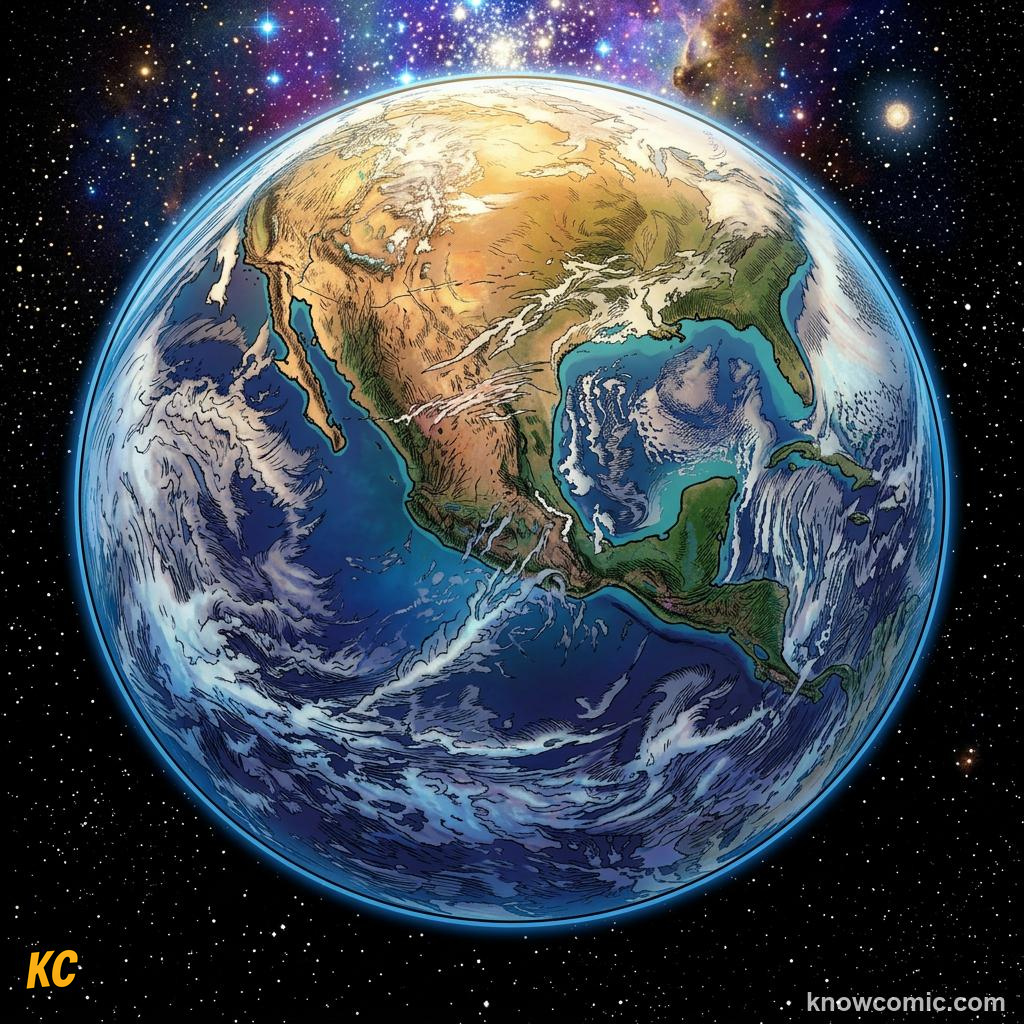
☀️ Orbit is nearly circular ❌ Seasons are not from near and far
PAGE 2 OF 5 — DIRECT SUNLIGHT
ANGLE MATTERS
WHY SUMMER FEELS HOTTER
When the Northern Hemisphere tilts toward the Sun, sunlight hits it more directly. Direct rays deliver more energy per square metre, so days feel warmer and summer arrives. When the Northern Hemisphere tilts away, sunlight strikes at a lower angle and spreads out. Less energy reaches each spot, so winter is cooler. Meanwhile the Southern Hemisphere experiences the opposite season.
☀️ ANGLE
Direct sunlight concentrates energy. Slanted sunlight spreads the same energy over a larger area, making it weaker.
ANGLE!
SUMMER
☀️ More direct rays north 🌡️ More heating per area
☀️ Longest day in the north 🏖️ Northern summer begins
DECEMBER
🌙 Shortest day in the north ☃️ Northern winter begins
LONG & SHORT
THE MOST TILTED DAYS
Two days each year are solstices. Around June 21, the Northern Hemisphere is most tilted toward the Sun. That is the June solstice, with the longest day and shortest night in the north. Around December 21, the Northern Hemisphere is most tilted away, bringing the December solstice and the shortest day of the year. The Southern Hemisphere gets the reverse pattern.
🎄 DECEMBER
The December solstice marks the shortest day in the Northern Hemisphere and the longest day in the Southern Hemisphere.
SOLSTICE!
PAGE 4 OF 5 — EQUINOXES
EQUAL LIGHT
DAY AND NIGHT BALANCE
Equinoxes happen when Earth's tilt is sideways relative to the Sun, so neither pole leans strongly toward or away. Day and night are nearly equal in length everywhere. The March equinox marks spring in the north and autumn in the south. The September equinox marks autumn in the north and spring in the south. Farmers and calendars around the world still use these dates to track the year.
⚖️ EQUAL
At an equinox, the Sun shines directly on the equator and day and night are about the same length worldwide.
BALANCE!
MARCH
🌸 Spring north, autumn south 🌱 Growing season starts north
SEPTEMBER
🍂 Autumn north, spring south 📅 Halfway points in the year
EQUAL
⚖️ Day and night nearly match 🌍 Sun over the equator
PAGE 5 OF 5 — SEASON FACTS
WRAP UP
TILT DRIVES THE YEAR
Seasons happen because Earth's axis is tilted about 23.5 degrees. Direct sunlight warms one hemisphere while the other gets slanted, weaker rays. Solstices mark the longest and shortest days. Equinoxes balance day and night. When it is summer in the north, it is winter in the south. Earth's distance from the Sun changes only a little and is not the main cause of seasons.
SEASONS!
CYCLE
🔄 Year repeats four seasons 🌎 Opposite hemispheres, opposite weather
REMEMBER
🪐 KEY FACTS
Earth's 23.5 degree tilt causes seasons. Direct sunlight brings summer. Solstices and equinoxes mark key dates. Distance from the Sun is not the main reason.
📐 Tilt of about 23.5 degrees drives seasons ☀️ Direct vs slanted sunlight matters ⚖️ Solstices and equinoxes mark the year
🧠 QUIZ TIME!
SEASONS & TILT · 5 QUESTIONS
QUESTION 01
What mainly causes Earth's seasons?
QUESTION 02
About how much is Earth's axis tilted?
QUESTION 03
When it is summer in the Northern Hemisphere, what season is it in the Southern Hemisphere?
QUESTION 04
What happens at an equinox?
QUESTION 05
Do seasons happen because Earth is much closer to the Sun in summer?