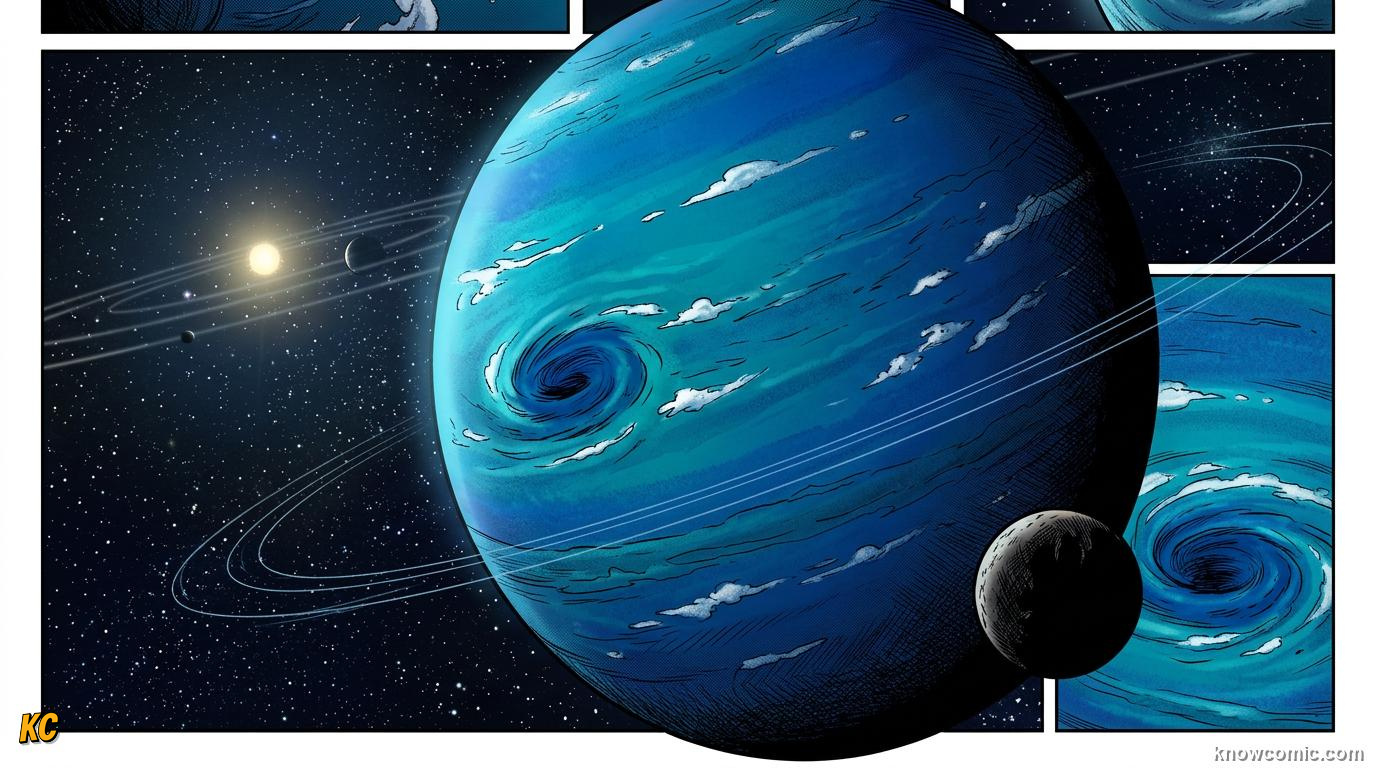
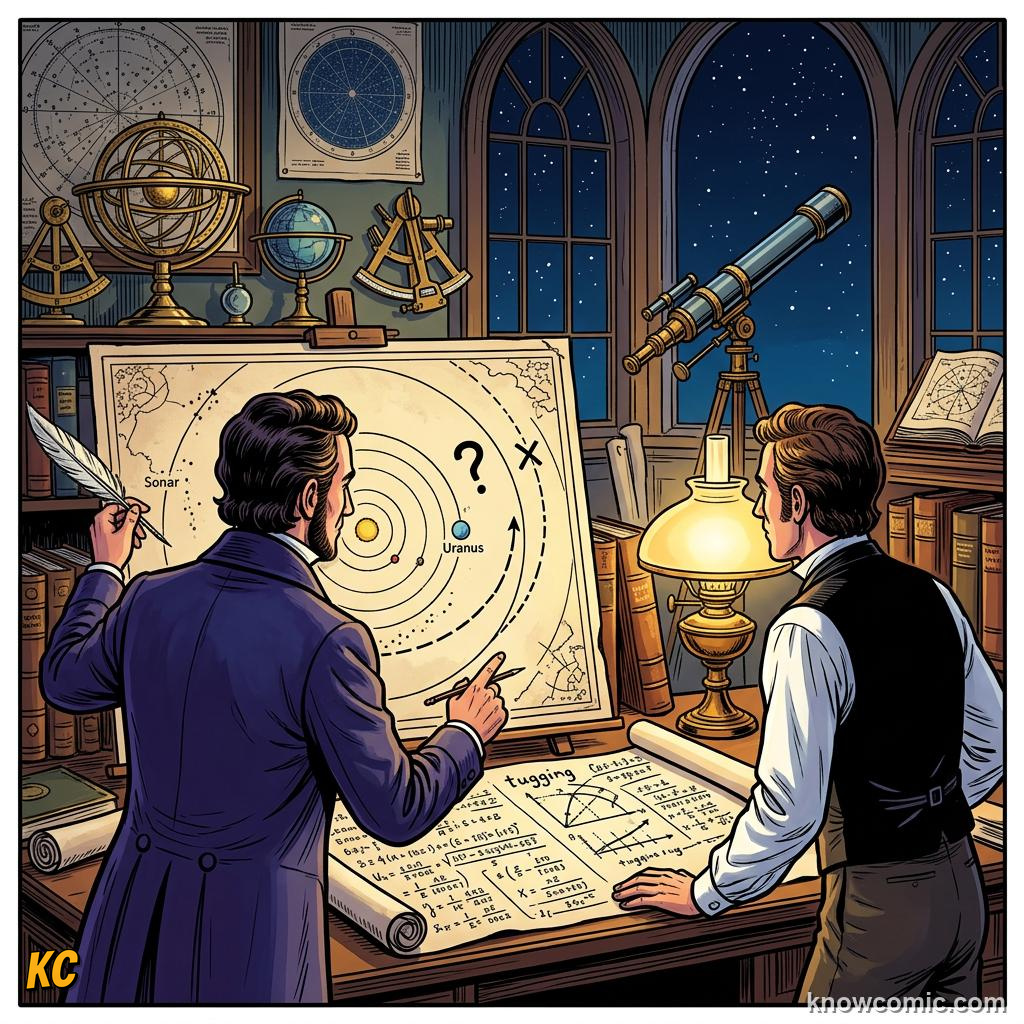
Neptune is the eighth and farthest major planet from the Sun. Sunlight is weak out there, yet Neptune is a stormy, active world. Its deep blue color comes from methane in the atmosphere, which absorbs red light. Neptune is an ice giant like Uranus, with hydrogen and helium on top and icy materials deeper down. It was the only planet found by math before it was seen through a telescope in 1846.
🌑 DISTANT
Neptune orbits about 30 times farther from the Sun than Earth does.
BLUE!
FAR
🌌 Farthest major planet 💙 Methane tints the clouds
MATH
🧮 Predicted before discovery 🔭 Found in 1846
PAGE 2 OF 5 — SUPERSONIC WINDS
WINDIEST
STORMS WITH ENORMOUS POWER
Neptune holds the record for the fastest winds of any major planet, reaching up to about 2,100 km/h. That is faster than the speed of sound in Earth's atmosphere at sea level. When Voyager 2 flew past in 1989, it saw a giant dark storm called the Great Dark Spot, as big as Earth. The spot faded later, but new storms appear. Scientists still wonder how Neptune gets so much energy for weather so far from the Sun.
💨 WIND
Neptune's winds can reach about 2,100 km/h, the fastest measured on any major planet.
FAST!
STORMS
🌑 Great Dark Spot in 1989 🔄 New storms keep forming
🏆 Fastest winds of major planets 💨 Up to about 2,100 km/h
PAGE 3 OF 5 — DIAMOND RAIN
DEEP
⬇️ Crystals may sink inward 🔬 Shown in lab, not seen directly
HEAT
🧲 May affect magnetic field 🧊 Part of ice giant interior
DEEP INSIDE
PRESSURE CREATES GEMS
Deep in Neptune's interior, pressure and temperature are extreme. Experiments on Earth suggest carbon atoms can bond into diamond-like crystals that slowly drift downward through the icy layers, a process scientists call diamond rain. This is not jewelry falling from clouds you could see. It happens thousands of kilometers down where hydrogen and carbon behave in strange ways. The idea helps explain heat and magnetic fields inside ice giants.
💎 LAB
Laboratory experiments support the idea that diamond-like carbon can form under Neptune-like pressures.
RAIN!
PAGE 4 OF 5 — TRITON BACKWARD
CAPTURED MOON?
TRITON ORBITS THE WRONG WAY
Neptune's largest moon Triton is one of the coldest objects in the solar system and orbits backward compared with Neptune's spin. That is a clue it may have been captured from the Kuiper belt long ago. Triton has geysers that shoot nitrogen ice and dust into space. In billions of years, tides may pull Triton so close that it breaks apart, possibly forming a future ring.
🌙 TRITON
Triton orbits Neptune in the opposite direction to the planet's rotation, suggesting it was captured.
BACK!
GEYSERS
❄️ Nitrogen plumes erupt 🔄 Retrograde orbit is odd
FUTURE
💥 May break up someday 💍 Could feed a ring
COLD
🧊 One of coldest large moons 🌌 Possible captured world
PAGE 5 OF 5 — NEPTUNE FACTS
WRAP UP
WINDY BLUE MYSTERY
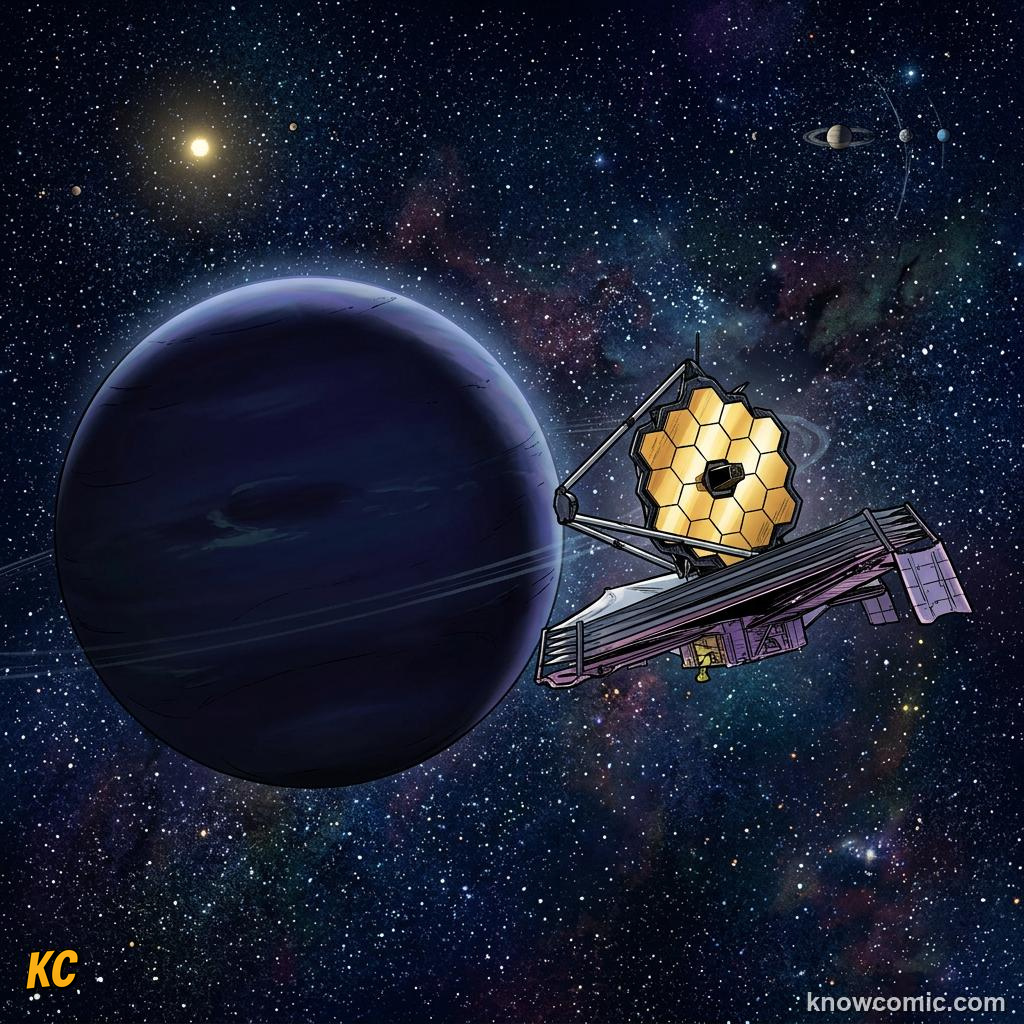
Neptune is a distant ice giant with winds up to about 2,100 km/h and a deep blue methane atmosphere. Lab work supports diamond-like carbon forming deep inside. Triton orbits backward and shoots geysers. Only Voyager 2 has visited. Neptune reminds us that even cold, far worlds can be wildly active.
WIND!
EXPLORE
🛰️ Voyager 2 in 1989 🔭 Need another mission someday
REMEMBER
🪐 KEY FACTS
Neptune has the fastest winds of any major planet, up to about 2,100 km/h. Experiments suggest diamond-like carbon may form deep inside. Moon Triton orbits backward and has geysers.
💨 Stormy despite weak sunlight 💎 Diamond rain idea supported by lab tests 🌙 Triton may be a captured Kuiper belt object