🦟
🌲
💨
🌱 KNOW PRIMARY · AGES 6–11

PLANTS &
BOTANY

🌱 From Tiny Seeds to Ancient Giants, The Living World!

📖 200 Topics 🆓 FREE + PRO ⏱️ 5 min per comic 🧠 Quiz included
🌿
EARLY FORESTS
~400M yrs ago
🌲
CARBONIFEROUS
358–298 Ma
💨
O₂ PEAK
~30–35% air
🦟
GIANT BUGS
Meganeura era
🌍
TODAY
21% oxygen
💨 THE CARBONIFEROUS OXYGEN SPIKE
TOPIC 11 · PLANTS & BOTANY · CARBONIFEROUS · 358–298 MILLION YEARS AGO
PAGE 1 OF 5, AIR YOU COULD BREATHE
SUPERCHARGED AIR
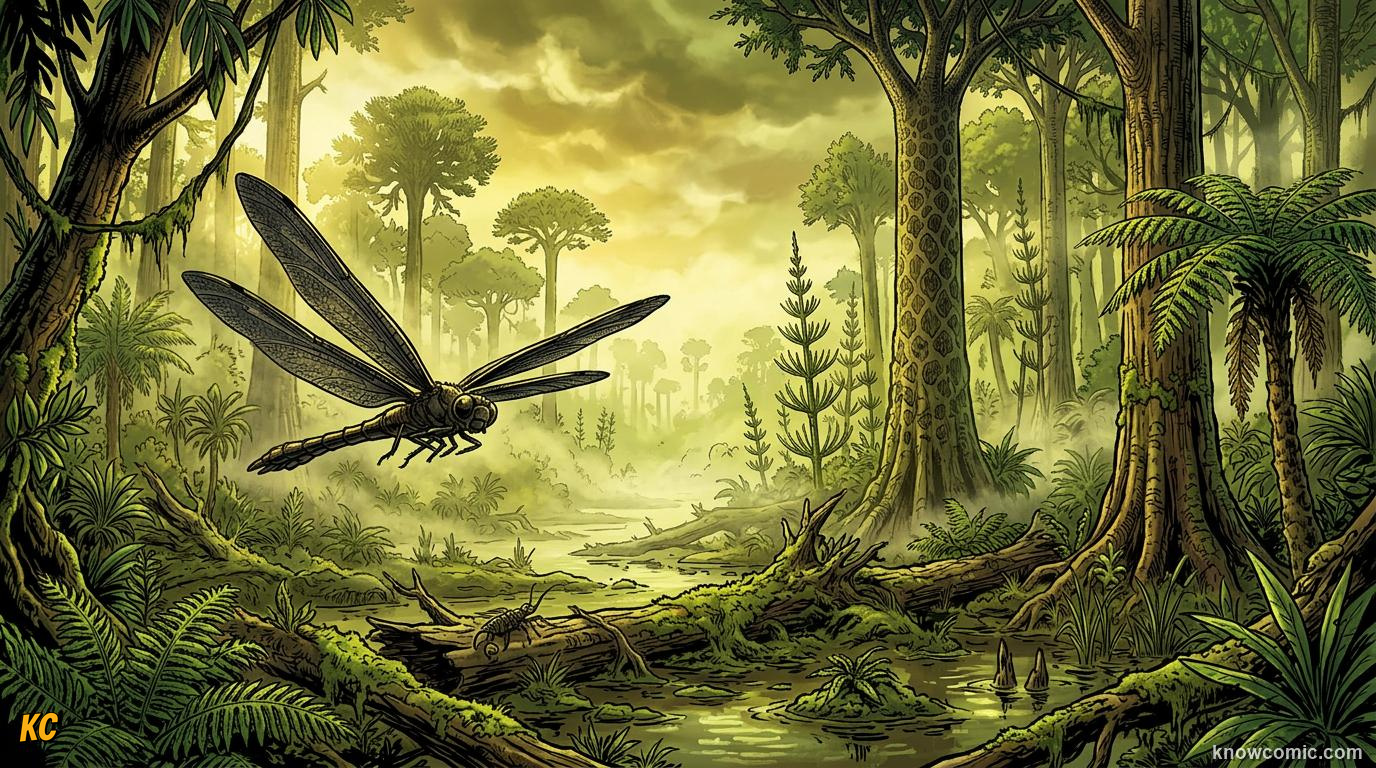
Comic panel about Carboniferous oxygen and giant insects: Supercharged Air, educational kids illustration
WHEN EARTH'S AIR WAS THICK WITH OXYGEN
Today the air around you is about 21% oxygen. During the Carboniferous period, roughly 300 million years ago, that number may have climbed as high as 30 to 35%. The world felt different. Swampy forests stretched across continents, fires burned hotter, and insects grew to sizes that would look impossible now. This oxygen spike is one of the strangest chapters in plant history.
⚡ DID YOU KNOW?
Meganeura was a Carboniferous dragonfly with a wingspan of about 65 to 70 centimetres. That is wider than many children's arms!
OXYGEN!
THEN VS NOW
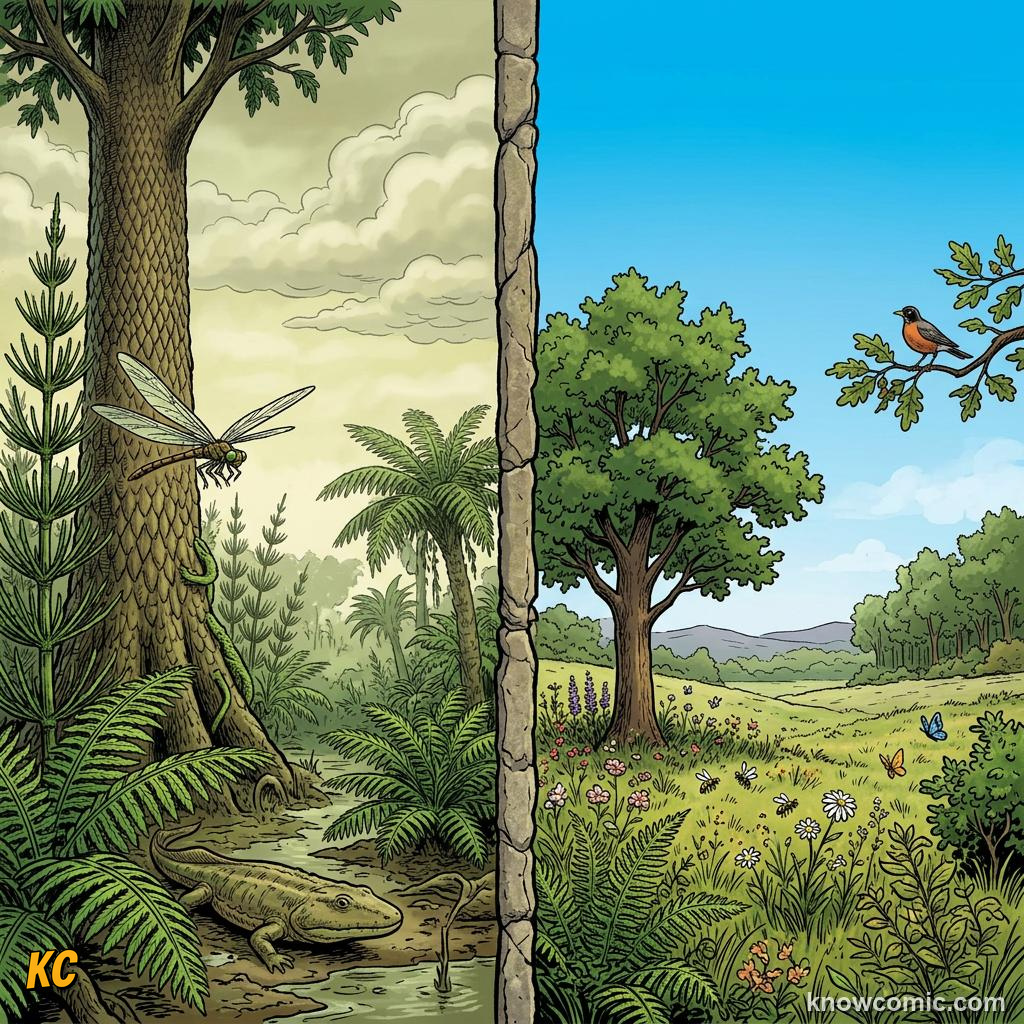
Comic panel about Carboniferous oxygen and giant insects: When Earth'S Air Was Thick With Oxygen, Then Vs Now, educational kids
💨 Carboniferous air: up to ~35% O₂
🌍 Today's air: about 21% O₂
GIANT INSECTS
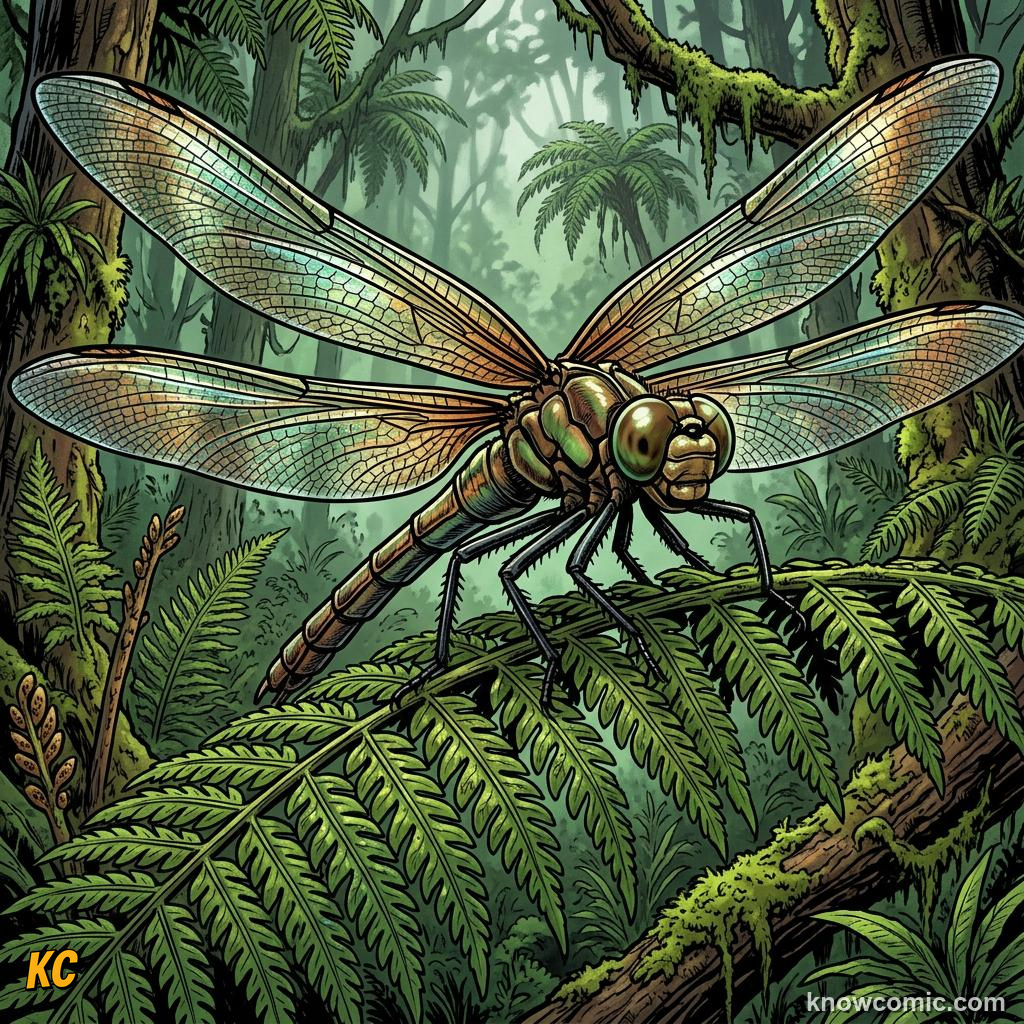
Comic panel about Carboniferous oxygen and giant insects: Giant Insects, educational kids illustration
🦟 Meganeura: huge prehistoric dragonfly
🪲 Other insects also reached record sizes
PAGE 2 OF 5, PLANTS PUMPED THE AIR
FORESTS MADE THE SPIKE
Comic panel about Carboniferous oxygen and giant insects: Forests Made The Spike, educational kids illustration
WHY PLANTS MATTER FOR THIS STORY
The Carboniferous was the age of giant ferns, clubmosses, and early trees spreading through warm, wet swamps. Those plants photosynthesised on a massive scale, releasing oxygen as a waste product. At the same time, fallen plants often sank into waterlogged soil before they could fully rot. Their carbon got buried and slowly turned into coal instead of returning to the air as CO₂. Less carbon recycled meant more oxygen could build up in the atmosphere over millions of years.
PHOTOSYNTHESIS!
SWAMP FORESTS
Comic panel about Carboniferous oxygen and giant insects: Why Plants Matter For This Story, Swamp Forests, educational kids illustration
🌿 Tree-sized ferns & clubmosses
💧 Wet ground slowed decay
O₂ OUTPUT
Comic panel about Carboniferous oxygen and giant insects: Why Plants Matter For This Story, O₂ Output, educational kids illustration
☀️ Sunlight + CO₂ → sugars + O₂
🌲 Vast forests = vast oxygen release
COAL TRAP
Comic panel about Carboniferous oxygen and giant insects: Coal Trap, educational kids illustration
🪨 Buried plant carbon became coal
🔒 Carbon locked away for millions of years
PAGE 3 OF 5, HOW INSECTS BREATHE
SPIRACLES
Comic panel about Carboniferous oxygen and giant insects: Spiracles, educational kids illustration
🔵 Tiny holes along the body sides
💨 Air enters through spiracles
TRACHEAE
Comic panel about Carboniferous oxygen and giant insects: Tracheae, educational kids illustration
🕸️ Branching tubes reach every cell
🫁 No lungs: tubes do the job
INSECT RESPIRATION
Comic panel about Carboniferous oxygen and giant insects: Insect Respiration, educational kids illustration
SPIRACLES & TRACHEAE, NOT LUNGS
Insects do not breathe through their hard outer shell the way you might guess. They breathe through spiracles, small openings along their sides, connected to a network of tracheal tubes that carry oxygen deep inside the body. Oxygen moves by diffusion, slowly spreading through those tubes. When the air holds more oxygen, each breath through the spiracles delivers more of it. That extra supply helped some Carboniferous insects support larger, more active bodies than most insects can manage today.
BREATHE!
PAGE 4 OF 5, SIZE LIMITS & FIRE
OXYGEN SETS THE CEILING
Comic panel about Carboniferous oxygen and giant insects: Spiracles &Amp; Tracheae, Not Lungs, Oxygen Sets The Ceiling, educational kids illustration
WHY BUGS SHRANK AGAIN
An insect's tracheal system has limits. The farther oxygen must diffuse through tubes, the harder it is to supply a large body. High atmospheric oxygen relaxed that limit, so giant dragonflies, millipedes, and cockroach relatives could thrive. Later, as oxygen levels fell toward modern values, the same breathing system could no longer support such huge sizes. High oxygen also made wildfires more common, shaping which plants could survive in open landscapes.
🔥 FIRE FACT
More oxygen means fires ignite more easily and burn more fiercely. Carboniferous forests experienced frequent fires that cleared space for new growth.
LIMITS!
DIFFUSION
Comic panel about Carboniferous oxygen and giant insects: Why Bugs Shrank Again, Diffusion, educational kids illustration
📏 Tube length caps body size
💨 More O₂ = longer tubes work better
MEGANEURA
Comic panel about Carboniferous oxygen and giant insects: Meganeura, educational kids illustration
🦟 Wingspan ~65–70 cm
🏹 Aerial predator of smaller insects
O₂ DECLINE
Comic panel about Carboniferous oxygen and giant insects: O₂ Decline, educational kids illustration
📉 Oxygen dropped after the Carboniferous
🐜 Insects returned to smaller sizes
PAGE 5 OF 5, PLANTS, AIR & LIFE
THE BIG PICTURE
Comic panel about Carboniferous oxygen and giant insects: The Big Picture, educational kids illustration
PLANTS CHANGED THE ATMOSPHERE TWICE
Long before humans, plants rewrote Earth's chemistry. Early photosynthesisers first raised oxygen enough for complex life. Then Carboniferous forests pushed levels even higher, fueling giant insects and intense fires while burying carbon as coal. Today we burn that ancient coal and release stored carbon back into the air. The oxygen spike reminds us that plants, atmosphere, and animal life are tightly linked across deep time.
🎓 GENIUS MOMENT
Much of the coal we use today formed during the Carboniferous. Those buried forests both locked carbon away and helped pump oxygen into the air above them.
LINKED!
TAKEAWAYS
Comic panel about Carboniferous oxygen and giant insects: Plants Changed The Atmosphere Twice, Takeaways, educational kids illustration
🌲 Swamp forests released huge O₂
🦟 Extra O₂ helped giant insects grow
REMEMBER
🌱 KEY FACTS
💨 Carboniferous O₂ peak: ~30–35% (today ~21%) 🦟 Meganeura wingspan: ~65–70 cm 🔵 Insects breathe via spiracles & tracheae 🌲 Plants photosynthesised & buried carbon as coal 📉 Lower O₂ later limited insect body size!
🧠 QUIZ TIME!
CARBONIFEROUS OXYGEN SPIKE · 5 QUESTIONS
QUESTION 01
About what percentage of today's air is oxygen?
QUESTION 02
How high may atmospheric oxygen have climbed during the Carboniferous?
QUESTION 03
How do insects get oxygen into their bodies?
QUESTION 04
About how wide was the wingspan of Meganeura?
QUESTION 05
Why could some Carboniferous insects grow so large?
0/5
LOADING...
← TOPIC 10 📋 ALL TOPICS TOPIC 12 →