🌱 From Tiny Seeds to Ancient Giants, The Living World!
📖 200 Topics🆓 FREE + PRO⏱️ 5 min per comic🧠 Quiz included
🌱
LEAFLESS STEMS
Early Devonian
→
🌿
MICROPHYLLS
Lycophyte line
→
🍃
MEGAPHYLLS
Euphyllophyte line
→
🌲
FOREST LEAVES
Carboniferous
→
🌍
TODAY
Countless leaf shapes
🍃 THE ORIGIN OF LEAVES
TOPIC 14 · PLANTS & BOTANY · DEVONIAN · ~420–360 MILLION YEARS AGO
PAGE 1 OF 5, STEMS WITHOUT LEAVES
BEFORE THE LEAF
THE FIRST LAND PLANTS HAD NO LEAVES
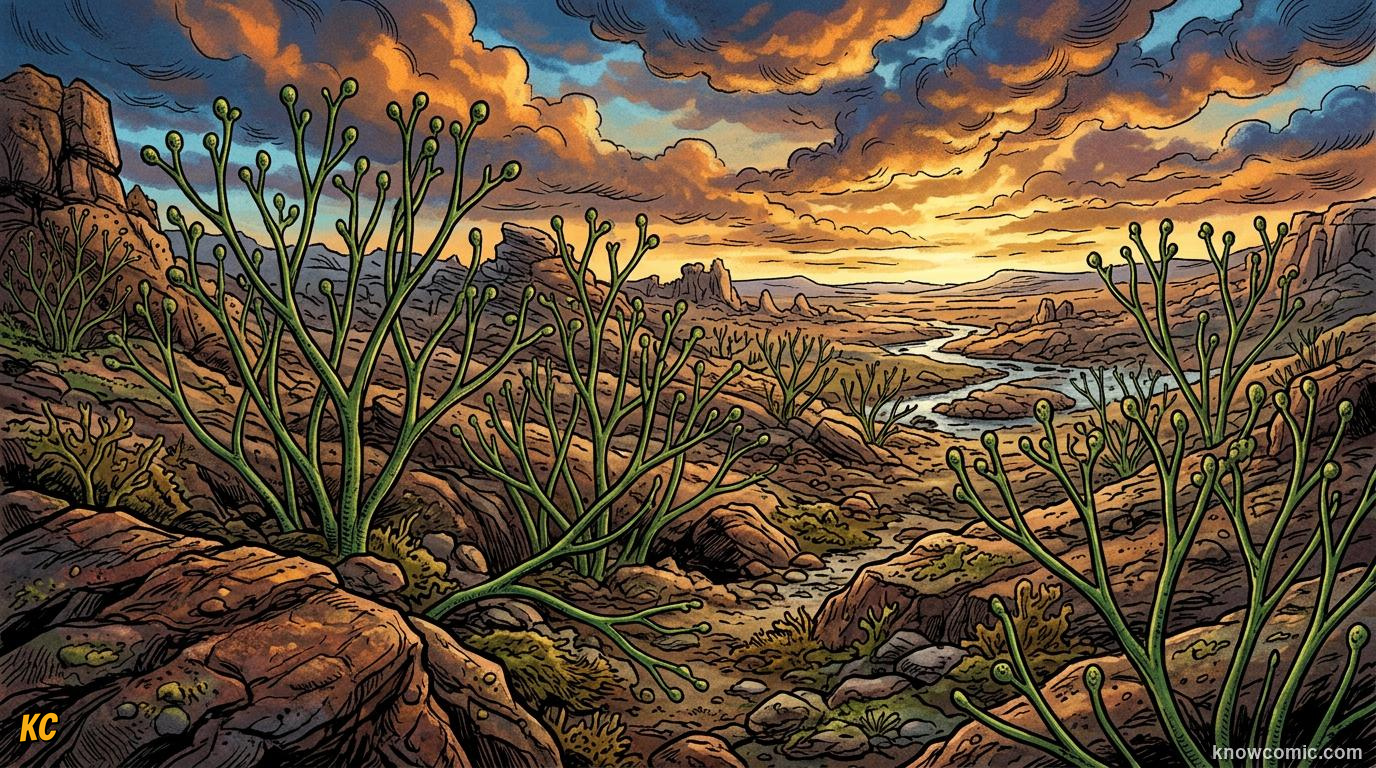
When plants first crawled out of the water onto land, they did not look like the trees and flowers you know today. During the Early Devonian period, roughly 420 to 400 million years ago, many early vascular plants were simple branching green stems. The whole stem could photosynthesise. There were no broad flat leaves yet, just forked axes reaching for light in a low, damp world.
⚡ DID YOU KNOW?
Fossils from Scotland's Rhynie chert preserve tiny Early Devonian plants like Cooksonia: Y-shaped green stems only a few centimetres tall, with spore cases at the tips and no leaves at all.
STEMS!
EARLY LOOK
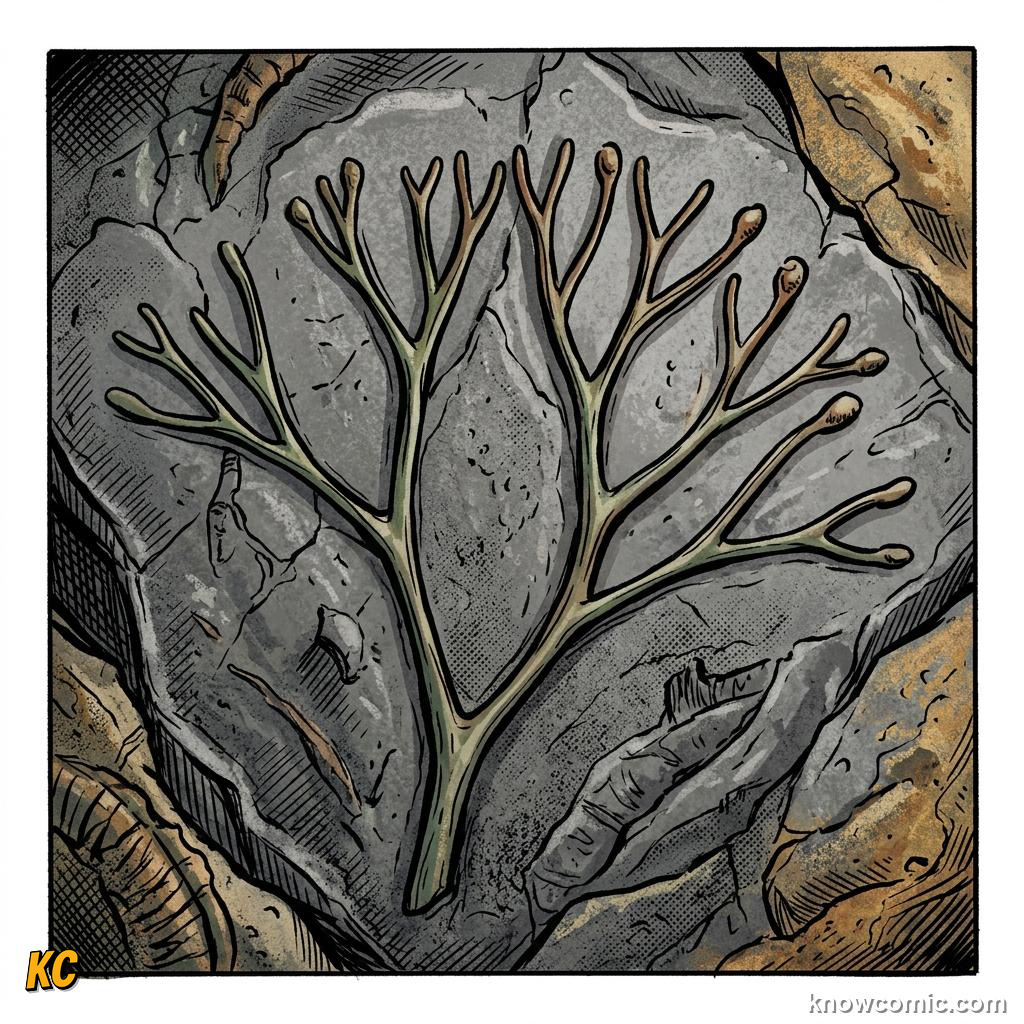
🌱 Forked green stems, no flat leaves
💧 Lived in damp Devonian landscapes
PHOTOSYNTHESIS
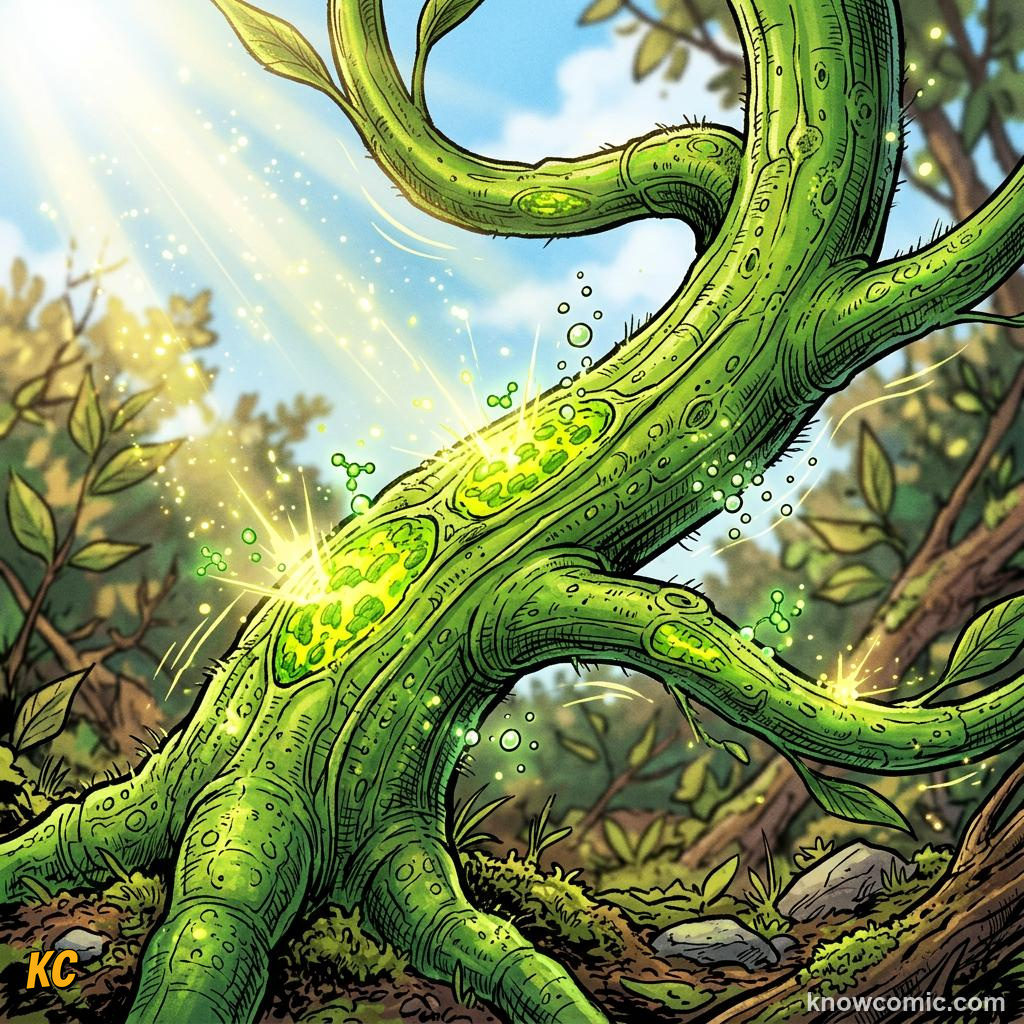
☀️ Green stem tissue caught sunlight
🌿 Leaves had not evolved yet
PAGE 2 OF 5, WHY FLAT LEAVES?
SUNLIGHT ENGINE
FLAT SURFACES CAPTURE MORE LIGHT
A thin, flat leaf presents a wide surface to the sun while using less material than a thick stem. More surface area means more chlorophyll can absorb light and turn carbon dioxide and water into sugars. Once plants evolved leaves, photosynthesis could happen on a much larger scale. Taller forests became possible because leaves could gather light high above the ground while roots pulled up water below.
CAPTURE!
SURFACE AREA
📐 Flat blades = more sun per gram
🌿 Better than a round stem alone
CHLOROPHYLL
💚 Green pigment traps light energy
🍬 Sugars fuel plant growth
Vascular plants split long ago into two great lineages: lycophytes and euphyllophytes. Both groups started from leafless branching ancestors, yet each evolved its own kind of leaf independently. Lycophytes developed small, simple microphylls, often with a single vein. Euphyllophytes developed megaphylls, the larger leaves with branching veins found on ferns and seed plants. Same job, different evolutionary paths.
TWICE!
PAGE 4 OF 5, HOW MEGAPHYLLS FORMED
FROM BRANCHES TO BLADES
BRANCHES FLATTENED INTO LEAVES
Scientists think megaphylls may have formed when a plant's branching system changed shape over millions of years. One main branch could grow taller than its neighbours, side branches could spread into one flat plane, and tissue could fill the gaps between them to make a solid blade. This idea is called the telome theory. Microphylls likely formed differently, perhaps as small outgrowths from the stem. Two routes, one sunny result.
🔬 LEAF TYPES
Microphylls: small, usually one vein, on lycophytes like clubmosses. Megaphylls: larger blades with branching veins, on ferns, horsetails, and seed plants.
FLATTEN!
OVERTOPPING
⬆️ One branch grows taller than others
🌿 Sets up a leaf-like structure
PLANATION
↔️ Side branches spread flat
☀️ All face the sun together
WEBBING
🕸️ Tissue fills gaps between branches
🍃 A flat leaf blade appears
PAGE 5 OF 5, LEAVES CHANGE THE WORLD
THE LEAF REVOLUTION
PHOTOSYNTHESIS AT A NEW SCALE
Once leaves appeared, plants did not just survive on land. They transformed it. Devonian and Carboniferous forests spread across continents, pumping oxygen into the air and burying carbon in swamps. Today every oak, fern frond, and grass blade carries the legacy of those first flat solar panels. Leaves are one of evolution's cleverest upgrades: the same stem trick, invented more than once, turned green stems into the leafy world we live in.
🎓 GENIUS MOMENT
Your houseplant's leaf and a pine needle look similar, but they may trace back to different evolutionary inventions. Lycophyte microphylls and euphyllophyte megaphylls are separate solutions to the same problem: catch more sunlight.
EVOLVE!
TAKEAWAYS
🌱 Early plants: leafless green stems
🍃 Leaves evolved at least twice
REMEMBER
🌱 KEY FACTS
🌱 Early Devonian plants: branching stems, no leaves
🌿 Microphylls: lycophytes (clubmosses)
🍃 Megaphylls: euphyllophytes (ferns & seed plants)
☀️ Flat leaves maximise sunlight capture
🌍 Leaves powered forest growth & photosynthesis at a new scale!
🧠 QUIZ TIME!
THE ORIGIN OF LEAVES · 5 QUESTIONS
QUESTION 01
What did the earliest land plants look like?
QUESTION 02
How many times did leaves evolve independently in vascular plants?
QUESTION 03
What are the small, simple leaves on lycophytes like clubmosses called?
QUESTION 04
Which group includes ferns and seed plants with larger, veined leaves?