LEARNING & CONDITIONING
PAGE 1 OF 5 — HOW WE LEARN
TRAINING TIME
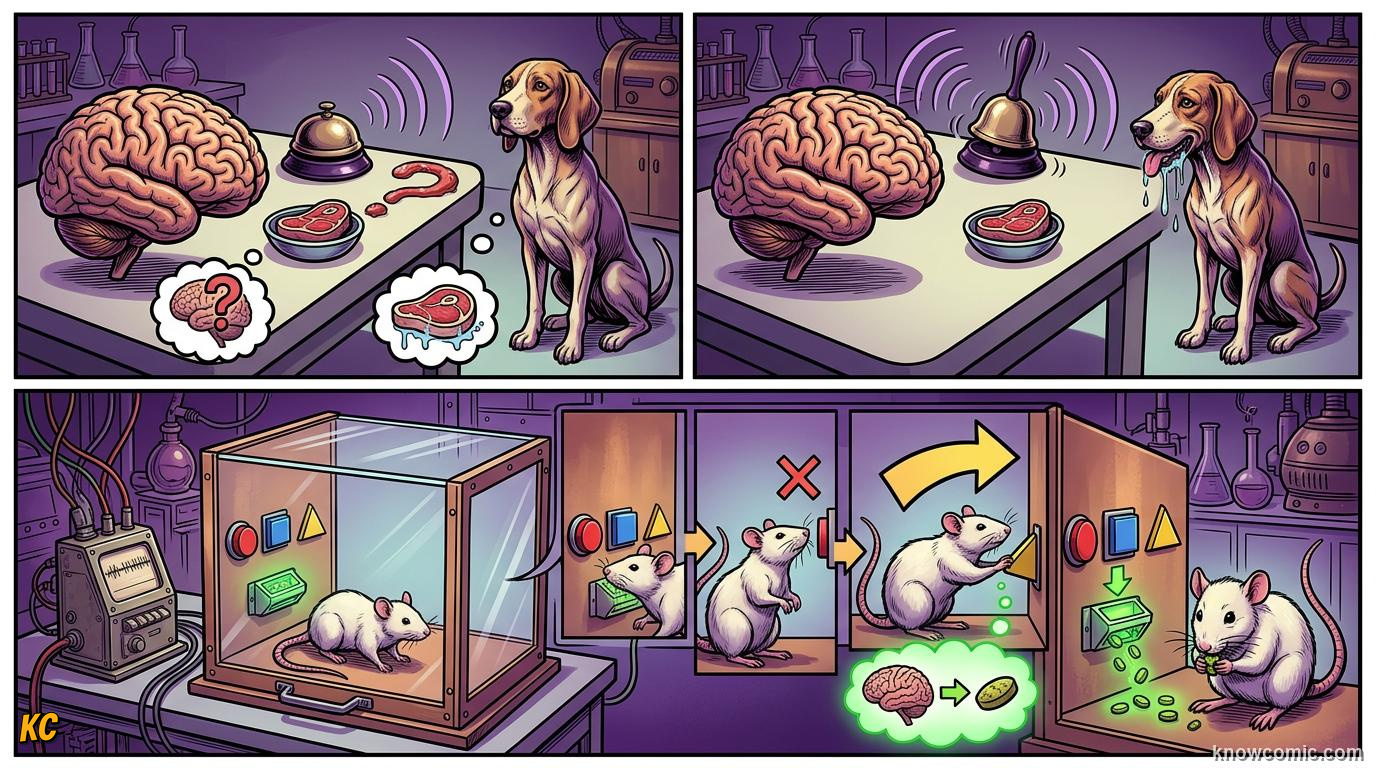
YOUR BRAIN LOVES PATTERNS!
How did you learn that a fire alarm means "leave the building"? Or that finishing homework might lead to screen time? Much of everyday learning happens through conditioning: linking events until your body or behavior reacts automatically. Russian scientist Ivan Pavlov discovered one major type by accident in the 1890s while studying dog digestion. American psychologist B.F. Skinner mapped another type in the 1930s using rats and pigeons in a "Skinner box." Together, classical and operant conditioning explain pet training, phobias, slot-machine habits, and why songs can suddenly make you hungry.
⚡ DID YOU KNOW?
Pavlov won the Nobel Prize in Physiology or Medicine in 1904 for digestion research, not for psychology. His conditioning discoveries grew out of that lab work.
LEARN!
CLASSICAL

🔔 Classical conditioning links a neutral signal to an automatic response.
🐕 Pavlov's dogs drooled at a bell after it was paired with food many times.
🐕 Pavlov's dogs drooled at a bell after it was paired with food many times.
OPERANT
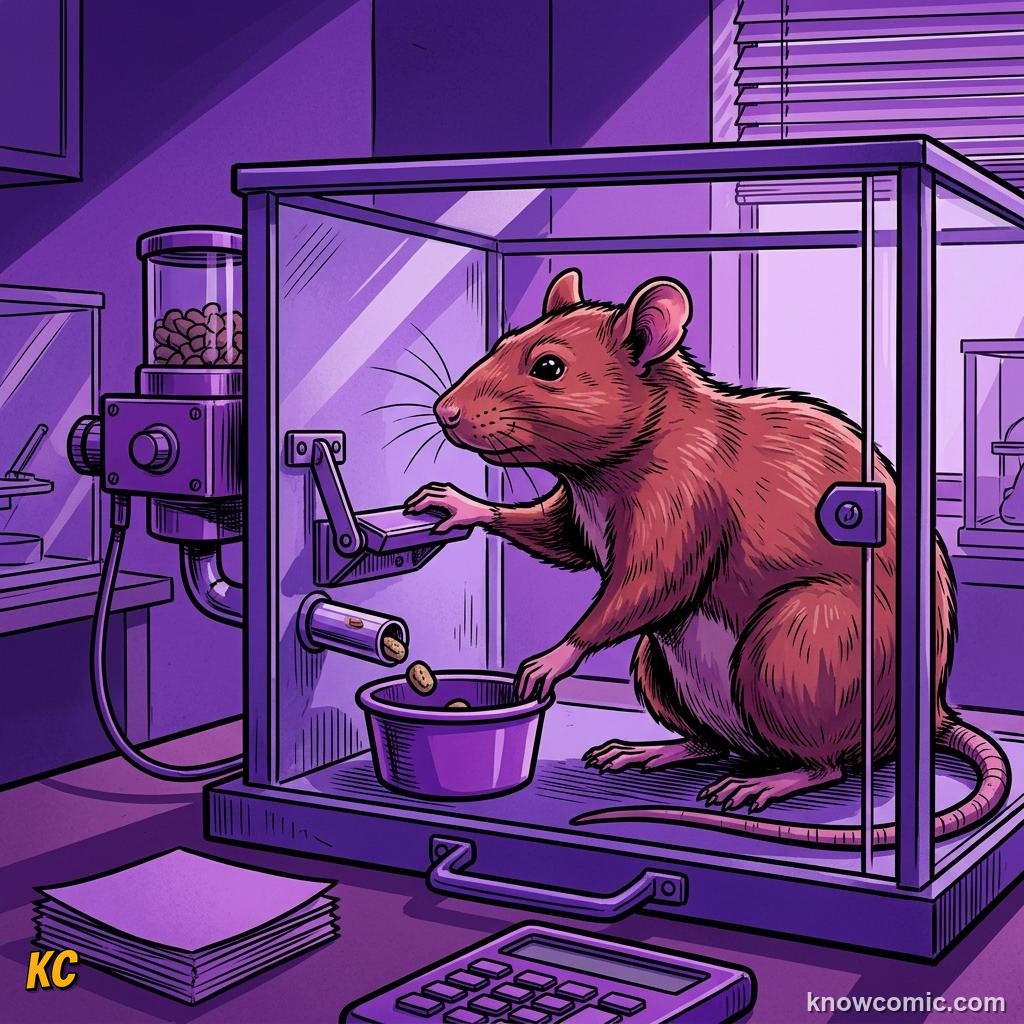
🐀 Operant conditioning shapes voluntary actions through consequences.
📘 Skinner laid it out in his 1938 book The Behavior of Organisms.
📘 Skinner laid it out in his 1938 book The Behavior of Organisms.