🚂 THE STEAM ENGINE: BIRTH OF THE RAILWAY AGE
PAGE 1 OF 5, MUSCLE, MUD, AND THE LIMITS OF HORSE-POWER
BEFORE THE LOCOMOTIVE
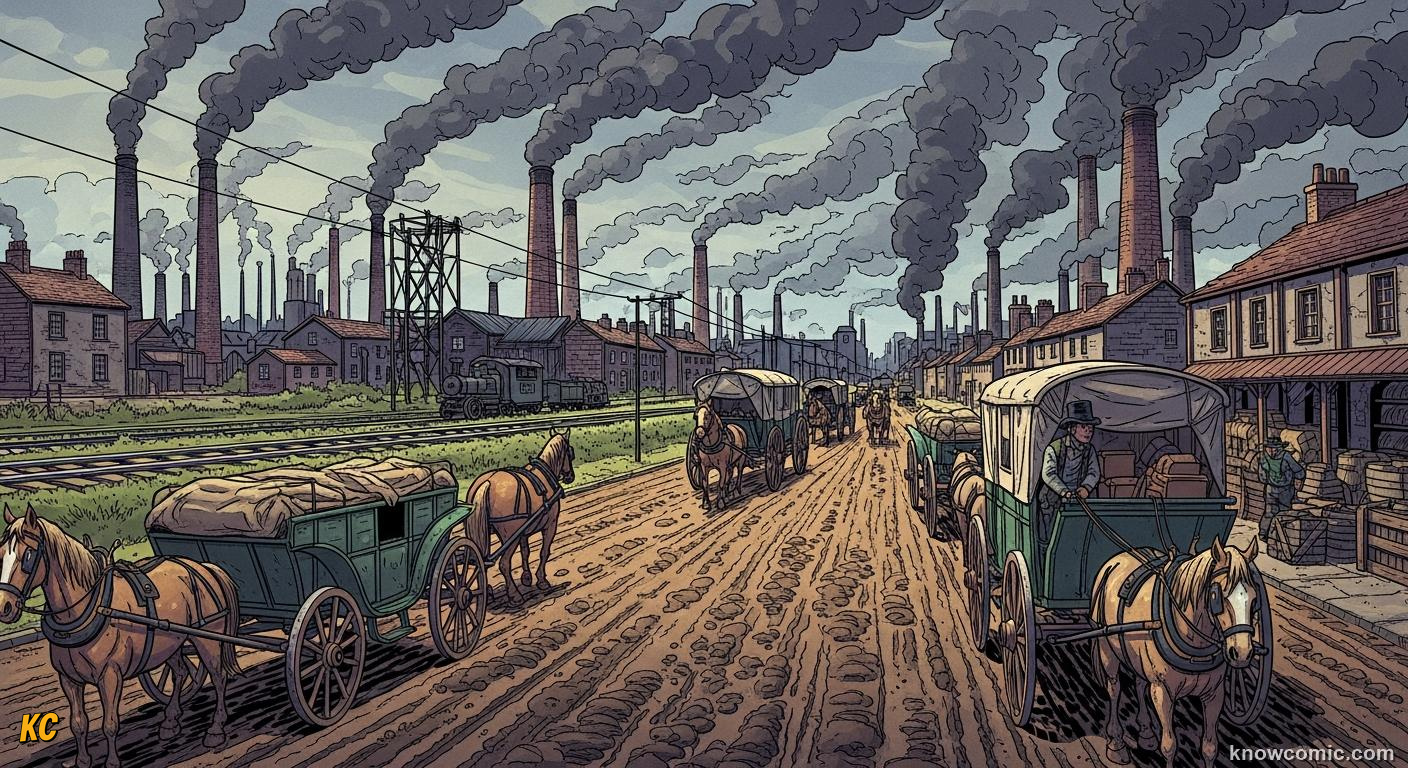
HORSES, CARRIAGES, COLD COAL
In the 1700s and early 1800s, land travel for people and heavy goods still meant horses, oxen, and wooden wheels in mud. A stagecoach clattered bravely — but feed, rest, and weather set the pace. Factories and mines burned more and more of ancient sunlight trapped in coal. Steam was already a workshop hero, pumping water and driving machinery, but a big question loomed: could that same chuffing, hissing power reliably pull a train on iron tracks with paying passengers, not just factory belts? Topic 1 gave you the wheel; this topic adds boiler, piston, and timetable.
📌 BIG PICTURE
The railway age was not "one Tuesday" — it is a cluster of better boilers, flatter track, and brave test runs in early-1800s Britain that turned smoke into a system.
CLOP…
COAL
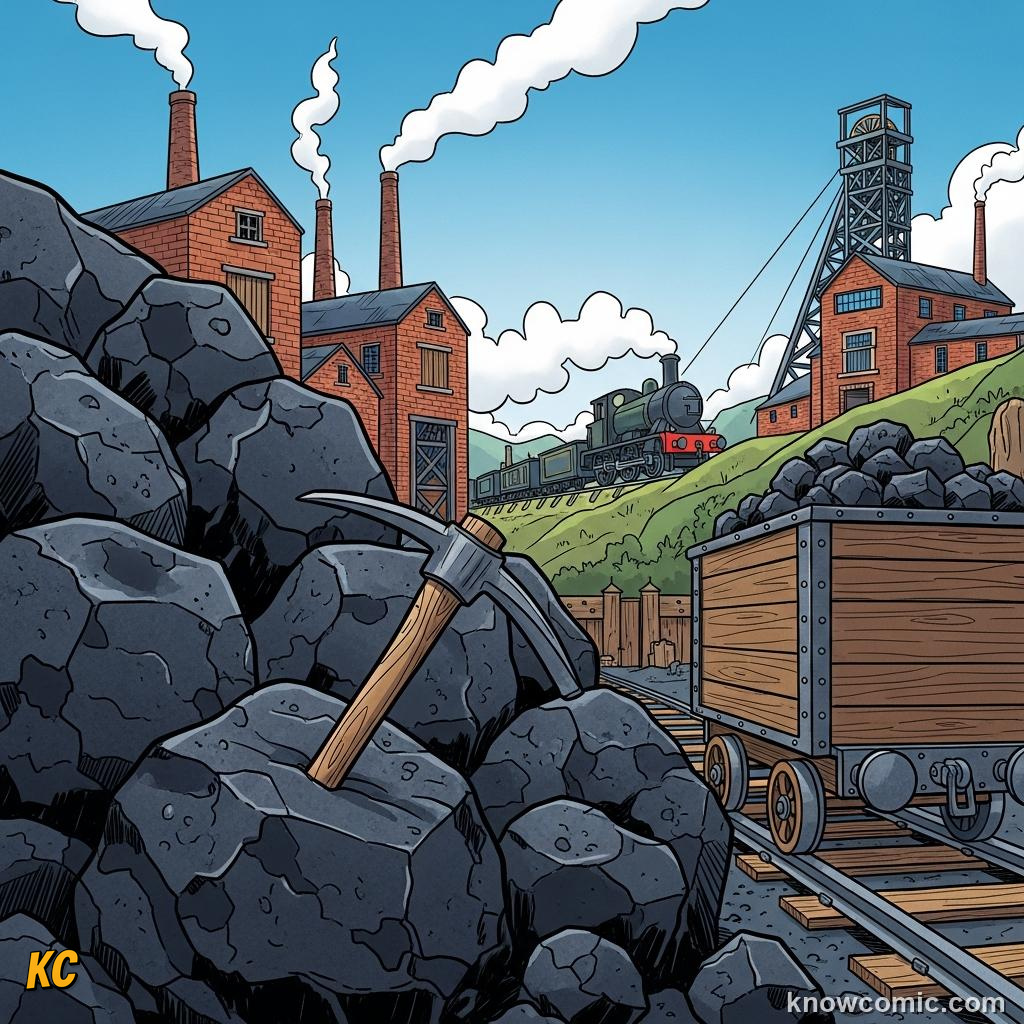
Stored chemical energy, dug from the ground
LIFT
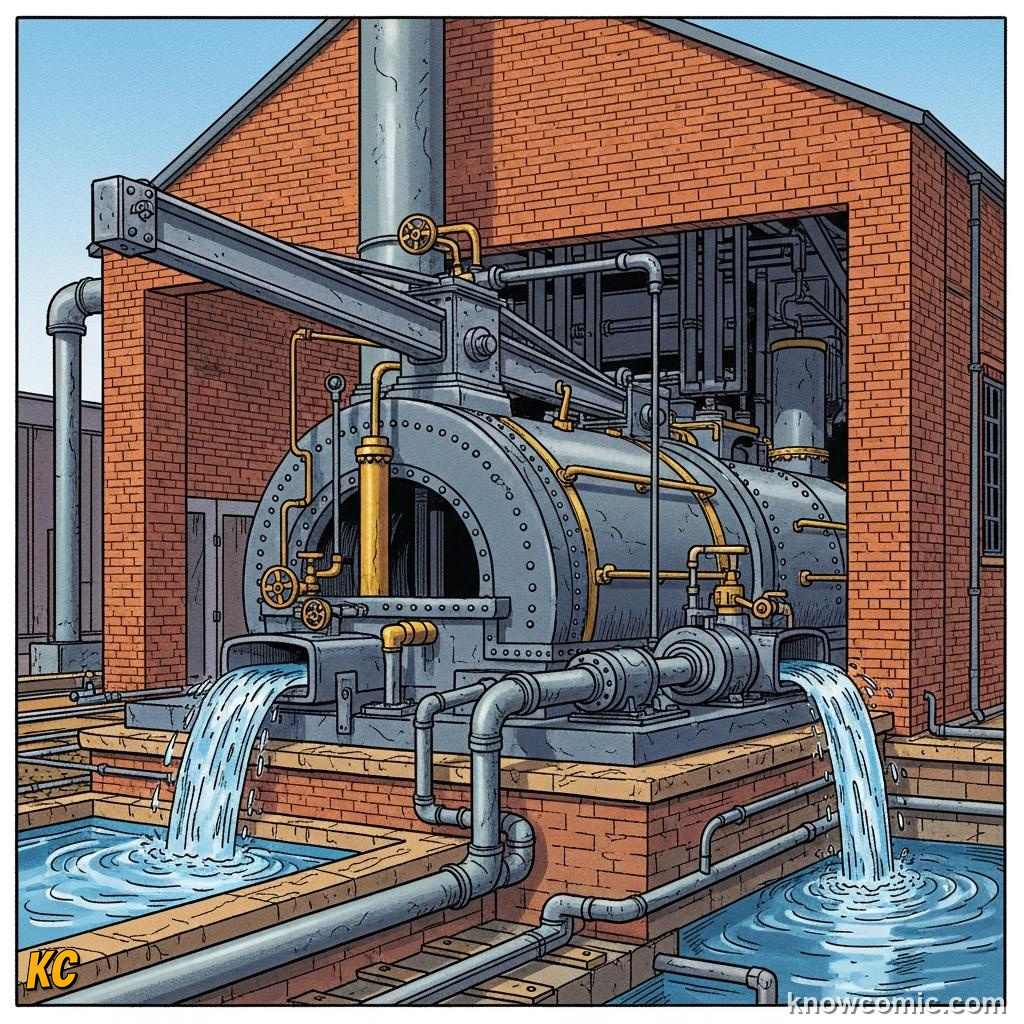
Early engines ate water and spat steam on purpose