🌀 THE CORIOLIS EFFECT: HOW EARTH'S ROTATION CURVES WINDS
PAGE 1 OF 5, A SPINNING PLANET UNDER YOUR FEET
EARTH TURNS
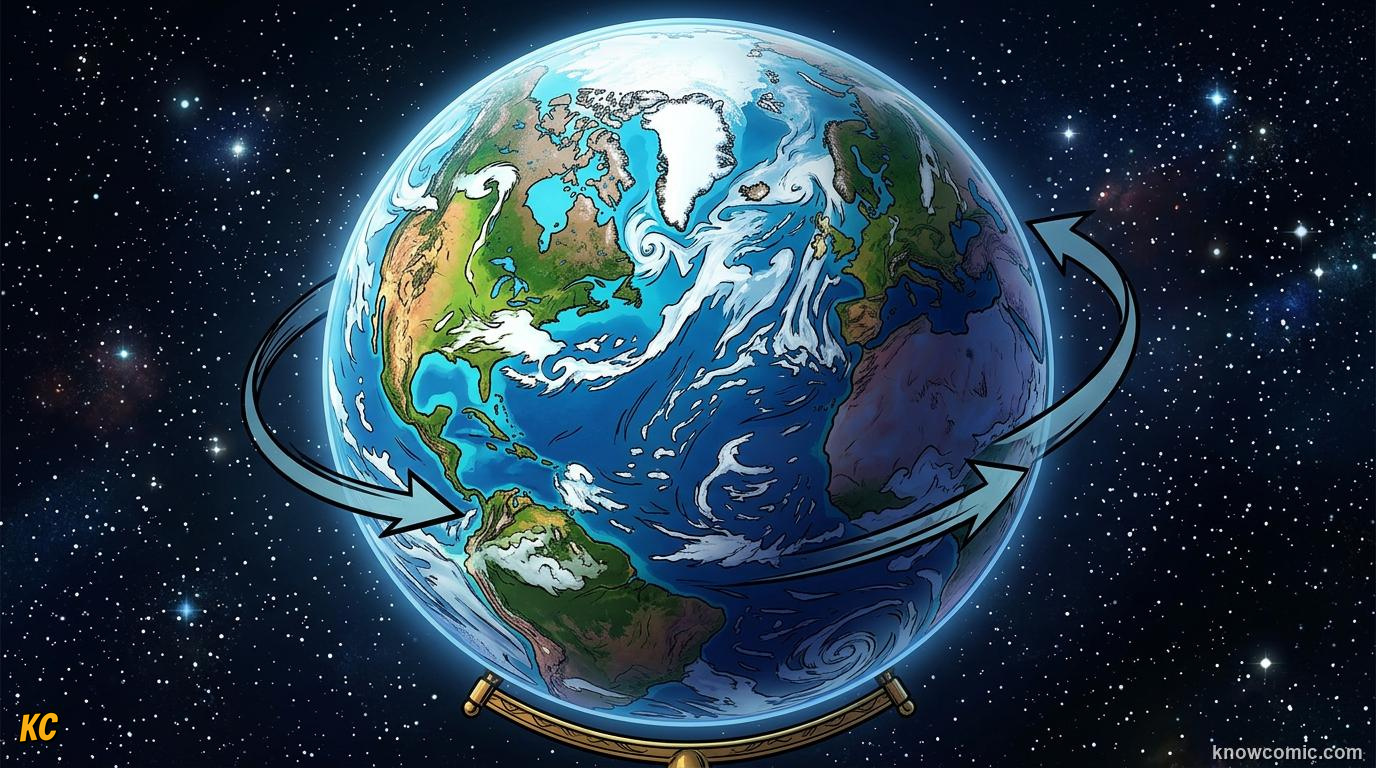
THE GROUND MOVES WHILE AIR KEEPS GOING
Earth spins once every 24 hours, turning from west to east. You do not feel it because everything around you spins too. But when a packet of air starts moving, the ground beneath it keeps rotating at a different speed. Near the equator the surface travels faster than near the poles. So moving air does not follow a straight line over the map. It gets pushed sideways. Scientists call this push the Coriolis effect, named after French engineer Gaspard-Gustave de Coriolis. Topic 6 (Wind) showed air rushing from high pressure to low pressure. Coriolis bends that flow and helps build the planet's big weather patterns.
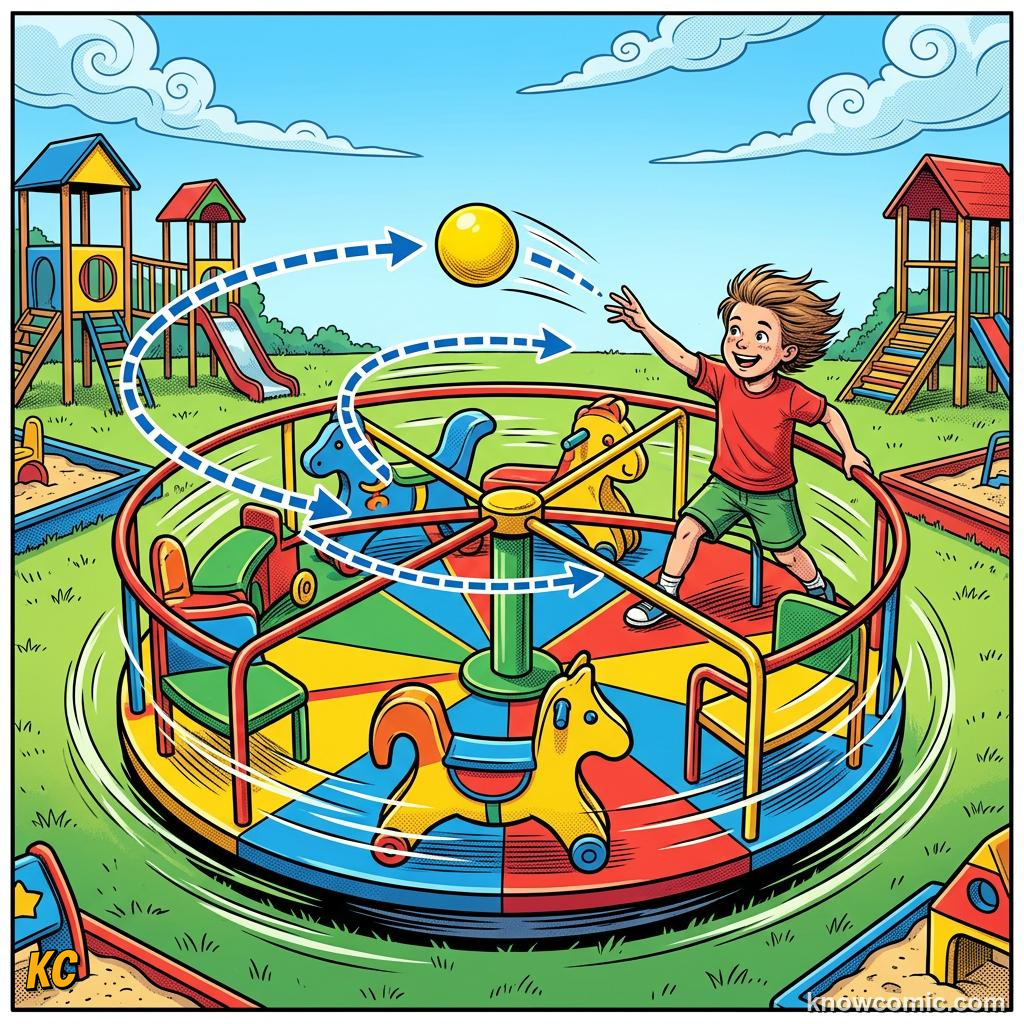
🎡 SPINNING RIDE
On a fast merry-go-round, a ball thrown straight seems to curve sideways. Earth's spin does something similar to winds and ocean currents over long distances.
SPIN!
DAY & NIGHT
🌍 Earth's rotation gives us day and night as different parts face the Sun.
🛰 Satellites track the spin precisely, and that same spin steers long-distance winds.
🛰 Satellites track the spin precisely, and that same spin steers long-distance winds.
NOT LOCAL
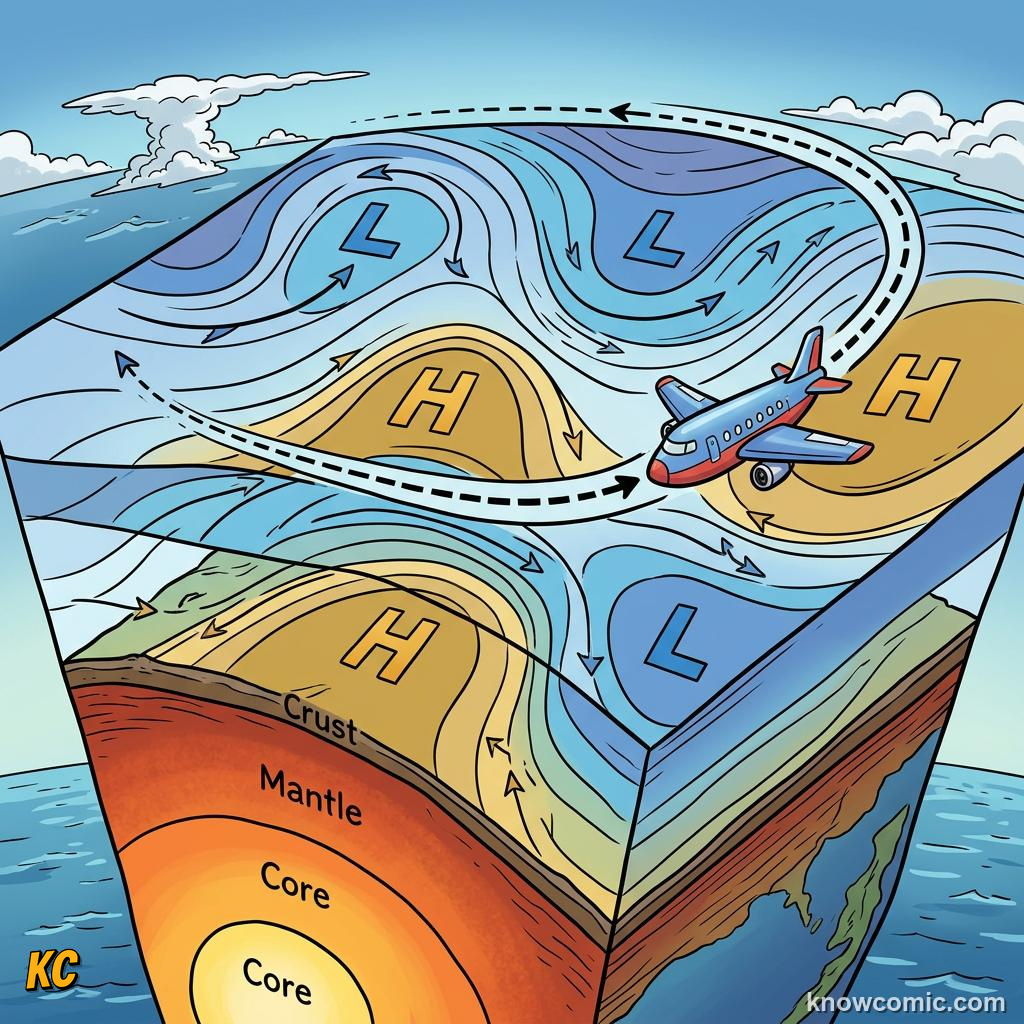
🚿 Coriolis is too weak to spin bathwater the way internet myths claim.
🌪 It matters most for large, slow-moving air masses over hundreds of kilometres.
🌪 It matters most for large, slow-moving air masses over hundreds of kilometres.