🔬
🌬️
⚽ FOR KIDS & EVERYONE · NO EXPERIENCE NEEDED

WORLD CUP
2026

🔬 Aerodynamics · Design · Swerve

📖 100 Topics 🆓 ALL FREE ⏱️ 5 min per comic 🧠 Quiz included
✏️
DESIGN
Panel Shape
🌬️
WIND TUNNEL
Lab Testing
🔍
TEXTURE
Surface Grip
✈️
FLIGHT
Swerve or Dip
🏆
WORLD CUP 2026
Match Ball
🔬 THE SCIENCE OF THE BALL
TOPIC 46 · WORLD CUP 2026 · LEVEL 4 · SCIENCE & TECH
PAGE 1 OF 5 · A FLYING LABORATORY
MORE THAN LEATHER
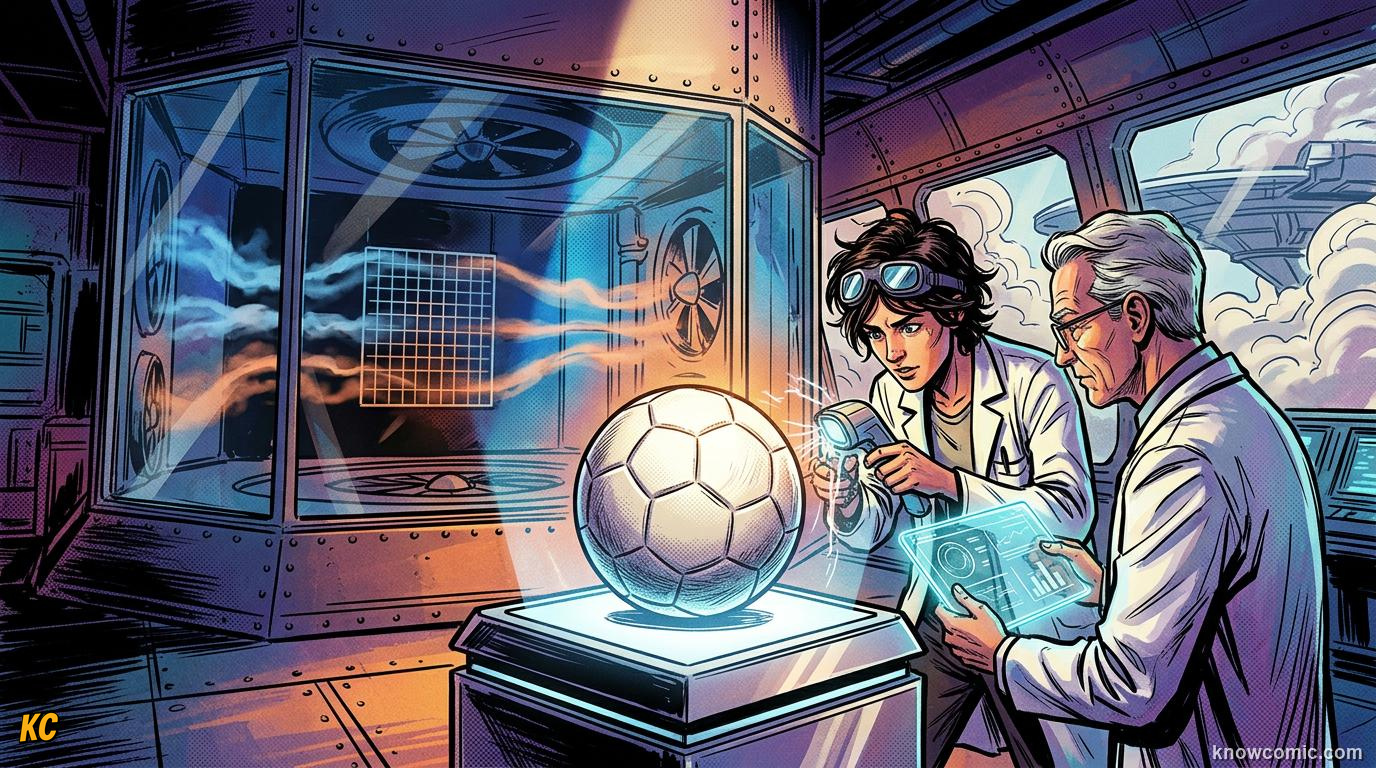
Comic panel titled the world cup ball is engineered, labelled more than leather, from the KnowComic World Cup 2026 lesson on the science of the ball
THE WORLD CUP BALL IS ENGINEERED
Every four years, a new World Cup ball arrives with a fresh name and bold design. It looks like a toy. It is actually a flying laboratory. Engineers spend years shaping panels, testing materials, and studying how air flows around a sphere at 100 kilometres per hour. The 2026 ball carries a motion sensor for offside tech, but its outer shell is pure aerodynamics. Panel count, seam depth, and surface texture all change how the ball moves through the air. A smooth ball can swerve wildly. A textured ball can grip the air and dip suddenly. Players notice tiny differences. Goalkeepers complain when a ball moves unpredictably. Strikers celebrate when it curves perfectly into the top corner. Science and sport collide inside every kick.
⚡ DID YOU KNOW?
World Cup balls are tested by robots that kick them thousands of times, plus real players in training camps, before FIFA approves them for the tournament.
KICK!
ENGINEERING
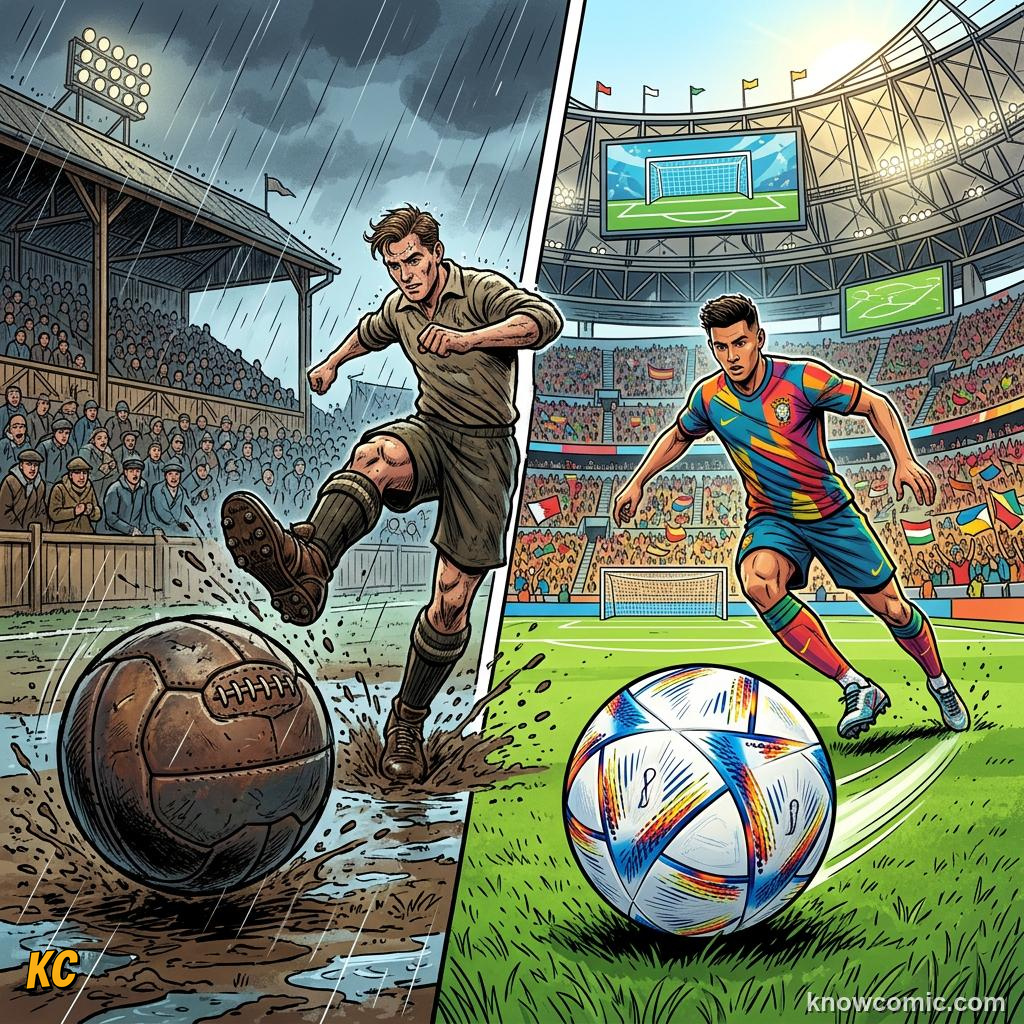
Comic panel titled from 32 panels to fewer seams, labelled engineering, from the KnowComic World Cup 2026 lesson on the science of the ball
🔬 Years of design and testing
📡 Sensor chip inside for tracking
FLIGHT
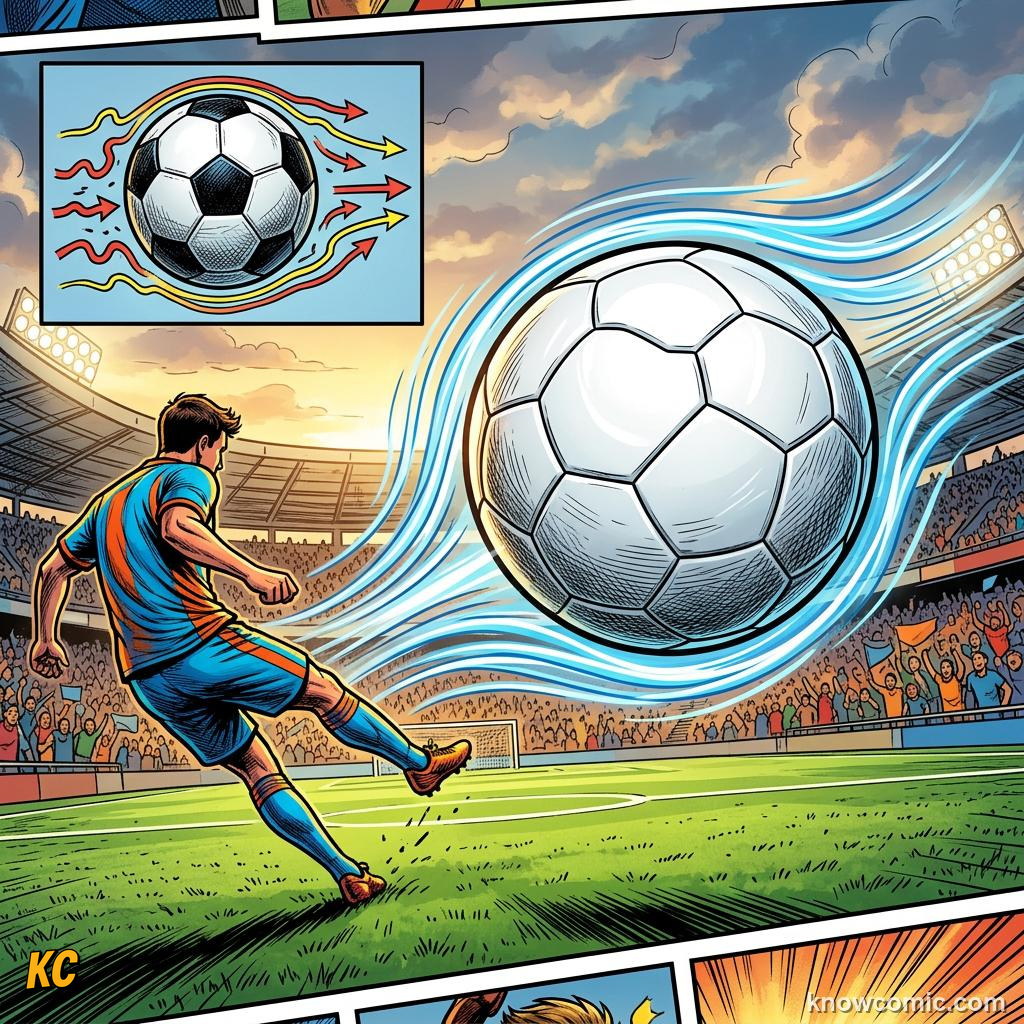
Comic panel titled from 32 panels to fewer seams, labelled flight, from the KnowComic World Cup 2026 lesson on the science of the ball
🌬️ Air flow decides the path
⚽ Swerve, dip, or fly straight
PAGE 2 OF 5 · PANEL DESIGN
PANELS AND SEAMS
Comic panel titled from 32 panels to fewer seams, labelled panels and seams, from the KnowComic World Cup 2026 lesson on the science of the ball
FROM 32 PANELS TO FEWER SEAMS
Old footballs had 32 leather patches, like a classic Telstar. Modern balls use fewer panels glued together with heat. The 2022 Al Rihla had just 20 panels. Fewer seams mean a smoother surface and less drag, but also trickier aerodynamics at high speed. Panel shape matters too. Curved panels wrap closer to a perfect sphere. Grooves between panels create tiny channels where air can grip or slip. Designers use computer models to simulate millions of flight paths before cutting a single prototype. Colour is not just decoration. High-contrast patterns help players spot spin in bright stadium lights. The ball must stay round after thousands of kicks, survive rain and heat, and feel stable on the boot. Every World Cup ball is a compromise between science, style, and the opinions of the world's best players.
⚡ FEWER PANELS
Modern World Cup balls use around 12 to 20 panels, down from 32 on classic balls. Fewer seams create a smoother surface that changes how air flows around the ball.
SHAPE!
SPHERE
Comic panel titled tested like a spacecraft, labelled sphere, from the KnowComic World Cup 2026 lesson on the science of the ball
⚽ Curved panels mimic a true sphere
📐 Round shape keeps flight stable
SEAMS
Comic panel titled tested like a spacecraft, labelled seams, from the KnowComic World Cup 2026 lesson on the science of the ball
🔗 Heat-welded seams, not stitches
🌬️ Grooves affect air grip
COLOUR
Comic panel titled tested like a spacecraft, labelled colour, from the KnowComic World Cup 2026 lesson on the science of the ball
🎨 Bold patterns help spot spin
💡 High contrast for stadium lights
PAGE 3 OF 5 · WIND TUNNEL TESTING
TUNNEL
Comic panel titled tested like a spacecraft, labelled tunnel, from the KnowComic World Cup 2026 lesson on the science of the ball
🌬️ Powerful fans blast air at the ball
📊 Sensors measure drag and lift
ROBOTS
Comic panel titled tested like a spacecraft, labelled robots, from the KnowComic World Cup 2026 lesson on the science of the ball
🤖 Robot legs kick balls all day
📈 Data logged on every flight path
LAB SCIENCE
Comic panel titled tested like a spacecraft, labelled lab science, from the KnowComic World Cup 2026 lesson on the science of the ball
TESTED LIKE A SPACECRAFT
Before a World Cup ball ever touches grass, it spends hours in wind tunnels. Engineers mount the ball on a rod and blast air at speeds matching a powerful shot. Smoke trails reveal how air swirls around the surface. Computers measure drag, the force that slows the ball, and lift, which can make it rise or dip. Balls spin on the rod to mimic curve shots. Robots with mechanical feet kick prototypes across indoor pitches while high-speed cameras film every wobble. Player testing comes next. Pros rate the feel on the boot, the weight in the air, and whether the flight feels honest. Adidas and FIFA tweak designs until the ball passes every test. The goal is predictable behaviour for passes and exciting movement for shots. Too wild and goalkeepers rebel. Too dull and fans complain about boring football.
⚡ WIND SPEED
Wind tunnels test balls at air speeds over 100 km/h, matching the velocity of a professional free kick.
TEST!
PAGE 4 OF 5 · TEXTURE AND AIR FLOW
SURFACE SCIENCE
Comic panel titled why texture changes everything, labelled surface science, from the KnowComic World Cup 2026 lesson on the science of the ball
WHY TEXTURE CHANGES EVERYTHING
A football's outer texture is not random. Microscopic bumps and dimples change how air sticks to the surface. Smooth balls let air flow cleanly at first, then separate suddenly at high speed, causing unpredictable swerves. Textured balls create a thin layer of turbulent air that clings longer, making flight more stable until spin takes over. The Jabulani at the 2010 World Cup was criticised for wobbling because its grooves behaved oddly in the air. Later balls added grippier surfaces that players trusted more. Surface coatings also repel water so rainy matches do not turn the ball into a slippery soap bar. Drag and lift shift with every kick speed. A soft pass needs a steady, straight path. A thunderous shot needs controlled movement, not wild zigzags. Designers balance these forces like aircraft engineers shaping a wing.
⚡ DRAG AND LIFT
Drag slows the ball down. Lift pushes it up or down. Texture and spin control both forces, deciding whether a shot dips under the bar or swerves wide.
GRIP!
SMOOTH
Comic panel titled the ball at world cup 2026, labelled smooth, from the KnowComic World Cup 2026 lesson on the science of the ball
🌊 Clean air flow at low speed
💨 Sudden swerve at high speed
TEXTURED
Comic panel titled the ball at world cup 2026, labelled textured, from the KnowComic World Cup 2026 lesson on the science of the ball
🔍 Micro bumps grip the air
✅ More stable, predictable flight
RAIN
Comic panel titled the ball at world cup 2026, labelled rain, from the KnowComic World Cup 2026 lesson on the science of the ball
💧 Water-repellent coating
⚽ Same grip in wet weather
PAGE 5 OF 5 · SWERVE, DIP, OR STRAIGHT
MATCH DAY
Comic panel titled the ball at world cup 2026, labelled match day, from the KnowComic World Cup 2026 lesson on the science of the ball
THE BALL AT WORLD CUP 2026
When the first match kicks off in 2026, every pass and shot will ride on years of aerodynamic research. The official ball combines a tuned panel design, grippy texture, and an inner sensor for offside tracking. Free-kick specialists will study its flight in training. Goalkeepers will judge its swerve in warm-ups. A knuckleball with no spin can still flutter unpredictably. A whipped cross with heavy spin will curve on command. Straight rockets depend on clean contact and stable drag. The ball does not score goals alone. It obeys physics plus the player's skill. World Cup history is full of ball debates, from the super-light Teamgeist to the aerodynamic Brazuca. Each tournament writes a new chapter in ball science. The 2026 edition aims to be fast, fair, and thrilling. Whether it flies straight or bends like a banana, now you know the engineering hiding under those colourful panels.
⚡ WORLD CUP 2026
The 2026 World Cup ball is designed for North American conditions, from hot desert stadiums to humid coastal cities, with aerodynamics tested for every climate.
GOAL!
SHOT TYPES
Comic panel labelled shot types, illustrating the science of the ball in KnowComic's World Cup 2026 series
🌀 Spin creates curve
📉 No spin can cause flutter
REMEMBER
🔬 KEY FACTS
Panel shape and seam count affect drag. Wind tunnels test flight at match speeds. Surface texture controls air grip. Spin plus design decide whether the ball swerves, dips, or flies straight.
✏️ Design shapes every panel
🌬️ Wind tunnels test the flight
🏆 Science meets World Cup 2026
🧠 QUIZ TIME!
THE SCIENCE OF THE BALL · 5 QUESTIONS
QUESTION 01
Where are World Cup balls tested before a tournament?
QUESTION 02
How do fewer panels on a modern ball affect its flight?
QUESTION 03
What is drag in ball science?
QUESTION 04
Why does surface texture matter on a football?
QUESTION 05
What extra technology is inside the modern World Cup ball?
0/5
LOADING...
← TOPIC 45 📋 ALL TOPICS TOPIC 47 →