🏃
💪
📊
⚽ FOR KIDS & EVERYONE · NO EXPERIENCE NEEDED

WORLD CUP
2026

🏃 Stamina · Sprint · Recovery

📖 100 Topics 🆓 ALL FREE ⏱️ 5 min per comic 🧠 Quiz included
SPRINT
Explosive Bursts
❤️
STAMINA
90 Minutes
📊
TRACK
GPS Data
🧊
RECOVER
Rest and Fuel
🏆
WORLD CUP 2026
Peak Fitness
🏃 FOOTBALLER FITNESS: 10 KM A MATCH
TOPIC 48 · WORLD CUP 2026 · LEVEL 4 · SCIENCE & TECH
PAGE 1 OF 5 · THE 10 KM FACT
MATCH DAY ENGINE
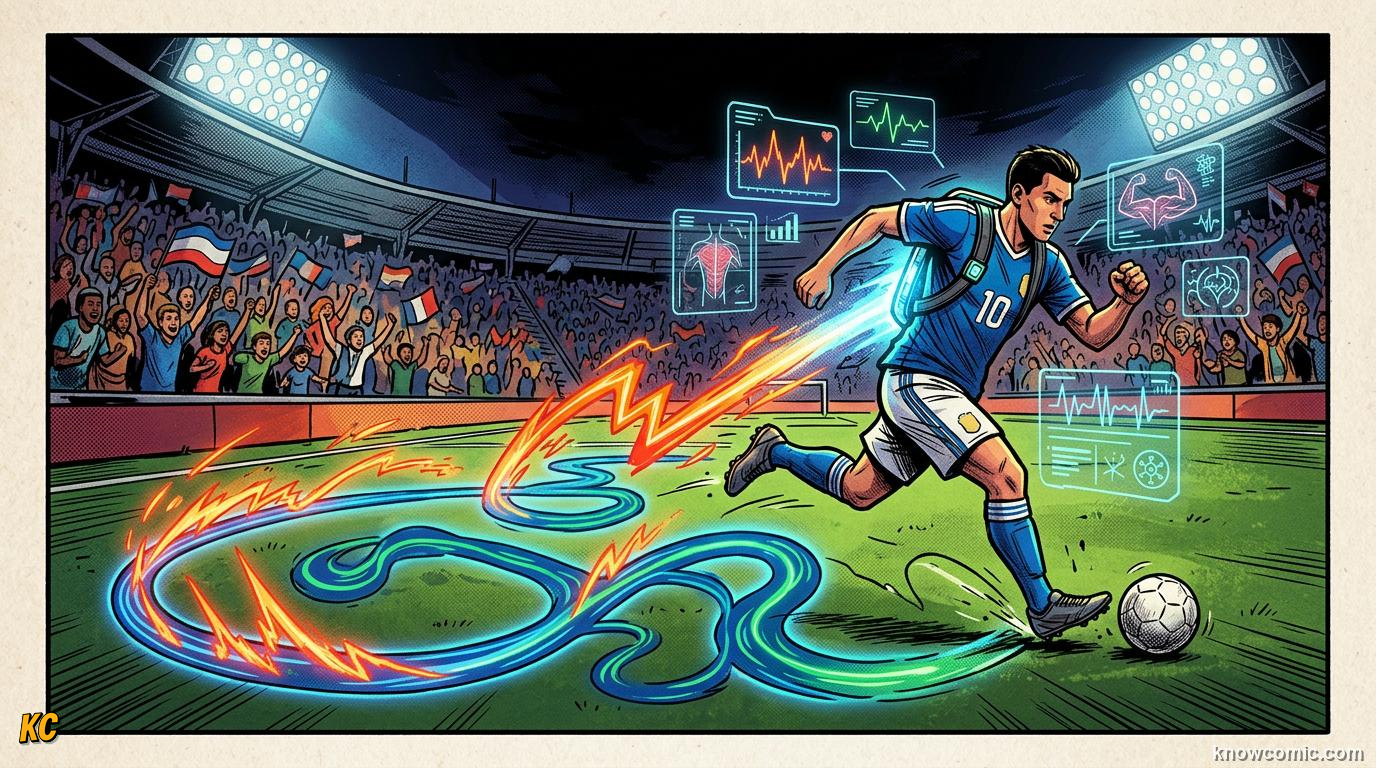
Comic panel titled how far pros really run, labelled match day engine, from the KnowComic World Cup 2026 lesson on footballer fitness - 10 km a match
HOW FAR PROS REALLY RUN
Footballers do not jog casually for ninety minutes. They mix walking, jogging, sprinting, jumping, and sudden stops. GPS trackers show that midfielders often cover 11 to 12 kilometres per match. Strikers and centre-backs might run 9 to 10 kilometres. That is like running around a school track twenty-five times, but with tackles, headers, and sprints thrown in. About 800 to 1,000 of those metres are high-intensity bursts at speeds over 20 km/h. A single sprint can hit 35 km/h, faster than most people ride a bicycle. World Cup players repeat this workload every few days during a tournament. No wonder they collapse at the final whistle. The ten-kilometre number is an average, but it captures the incredible engine every elite footballer needs. Fitness is not optional at the top level. It is the foundation under every skill.
⚡ DID YOU KNOW?
Midfielders cover the most distance in a match, often over 11 km. Goalkeepers run the least, around 4 to 5 km, but still need explosive power for dives and throws.
RUN!
DISTANCE
Comic panel titled stop, go, repeat, labelled distance, from the KnowComic World Cup 2026 lesson on footballer fitness - 10 km a match
📏 About 10 km per match on average
🏃 Position changes the total
INTENSITY

Comic panel titled stop, go, repeat, labelled intensity, from the KnowComic World Cup 2026 lesson on footballer fitness - 10 km a match
⚡ Hundreds of sprints per game
💥 Bursts up to 35 km/h
PAGE 2 OF 5 · SPRINT SCIENCE
EXPLOSIVE POWER
Comic panel titled stop, go, repeat, labelled explosive power, from the KnowComic World Cup 2026 lesson on footballer fitness - 10 km a match
STOP, GO, REPEAT
Football is a sprint sport disguised as an endurance game. Players accelerate from standing still dozens of times per half. Each burst lasts 2 to 5 seconds and drains fast-twitch muscle fibres. Wingers sprint down the line. Full-backs recover to block crosses. Strikers chase through balls. Between sprints, they jog or walk to recover, but the heart rate rarely drops fully. This stop-start pattern is harder on the body than steady running. Training mimics it. Interval sessions alternate all-out sprints with short rests. Plyometric drills build explosive leg power for the first three steps. Strength work in the gym protects knees and hamstrings from the constant acceleration. Speed without stamina is useless by minute 70. Stamina without speed loses you the ball. World Cup squads train both, because knockout matches can go to extra time when legs turn to jelly.
⚡ SPRINT COUNT
Elite players perform 150 to 250 sprints per match. Each one demands explosive power from legs that have already run kilometres.
GO!
ACCELERATION
Comic panel titled the world cup body, labelled acceleration, from the KnowComic World Cup 2026 lesson on footballer fitness - 10 km a match
🚀 First three steps win the race
🦵 Plyometrics build leg power
INTERVALS
Comic panel titled the world cup body, labelled intervals, from the KnowComic World Cup 2026 lesson on footballer fitness - 10 km a match
🔄 Sprint-rest cycles in training
❤️ Heart rate stays match-ready
STRENGTH
Comic panel titled the world cup body, labelled strength, from the KnowComic World Cup 2026 lesson on footballer fitness - 10 km a match
🏋️ Gym work protects muscles
🛡️ Stronger legs resist injury
PAGE 3 OF 5 · BUILDING STAMINA
AEROBIC
Comic panel titled the world cup body, labelled aerobic, from the KnowComic World Cup 2026 lesson on footballer fitness - 10 km a match
🫁 Long runs build aerobic base
❤️ Bigger engine for 90 minutes
ANAEROBIC
Comic panel titled the world cup body, labelled anaerobic, from the KnowComic World Cup 2026 lesson on footballer fitness - 10 km a match
🔥 Short bursts use anaerobic power
⚡ Recharged between plays
TRAINING BLOCKS
Comic panel titled the world cup body, labelled training blocks, from the KnowComic World Cup 2026 lesson on footballer fitness - 10 km a match
THE WORLD CUP BODY
Building a World Cup body takes years. Pre-season focuses on aerobic base: long runs, cycling, and swimming that expand the heart and lungs. As the season approaches, training shifts to match-specific drills. Small-sided games replicate the sprint-jog rhythm of real football. Sports scientists measure VO2 max, the maximum oxygen a player can use. Higher VO2 max means more fuel for late-match sprints. Lactate threshold matters too. It is the point where legs start burning. Training pushes that threshold higher so players recover faster between bursts. Altitude camps in mountains boost red blood cells. Heat training prepares squads for summer World Cups. Every national team employs fitness coaches, physios, and nutritionists working as one unit. By kickoff in 2026, squads aim to peak physically for the knockout rounds when the trophy is decided.
⚡ VO2 MAX
Elite footballers often have a VO2 max above 60 ml/kg/min. That is similar to elite cyclists and shows how fit the modern game demands players to be.
TRAIN!
PAGE 4 OF 5 · TRACKING EVERY STEP
GPS VESTS
Comic panel titled data under the shirt, labelled gps vests, from the KnowComic World Cup 2026 lesson on footballer fitness - 10 km a match
DATA UNDER THE SHIRT
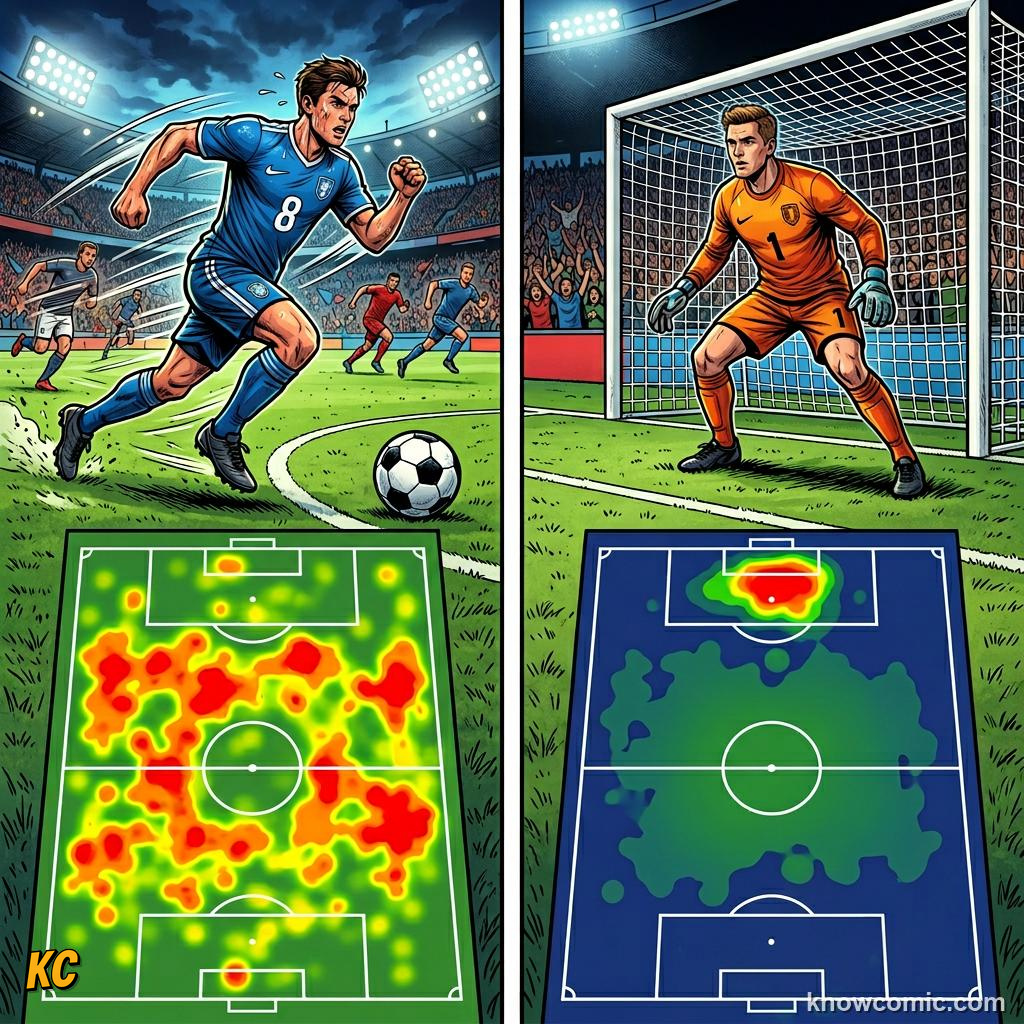
Modern players wear GPS trackers in tight vests under their shirts. The device logs distance, top speed, acceleration, and heart rate every second. Coaches see live dashboards on tablets at the sideline. If a midfielder covers less ground than usual, they might be carrying an injury. If a winger hits fewer sprints, fatigue is setting in. Heat maps show where players spend the most time on the pitch. Training loads are managed carefully. Too much sprint work risks hamstring tears. Too little and players gas out in the 80th minute. World Cup squads use the same tech in camp. Fitness staff compare match data across the tournament to plan rotations. Star players may rest in group games to save legs for knockouts. Every step is counted, every heartbeat logged. Football fitness is now a science measured in numbers, not just sweat.
⚡ LIVE DATA
GPS vests update up to 10 times per second. Coaches can see a player's speed and position on the pitch in real time during training and matches.
DATA!
DISTANCE
Comic panel titled ready for world cup 2026, labelled distance, from the KnowComic World Cup 2026 lesson on footballer fitness - 10 km a match
📏 Total km covered per player
🗺️ Heat maps show positioning
HEART RATE
Comic panel titled ready for world cup 2026, labelled heart rate, from the KnowComic World Cup 2026 lesson on footballer fitness - 10 km a match
❤️ Monitors effort and fatigue
🔄 Helps plan player rotations
LOAD
Comic panel titled ready for world cup 2026, labelled load, from the KnowComic World Cup 2026 lesson on footballer fitness - 10 km a match
📊 Training load prevents injury
⚖️ Balance work and rest days
PAGE 5 OF 5 · RECOVERY AND FUEL
BOUNCE BACK
Comic panel titled ready for world cup 2026, labelled bounce back, from the KnowComic World Cup 2026 lesson on footballer fitness - 10 km a match
READY FOR WORLD CUP 2026
Running ten kilometres is only half the battle. Recovery decides who survives a month-long World Cup. Ice baths reduce muscle swelling. Compression boots pump blood through tired legs. Massage and stretching keep hamstrings flexible. Sleep is the secret weapon: eight to ten hours rebuilds muscle and resets the brain. Nutrition fuels everything. Carbohydrates refill glycogen stores in muscles. Protein repairs torn fibres. Hydration with electrolytes replaces sweat lost in heat. Teams travel with chefs and sports dietitians who plan every meal. The 2026 tournament spans three countries and summer heat. Squads will rotate players, manage travel fatigue, and use sports science to stay fresh. The fittest team does not always win the World Cup. But no team wins without world-class fitness. Ten kilometres per match, hundreds of sprints, and smart recovery. That is the science behind the athletes you will cheer in 2026.
⚡ WORLD CUP 2026
The expanded 48-team, 104-match format means more games and less rest. Fitness and recovery science will matter more than ever.
STRONG!
FUEL
Comic panel labelled fuel, illustrating footballer fitness - 10 km a match in KnowComic's World Cup 2026 series
🍝 Carbs and protein refill energy
💧 Hydration beats the heat
REMEMBER
🏃 KEY FACTS
Pros run about 10 km per match with 150 to 250 sprints. Training builds aerobic stamina and explosive speed. GPS vests track every step. Recovery, sleep, and nutrition keep players ready.
⚡ Sprints demand explosive power
📊 GPS tracks every movement
🏆 Fitness fuels World Cup 2026
🧠 QUIZ TIME!
FOOTBALLER FITNESS: 10 KM A MATCH · 5 QUESTIONS
QUESTION 01
How far does the average outfield player run in a match?
QUESTION 02
How many sprints does an elite player typically perform per match?
QUESTION 03
What do GPS vests worn under shirts measure?
QUESTION 04
What is VO2 max?
QUESTION 05
Why is recovery so important during a World Cup tournament?
0/5
LOADING...
← TOPIC 47 📋 ALL TOPICS TOPIC 49 →