🍝
💧
🥗
⚽ FOR KIDS & EVERYONE · NO EXPERIENCE NEEDED

WORLD CUP
2026

🍝 Food · Energy · Hydration

📖 100 Topics 🆓 ALL FREE ⏱️ 5 min per comic 🧠 Quiz included
🍝
CARBS
Pre-Match Fuel
💧
HYDRATE
Sweat and Sip
ELECTROLYTES
Salt Balance
🥩
PROTEIN
Post-Match Repair
👨‍🍳
WORLD CUP 2026
Team Chefs
🍝 NUTRITION: FUEL OF CHAMPIONS
TOPIC 49 · WORLD CUP 2026 · LEVEL 4 · SCIENCE & TECH
PAGE 1 OF 5 · PRE-MATCH FUEL
THE CARB LOAD
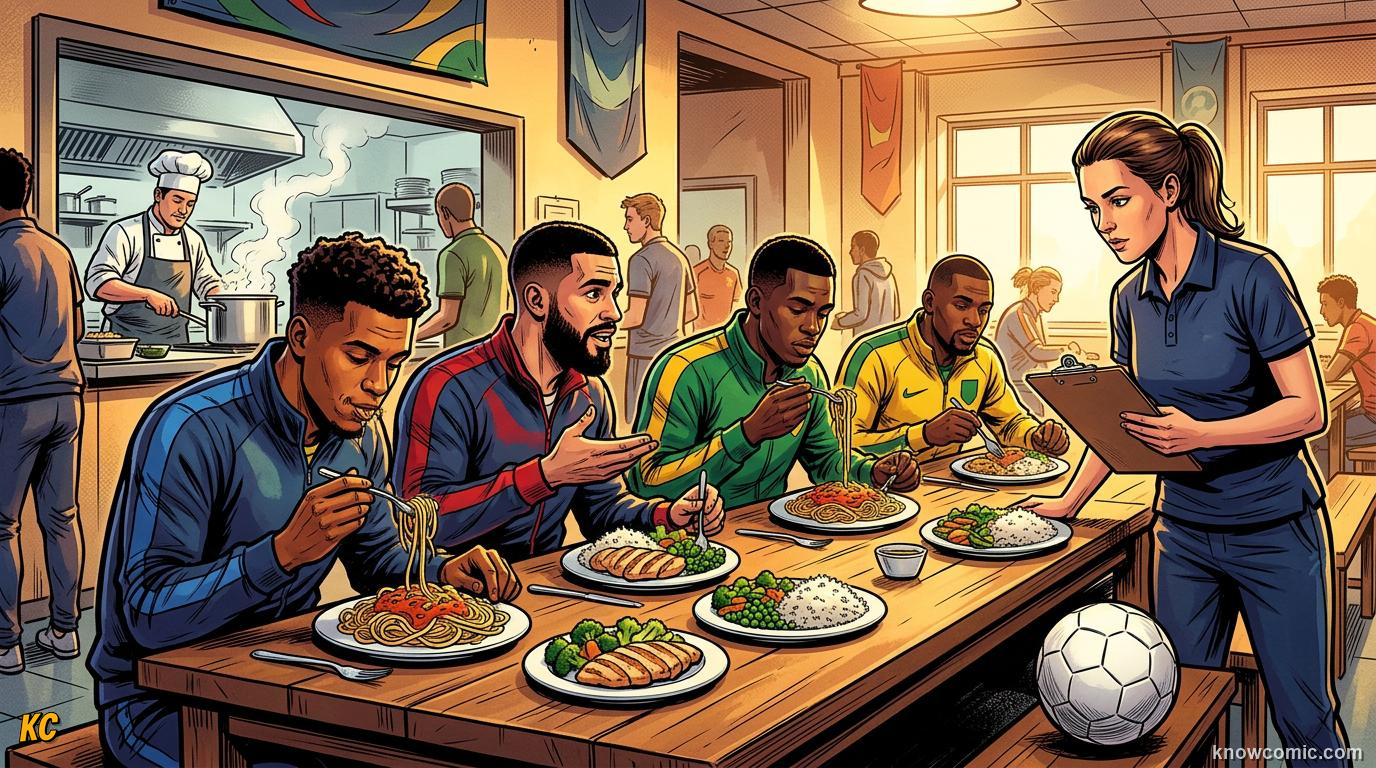
Comic panel titled eating for kickoff, labelled the carb load, from the KnowComic World Cup 2026 lesson on nutrition - fuel of champions
EATING FOR KICKOFF
Football is powered by glycogen, a stored form of carbohydrate in muscles and the liver. Elite players eat a carb-rich meal three to four hours before kickoff. Pasta, rice, potatoes, and bread are favourites because they digest steadily and release energy over ninety minutes. A typical pre-match plate might include grilled chicken with penne, or salmon with sweet potato. Fat and fibre are kept low so the stomach stays calm during sprints. Sports dietitians call this carb loading, and squads start building stores days before a big match. Tournament nutrition is not guesswork. Every gram is weighed, timed, and logged. When you see players line up for the anthem, their fuel tanks are already full. Without enough carbs, legs feel heavy by the second half. With the right fuel, they can sprint in minute 89. Food is the first weapon in a footballer's kit.
⚡ DID YOU KNOW?
A footballer can burn 1,000 to 1,500 calories during a match. Most of that energy comes from glycogen stored in muscles, which carbs refill after every meal.
FUEL!
TIMING
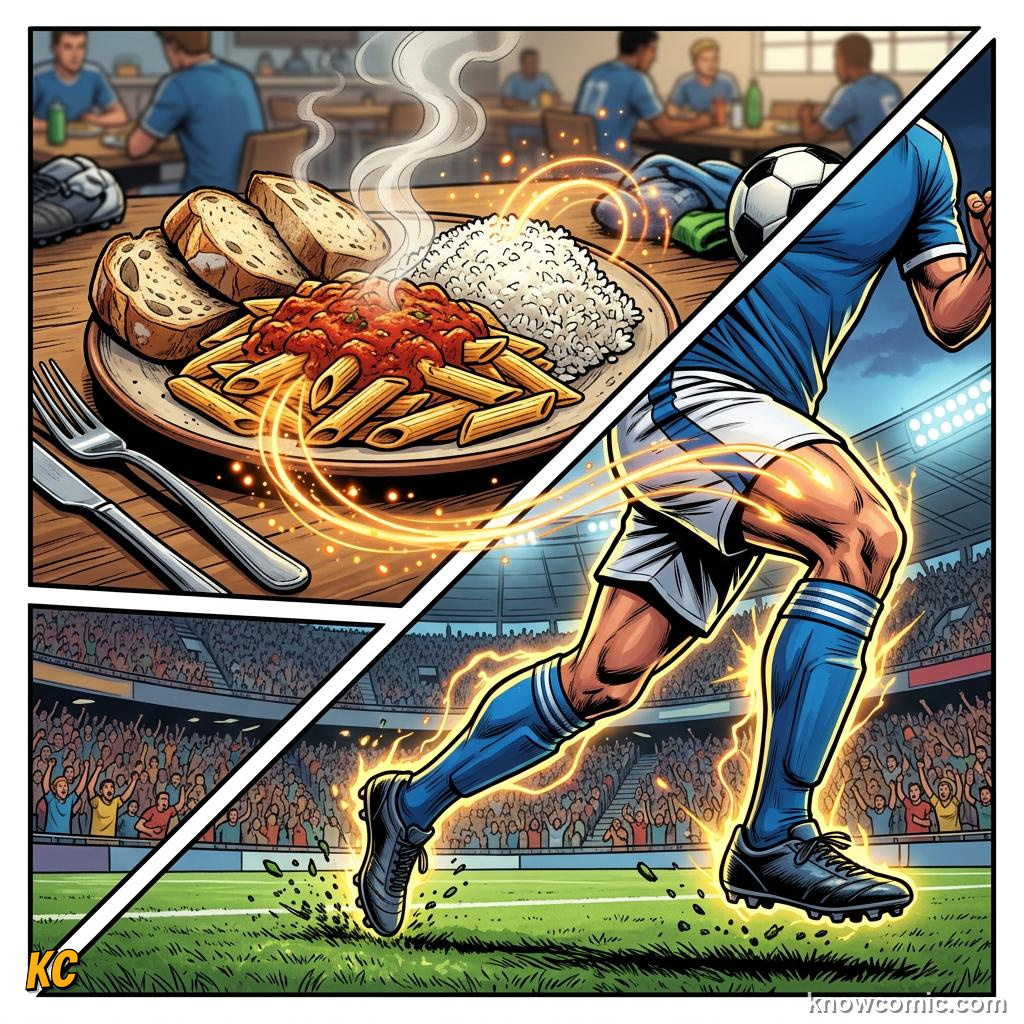
Comic panel titled what's on the plate, labelled timing, from the KnowComic World Cup 2026 lesson on nutrition - fuel of champions
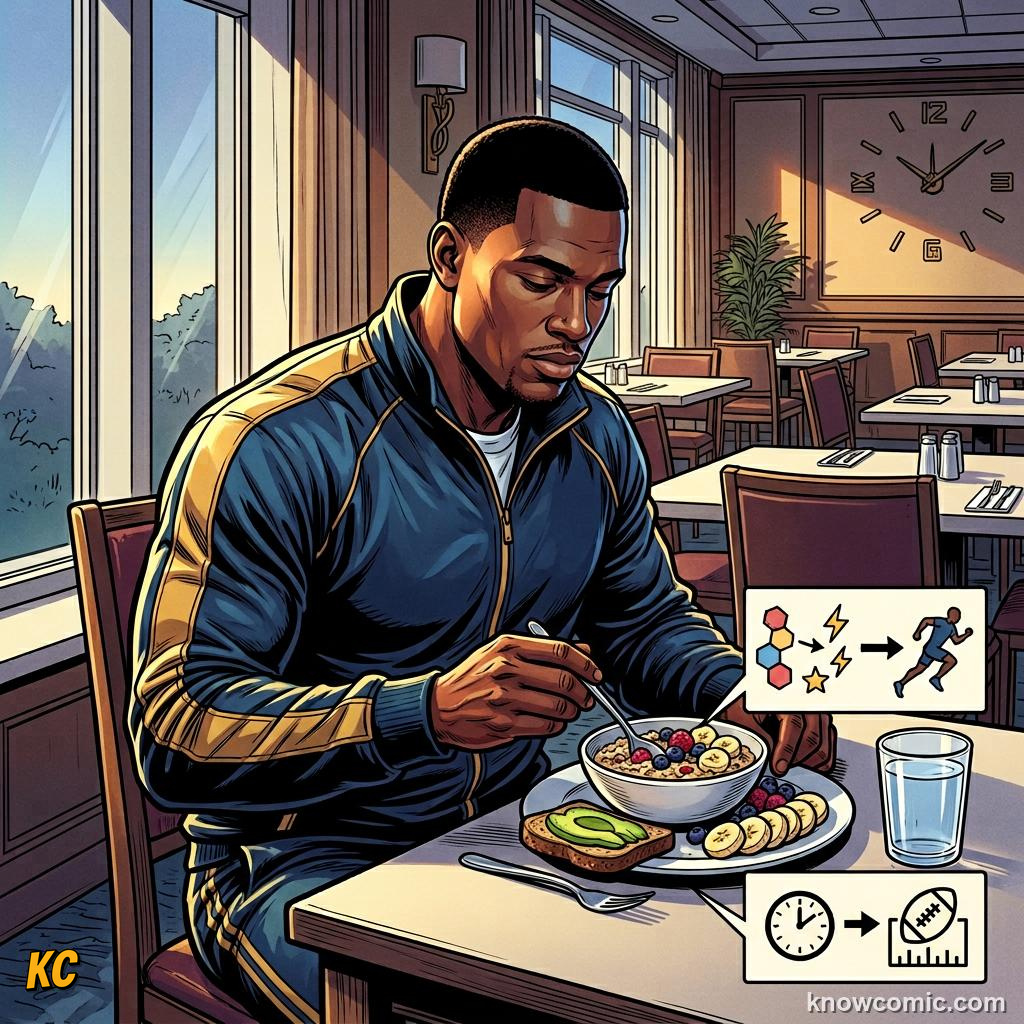
⏰ Big meal 3 to 4 hours before
🍌 Light snack 60 minutes prior
GLYCOGEN
Comic panel titled what's on the plate, labelled glycogen, from the KnowComic World Cup 2026 lesson on nutrition - fuel of champions
🔋 Muscles store match energy
🍝 Pasta and rice top up tanks
PAGE 2 OF 5 · MATCH-DAY MENU
TEAM DINING ROOM
Comic panel titled what's on the plate, labelled team dining room, from the KnowComic World Cup 2026 lesson on nutrition - fuel of champions
WHAT'S ON THE PLATE?
National teams travel with full nutrition teams. Sports dietitians design menus for every training day, travel day, and match day. Breakfast might be porridge with berries, eggs, and wholegrain toast. Lunch balances lean protein with rice or quinoa. Snacks include yoghurt, fruit, and energy bars approved by the medical staff. Players avoid fried food, heavy cream sauces, and unfamiliar dishes that could upset the stomach. Halftime is short, but some squads sip carb gels or diluted sports drinks for a quick boost. Individual plans matter too. A winger might need more carbs than a goalkeeper. A player with a gluten allergy gets a separate menu. Chefs cook in team hotels and training bases so food is consistent from camp to camp. At the World Cup, where squads move between cities and countries, that control is priceless. You cannot win on an empty tank or a queasy gut.
⚡ MATCH DAY
Many squads aim for 6 to 10 grams of carbs per kilogram of body weight on match days. That means a 75 kg midfielder might eat 450 to 750 grams of carbs spread across meals.
EAT!
BREAKFAST
Comic panel titled why hydration wins games, labelled breakfast, from the KnowComic World Cup 2026 lesson on nutrition - fuel of champions
🥣 Porridge and eggs start the day
🫐 Fruit adds vitamins and fibre
HALFTIME
Comic panel titled why hydration wins games, labelled halftime, from the KnowComic World Cup 2026 lesson on nutrition - fuel of champions
🍊 Orange slices on the bench
⚡ Carb gels for a quick boost
PERSONAL
Comic panel titled why hydration wins games, labelled personal, from the KnowComic World Cup 2026 lesson on nutrition - fuel of champions
📋 Custom plans per position
🚫 No risky new foods on match day
PAGE 3 OF 5 · HYDRATION SCIENCE
SWEAT
Comic panel titled why hydration wins games, labelled sweat, from the KnowComic World Cup 2026 lesson on nutrition - fuel of champions
💦 Players lose 1 to 3 litres per match
🌡️ Heat doubles sweat rate
SIP
Comic panel titled why hydration wins games, labelled sip, from the KnowComic World Cup 2026 lesson on nutrition - fuel of champions
🥤 Small sips every 15 to 20 minutes
🚰 Plain water for light sessions
WATER POWER
Comic panel titled why hydration wins games, labelled water power, from the KnowComic World Cup 2026 lesson on nutrition - fuel of champions
WHY HYDRATION WINS GAMES
Dehydration is a silent opponent. Lose just 2 percent of body weight in sweat and reaction time slows, sprint speed drops, and decision-making gets fuzzy. Footballers sweat heavily even in cool weather. In summer heat, a midfielder can lose two to three litres of fluid in ninety minutes. Teams monitor urine colour and body weight before and after training to track hydration. Players drink steadily through the day, not just at halftime. Sports drinks with electrolytes help during intense sessions because sweat carries away sodium, potassium, and magnesium. Plain water works for light training, but match days demand more. Goalkeepers and subs still hydrate even with less running. World Cup 2026 will be played across the USA, Mexico, and Canada in June and July. Stadiums in Texas and Mexico City can push past 35 degrees Celsius. Hydration plans will be as important as passing drills. A cramp in the 85th minute often starts with a dry water bottle at breakfast.
⚡ HEAT ALERT
FIFA allows extra cooling breaks in extreme heat. Hydrated players recover faster during those pauses and stay sharper when play resumes.
SIP!
PAGE 4 OF 5 · ELECTROLYTES AND RECOVERY
AFTER THE WHISTLE
Comic panel titled protein repairs the engine, labelled after the whistle, from the KnowComic World Cup 2026 lesson on nutrition - fuel of champions
PROTEIN REPAIRS THE ENGINE
When the final whistle blows, recovery nutrition begins. Muscles are full of tiny tears from sprints, tackles, and jumps. Protein helps repair them. Most squads aim for 20 to 40 grams of protein within 30 to 60 minutes after a match. Chocolate milk is a popular recovery drink because it blends protein, carbs, and fluid in one cup. Grilled chicken, fish, eggs, and Greek yoghurt appear on post-match buffets. Carbs return too, because the body needs both to refill glycogen and rebuild muscle. Electrolytes replace the salt lost in sweat. Sodium keeps nerves and muscles firing correctly. Potassium prevents cramps. Magnesium supports energy production. Sports drinks, electrolyte tablets, and salty snacks all play a role. Sleep and ice baths help, but without food the body cannot bounce back before the next session. In a World Cup with games every few days, recovery meals are scheduled like training sessions. Miss the window and tomorrow's legs feel like lead.
⚡ RECOVERY WINDOW
The first hour after a match is prime time for recovery nutrition. Carbs plus protein together work better than either one alone.
REPAIR!
PROTEIN
Comic panel titled nutrition at world cup 2026, labelled protein, from the KnowComic World Cup 2026 lesson on nutrition - fuel of champions
🥩 Chicken, fish, and eggs repair muscle
🥛 Chocolate milk is a squad favourite
SODIUM
Comic panel titled nutrition at world cup 2026, labelled sodium, from the KnowComic World Cup 2026 lesson on nutrition - fuel of champions
🧂 Salt replaces sweat losses
⚡ Keeps muscles and nerves sharp
CRAMPS
Comic panel titled nutrition at world cup 2026, labelled cramps, from the KnowComic World Cup 2026 lesson on nutrition - fuel of champions
🦵 Cramps often mean low electrolytes
💧 Drink before you feel thirsty
PAGE 5 OF 5 · CHEFS AND WORLD CUP HEAT
TEAM KITCHEN
Comic panel titled nutrition at world cup 2026, labelled team kitchen, from the KnowComic World Cup 2026 lesson on nutrition - fuel of champions
NUTRITION AT WORLD CUP 2026
Behind every World Cup squad is a kitchen crew you never see on TV. Team chefs and sports dietitians travel with the squad, cooking familiar meals in foreign hotels. They source local ingredients but stick to trusted recipes. Food safety is strict: no undercooked meat, no street food risks, no surprises. The 2026 tournament stretches across three nations with different climates. A team playing in cool Vancouver one week might face humid Houston the next. Nutrition plans adapt to altitude, heat, and travel fatigue. Cooling towels, icy drinks, and extra sodium help in hot stadiums. Lighter meals and more fluids ease long flights. Players who eat well sleep better and recover faster between the 104 matches of this expanded World Cup. Fans see goals and saves. Staff see meal schedules, hydration charts, and supplement logs. Champions are built in the gym and on the pitch, but they are fuelled in the dining room. Science turned football nutrition from guesswork into a winning strategy.
⚡ WORLD CUP 2026
The 48-team format means shorter rest between games for many squads. Smart eating and drinking will separate teams that survive the group stage from those that fade in the heat.
CHEFS!
TRAVEL
Comic panel labelled travel, illustrating nutrition - fuel of champions in KnowComic's World Cup 2026 series
✈️ Chefs follow squads city to city
🌡️ Menus shift for heat and altitude
REMEMBER
🍝 KEY FACTS
Carbs fuel muscles before kickoff. Hydration and electrolytes beat heat and cramps. Protein plus carbs repair the body after matches. Team chefs and dietitians plan every plate at World Cup 2026.
🍝 Pasta and rice load glycogen
💧 Sip fluids all day long
🏆 Food fuels World Cup glory
🧠 QUIZ TIME!
NUTRITION: FUEL OF CHAMPIONS · 5 QUESTIONS
QUESTION 01
What do footballers mainly eat before a match to store energy?
QUESTION 02
Why is hydration so important during a football match?
QUESTION 03
What is the best time to eat protein after a match?
QUESTION 04
What do electrolytes like sodium and potassium do for players?
QUESTION 05
Why will nutrition matter extra at World Cup 2026?
0/5
LOADING...
← TOPIC 48 📋 ALL TOPICS TOPIC 50 →