🧠 REACTION TIME: THE KEEPER'S BRAIN
PAGE 1 OF 5 · THE HALF-SECOND PENALTY
PENALTY SPOT
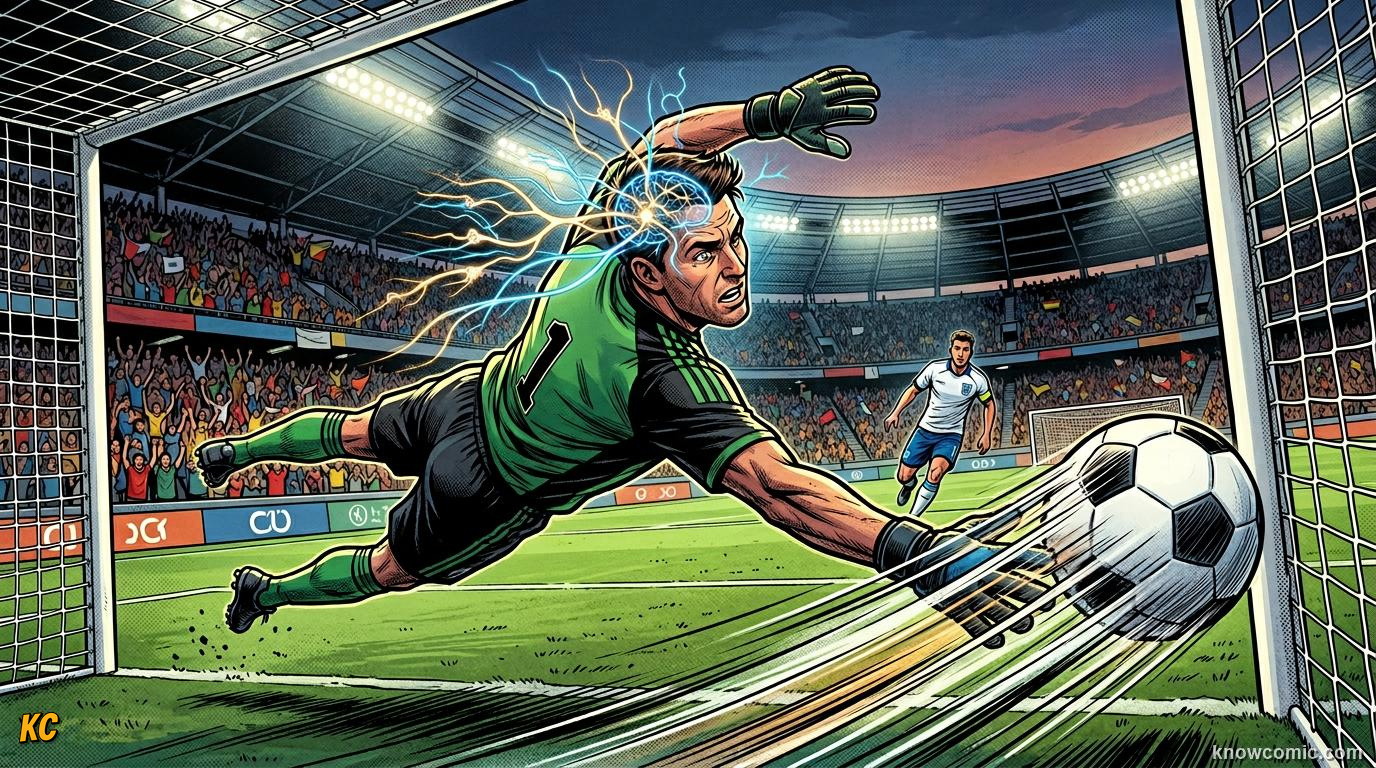
LESS THAN HALF A SECOND
A World Cup penalty is one of the fastest moments in sport. From boot to net, the ball can travel in about 400 to 500 milliseconds. That is less than half a second. A professional shot may reach 100 km/h or more. The goalkeeper stands 11 metres away with a goal eight feet high and eight yards wide. They cannot wait to see where the ball goes. By the time the ball leaves the foot, the keeper must already be moving. Scientists call this a reaction challenge, not a guessing game. The brain receives visual information, picks a direction, and sends signals to muscles. All of this must happen while the ball is still in flight. Miss by 50 milliseconds and the ball is in the net. World Cup shootouts have been decided by saves measured in tiny fractions of a second. Speed of thought matters as much as speed of dive.
⚡ DID YOU KNOW?
A penalty shot can reach the goal line in roughly 0.4 seconds. Human reaction time to a visual stimulus is about 0.2 seconds, leaving almost no time to spare.
FAST!
SPEED
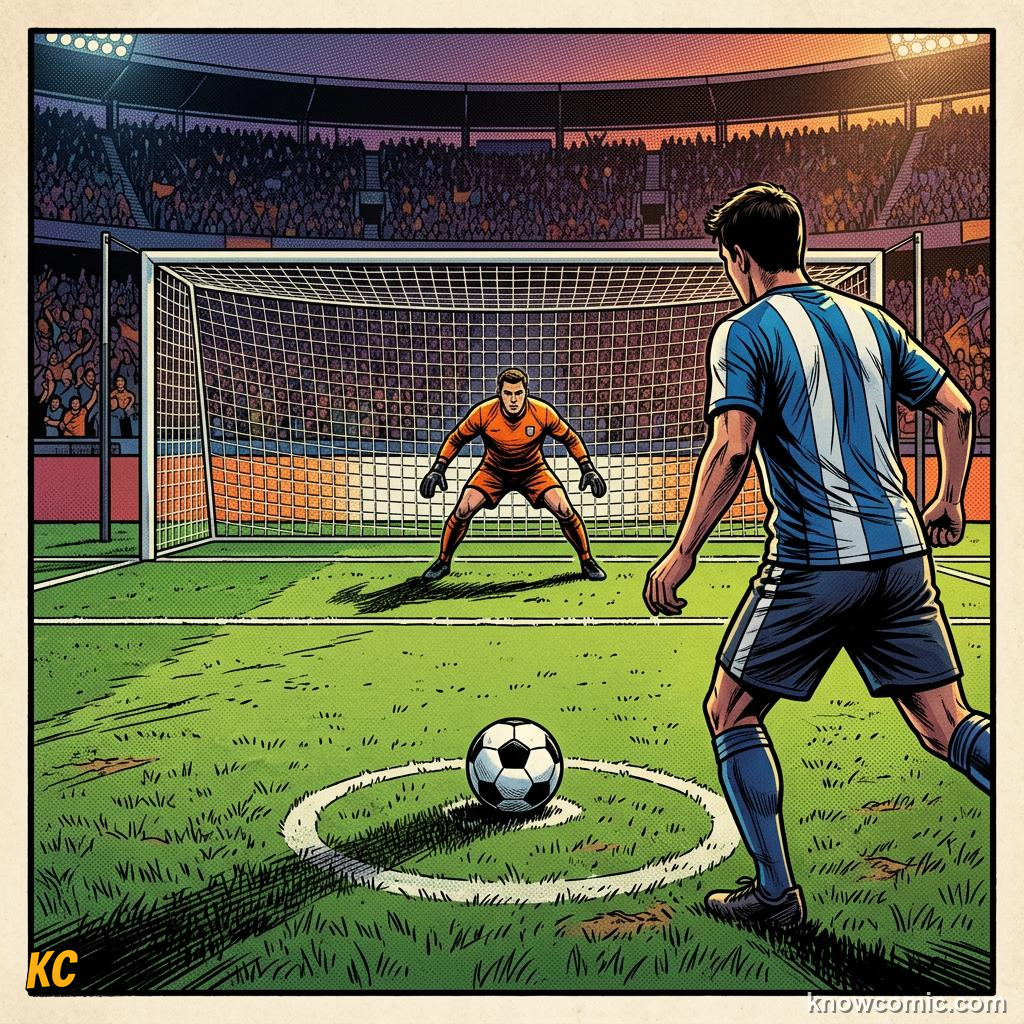
⚽ Ball flight: ~400 ms
🎯 11 metres from keeper
🎯 11 metres from keeper
STAKES
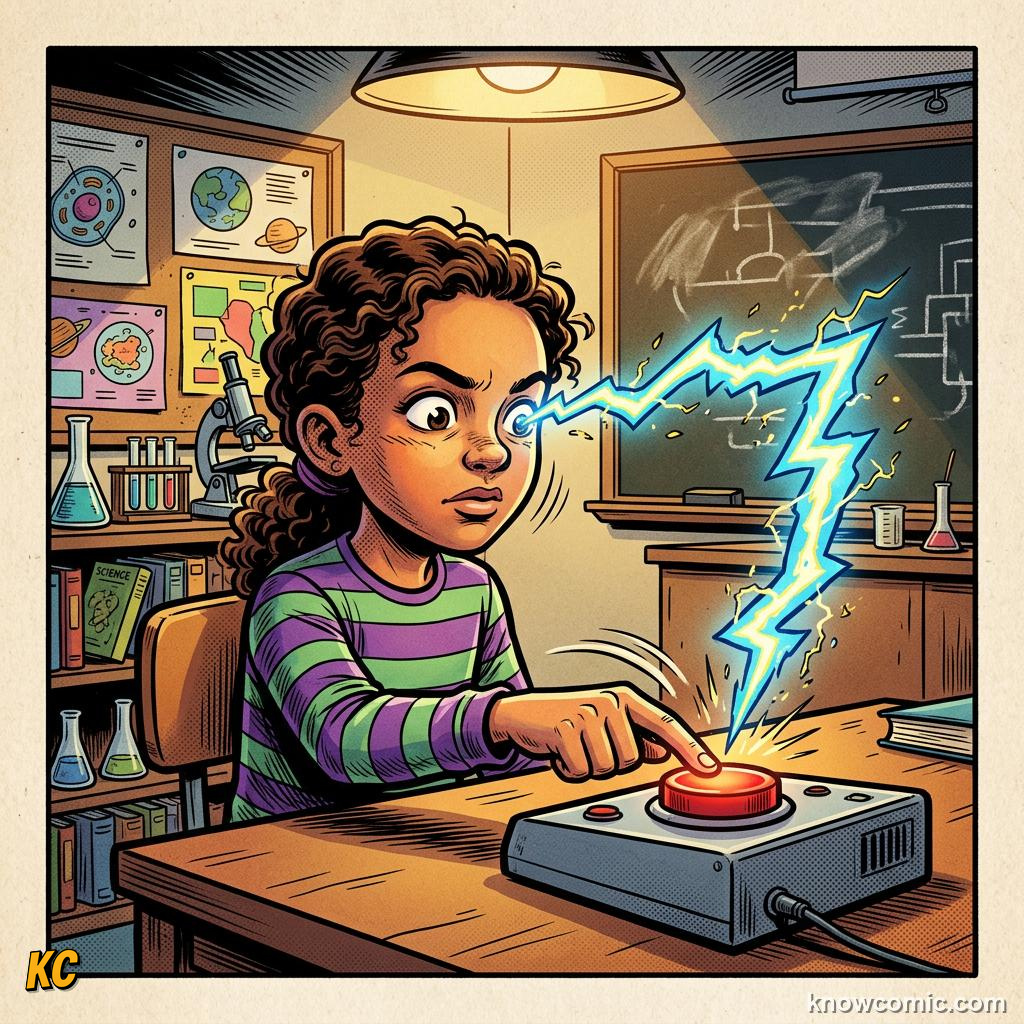
🏆 Shootouts decide titles
⏱️ Every millisecond counts
⏱️ Every millisecond counts