🏟️ MATCH DAY BEHIND THE SCENES
PAGE 1 OF 5 · BEFORE THE SUN RISES
EARLY START
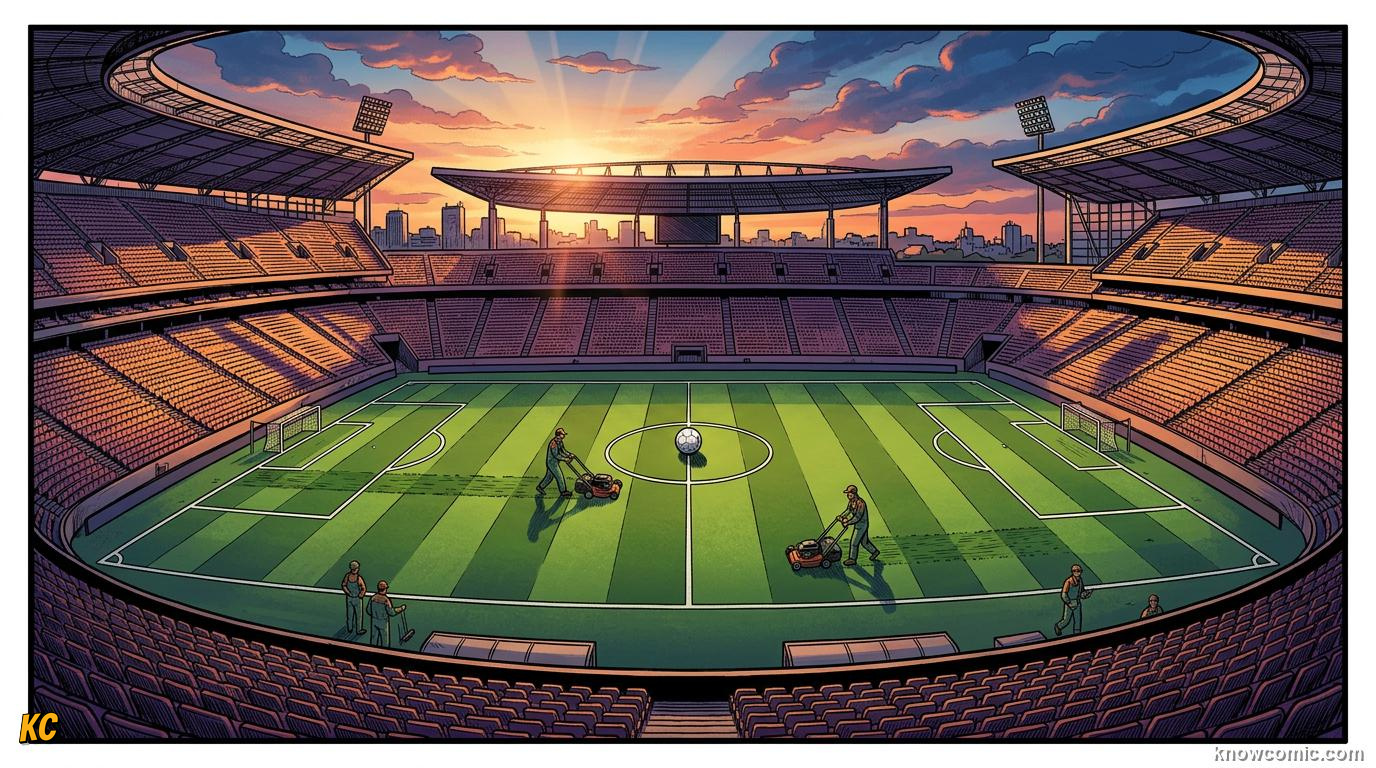
THE STADIUM WAKES UP
Long before fans queue at the gates, the stadium is already buzzing. Groundskeepers arrive in the dark to inspect the pitch, checking grass length, moisture, and painted lines. They mow patterns that look striped on TV and test sprinkler systems so the surface stays perfect for fast passes. Cleaners sweep stands that held a concert or baseball game days earlier. Electricians test floodlights and giant screens. Catering teams unload food trucks and stock kitchens that will serve tens of thousands of meals. A World Cup match is not a two-hour show. It is a full-day operation involving hundreds of specialists who never touch the ball. Match day coordinators run checklists: Are dressing rooms ready? Are flags hung? Is the referee room stocked with water and towels? World Cup 2026 stadiums often serve multiple sports, so crews must transform arenas overnight. By sunrise the pitch gleams while most of the city still sleeps. When you watch kickoff on TV, remember an army already worked eight hours to make that moment possible.
⚡ DID YOU KNOW?
Groundskeepers sometimes re-paint white lines hours before kickoff and walk the pitch with studded boots to test how firm the grass feels underfoot.
DAWN!
GRASS
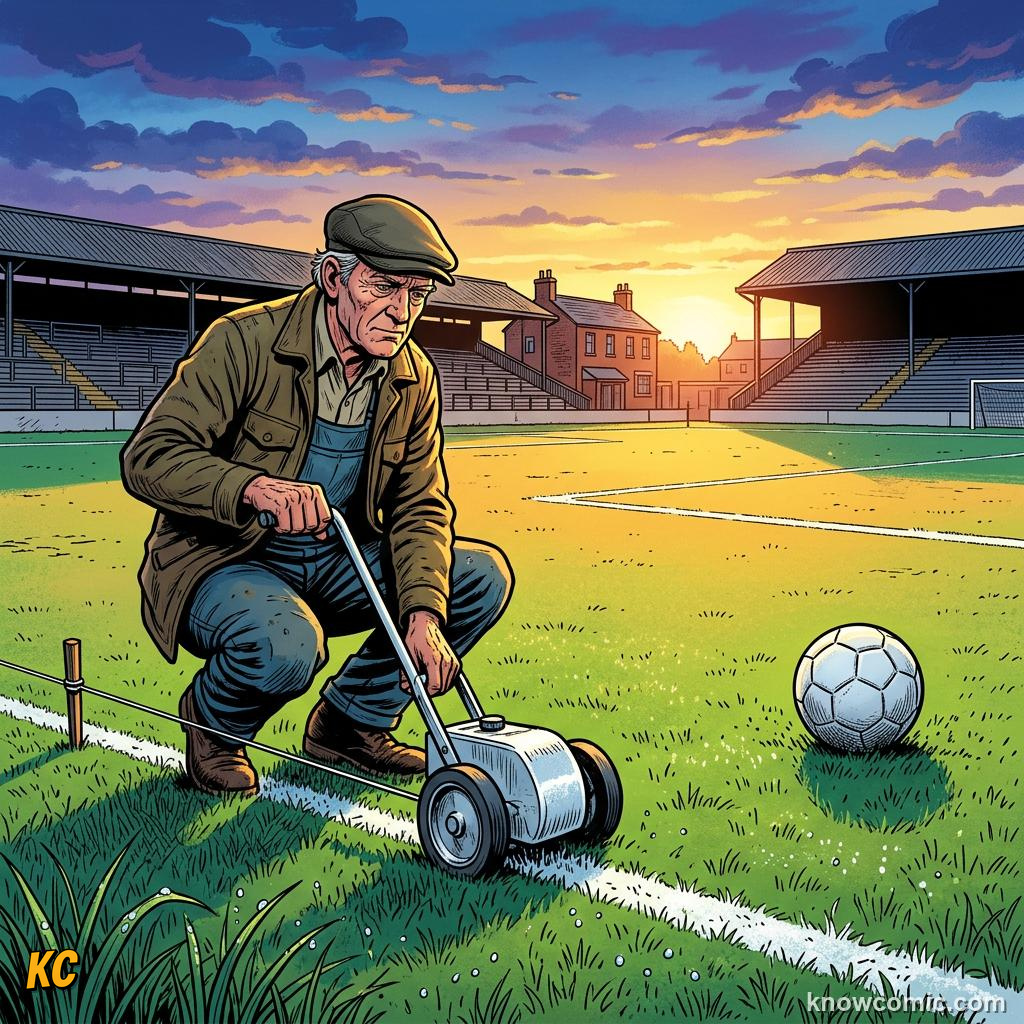
✂️ Perfect pitch for elite players
💧 Water and heat carefully managed
💧 Water and heat carefully managed
CHECKLIST
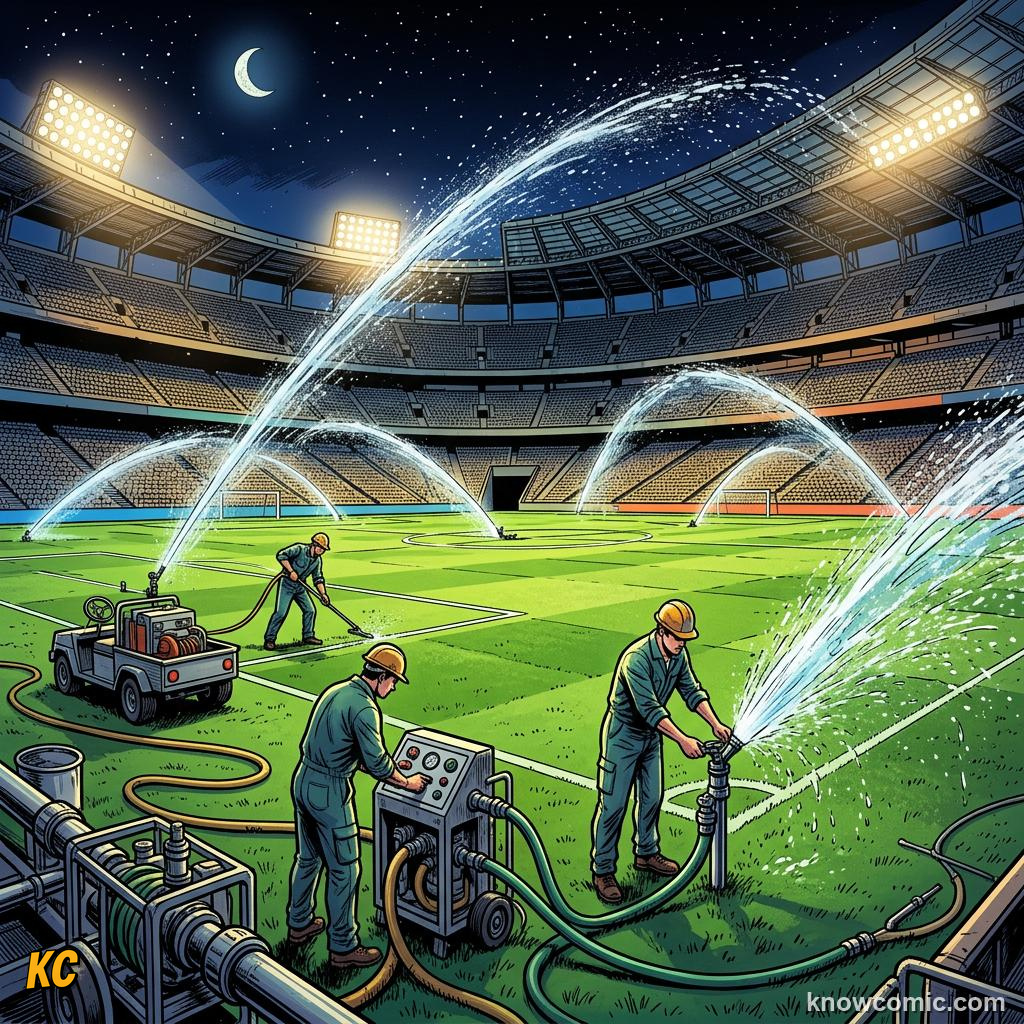
📋 Every detail timed to the minute
🔧 Tech and lights tested early
🔧 Tech and lights tested early