🌱 THE MAGIC OF SEEDS
🌱 YOUR SEED STARTER GARDEN CHECKLIST
Green thumb in training, gather these supplies before you plant. This comic explains why a dry seed can wait for years, then burst into life with just water and warmth.
- 🫘 Large easy seeds: bean, pea, or sunflower seeds you can watch sprout day by day
- 🪴 Small pots or seed tray: with drainage holes so roots never sit in soggy soil
- 🌍 Potting mix: light fluffy soil made for seedlings, not heavy garden dirt
- 💧 Watering can or spray bottle: gentle moisture keeps seeds happy without washing them away
- ☀️ Warm bright spot: windowsill or balcony with several hours of sunlight daily
- 🏷️ Pencil labels: write the plant name and date so you remember what you planted
Time: about 15 minutes to plant · First sprouts in 3 to 10 days · Check soil moisture every morning
PAGE 1 OF 5, A TINY POWERHOUSE
SEED SCIENCE
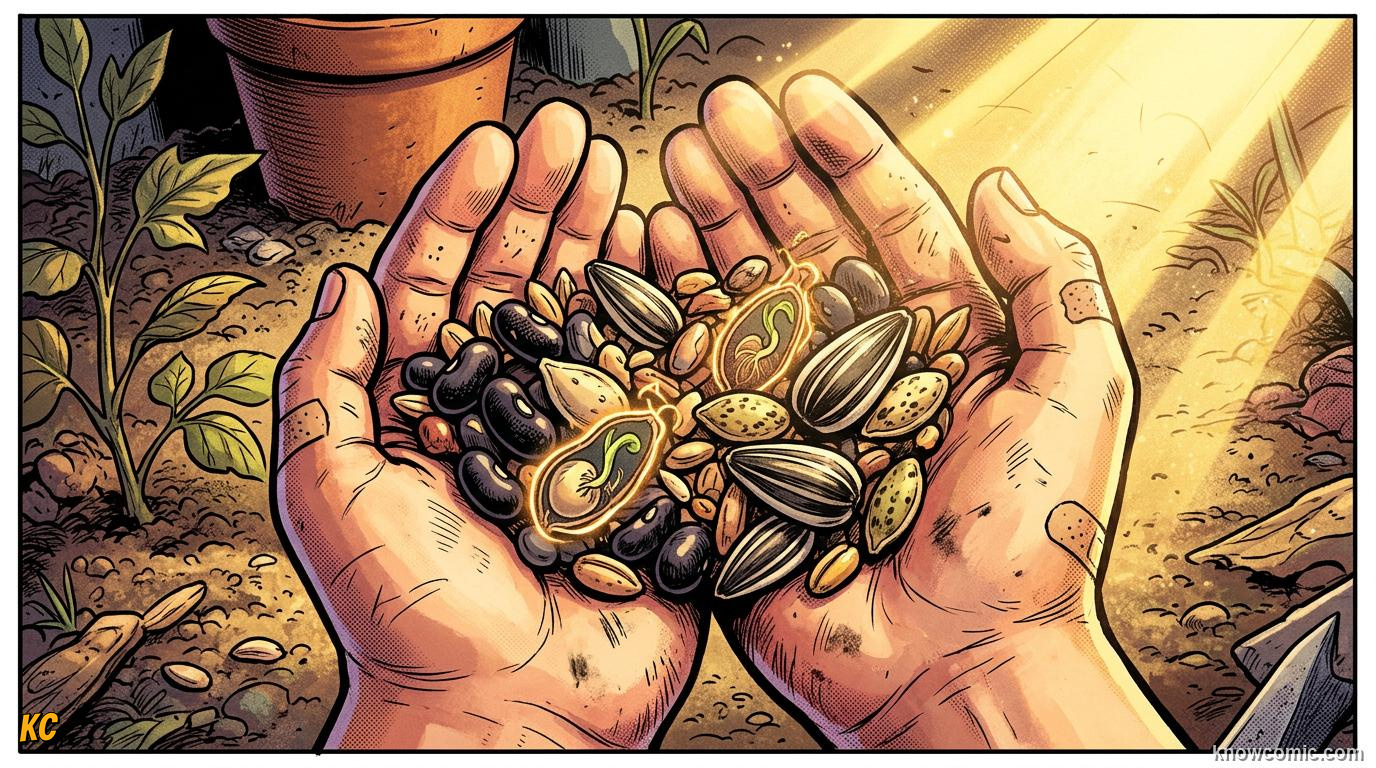
SMALL BUT COMPLETE
A seed looks dry and lifeless, yet it holds a full set of genetic instructions inside every cell of the embryo. That DNA tells the future plant how to build roots, stems, leaves, and flowers. Seeds also pack a lunch: stored starch, oils, or proteins the baby plant eats before it can photosynthesize. This waiting state is called dormancy. A seed can sleep through cold winters or hot droughts until water and warmth say it is safe to grow.
⚡ DID YOU KNOW?
Some lotus seeds found in ancient lake mud sprouted after more than 1,000 years of dormancy. Life was still packed inside that hard shell.
TINY!
BEAN
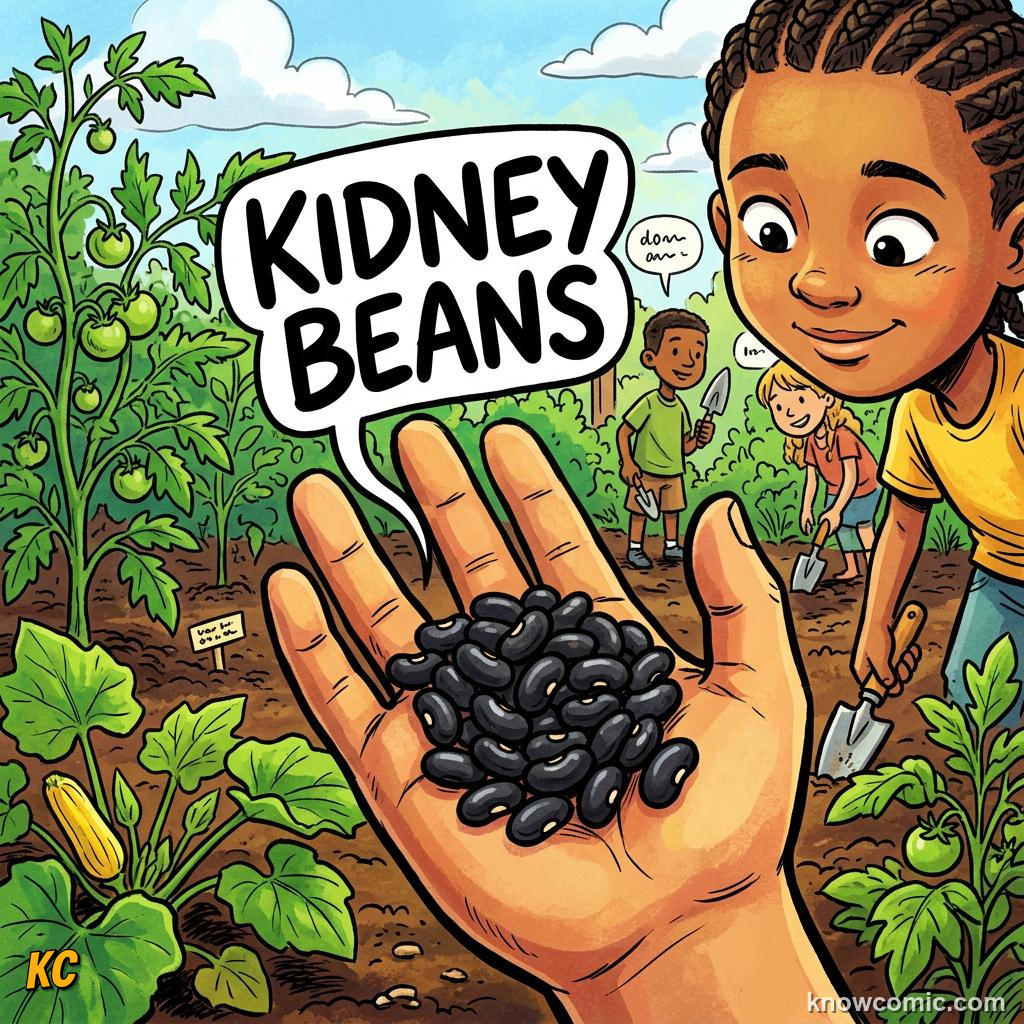
🫘 Bean seeds are big and split open fast, perfect for your first sprout watch.
🌱 You can see the root hook before the stem even appears.
🌱 You can see the root hook before the stem even appears.
SUNFLOWER
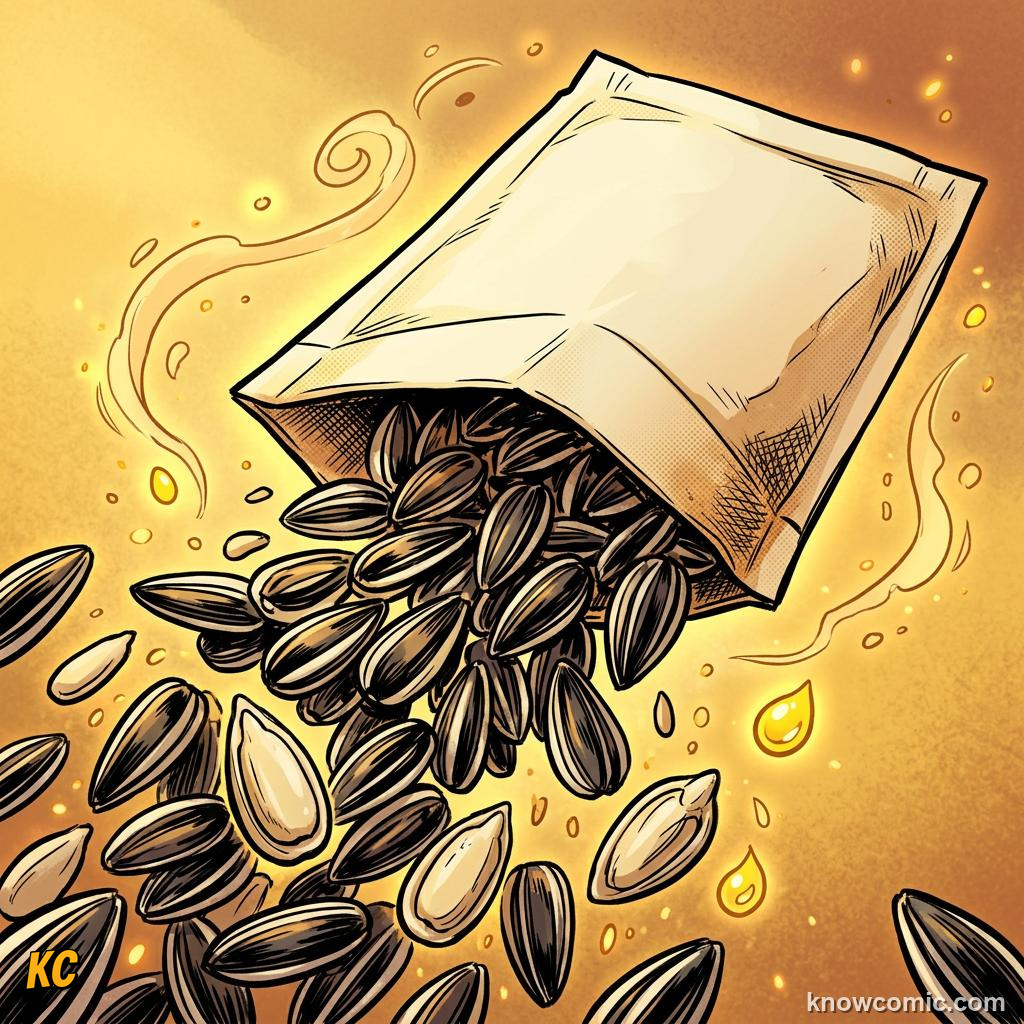
🌻 Sunflower seeds store rich oils that fuel a tall stem.
☀️ One small seed can become a plant taller than you!
☀️ One small seed can become a plant taller than you!
PAGE 2 OF 5, INSIDE THE SHELL
ANATOMY
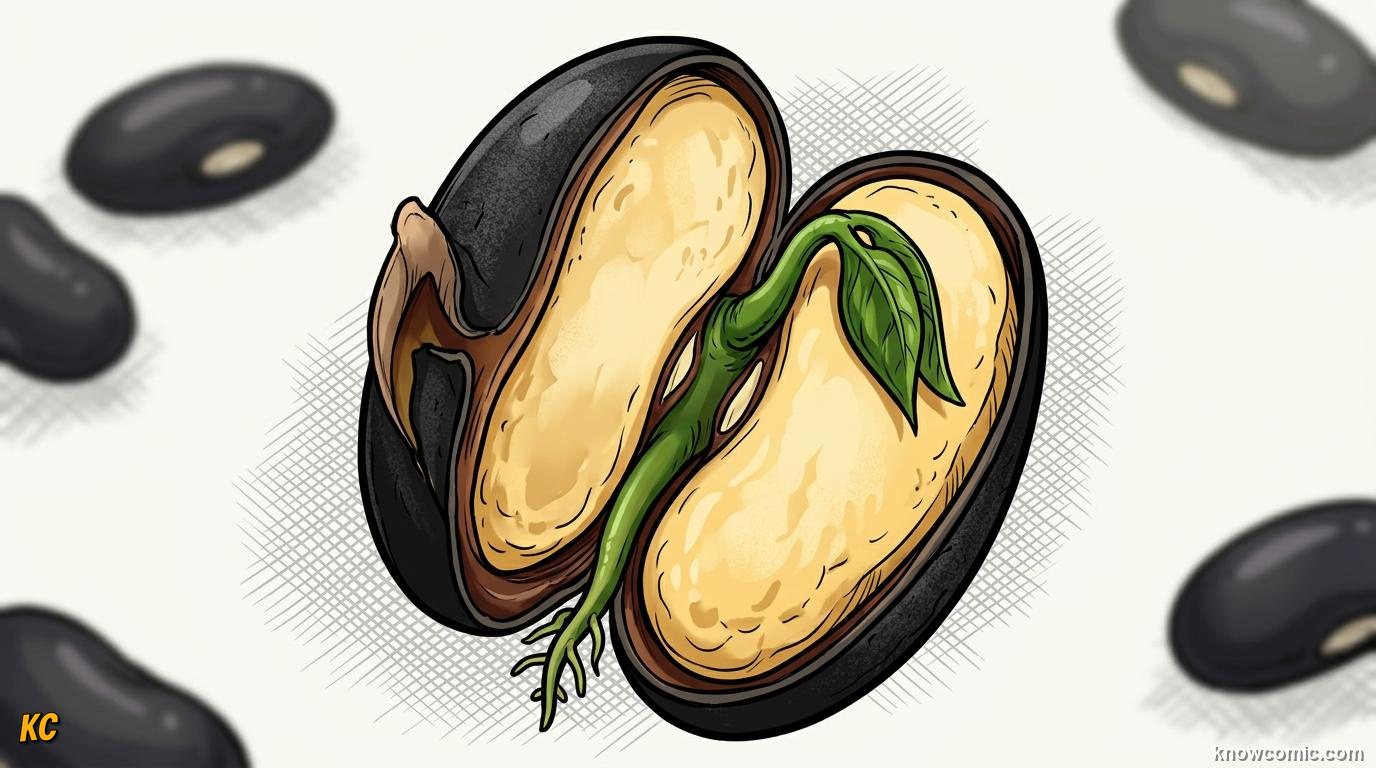
THREE PARTS, ONE MISSION
Every seed has a protective coat on the outside, a tiny embryo in the middle, and a food supply tucked beside it. The seed coat is waterproof and tough, like armor against bugs and drying out. The embryo is the baby plant in waiting: a miniature root tip, a stub of stem, and folded first leaves called cotyledons. The food store might be the two fat halves of a bean or a starchy endosperm in grains. When germination starts, the embryo uses that stored energy to push through soil before sunlight arrives.
⚡ DID YOU KNOW?
Monocot seeds like corn keep food in endosperm tissue, while dicot seeds like beans store most food inside their two cotyledons.
PACKED!
COAT
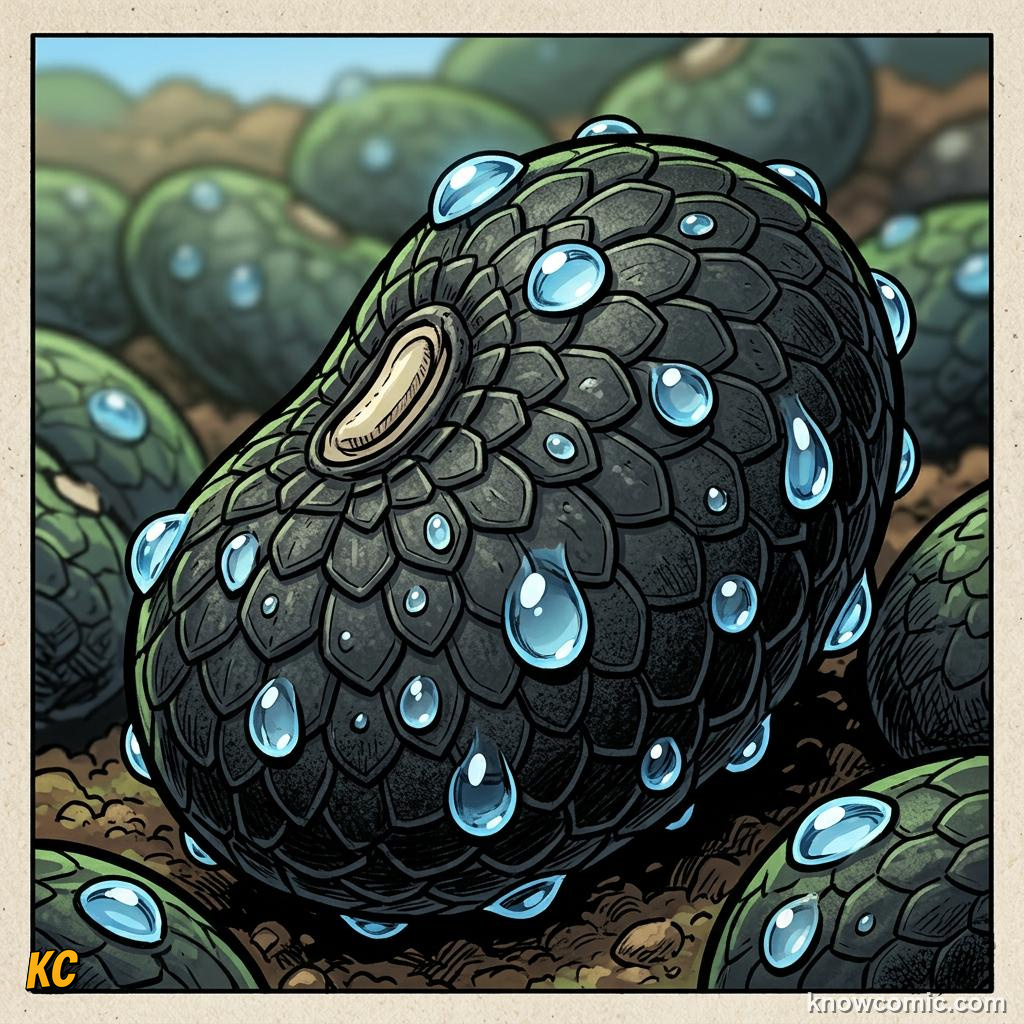
🛡️ The seed coat blocks disease and keeps moisture inside.
💧 Water must soak through before life can switch on.
💧 Water must soak through before life can switch on.
EMBRYO
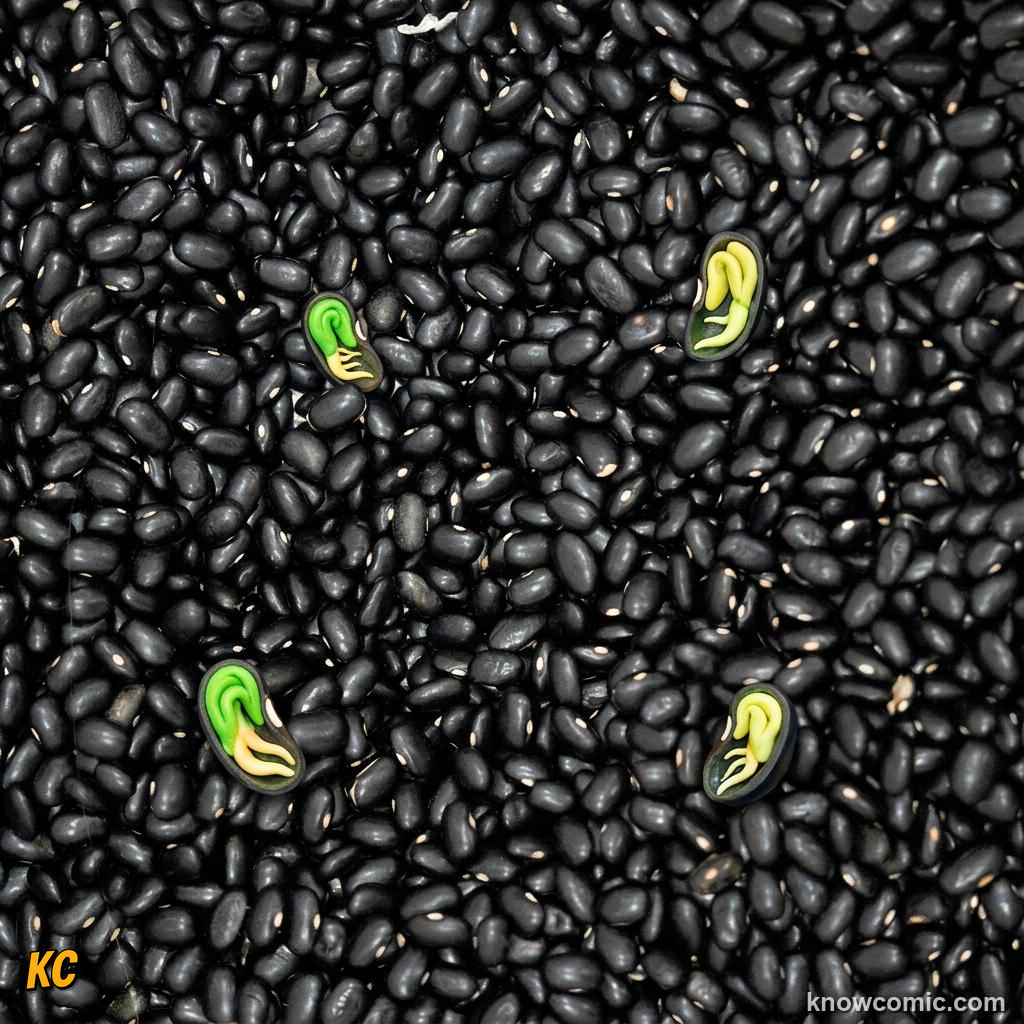
👶 The embryo holds the root, stem, and leaf blueprint.
🧬 DNA inside every cell guides the whole future plant.
🧬 DNA inside every cell guides the whole future plant.
FOOD
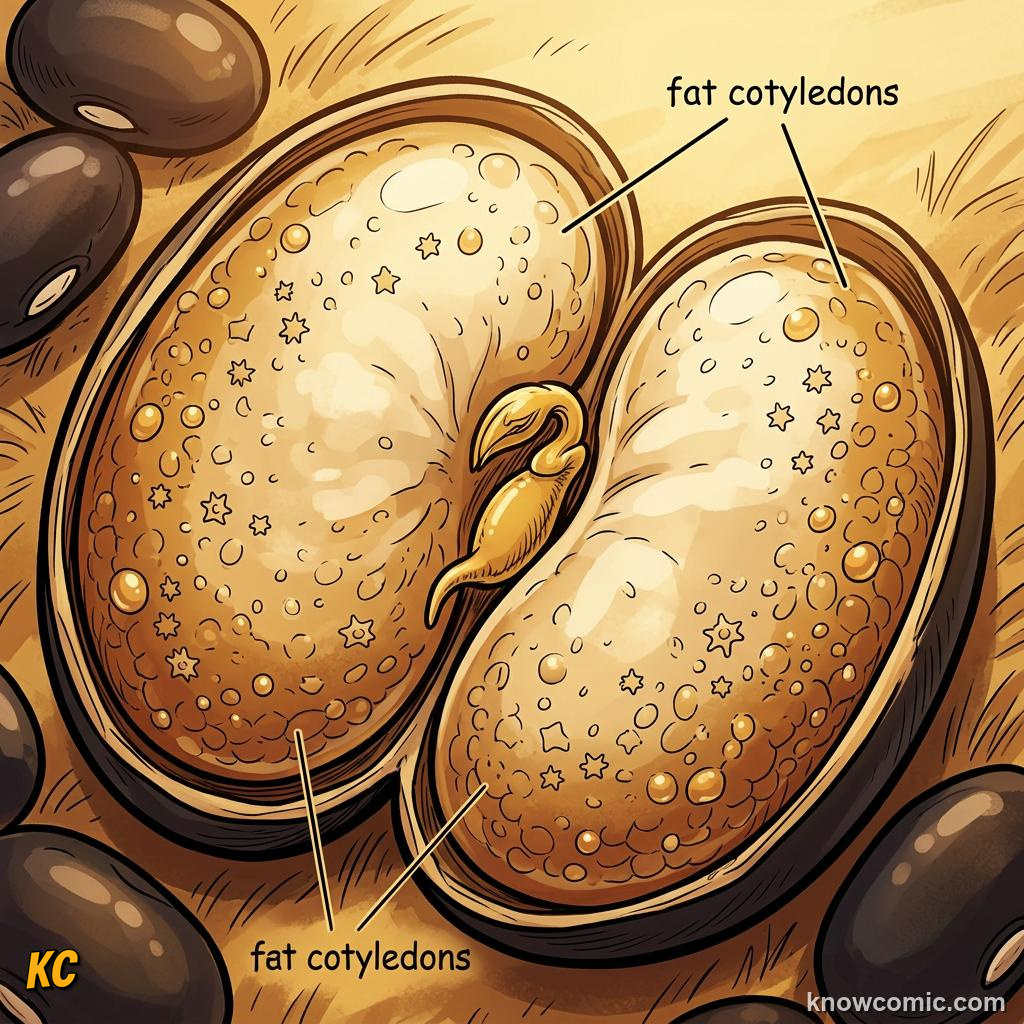
🍱 Stored starch and oils feed the sprout underground.
🌱 Cotyledons shrink as the plant makes its own food.
🌱 Cotyledons shrink as the plant makes its own food.
PAGE 3 OF 5, GERMINATION STARTS
WATER
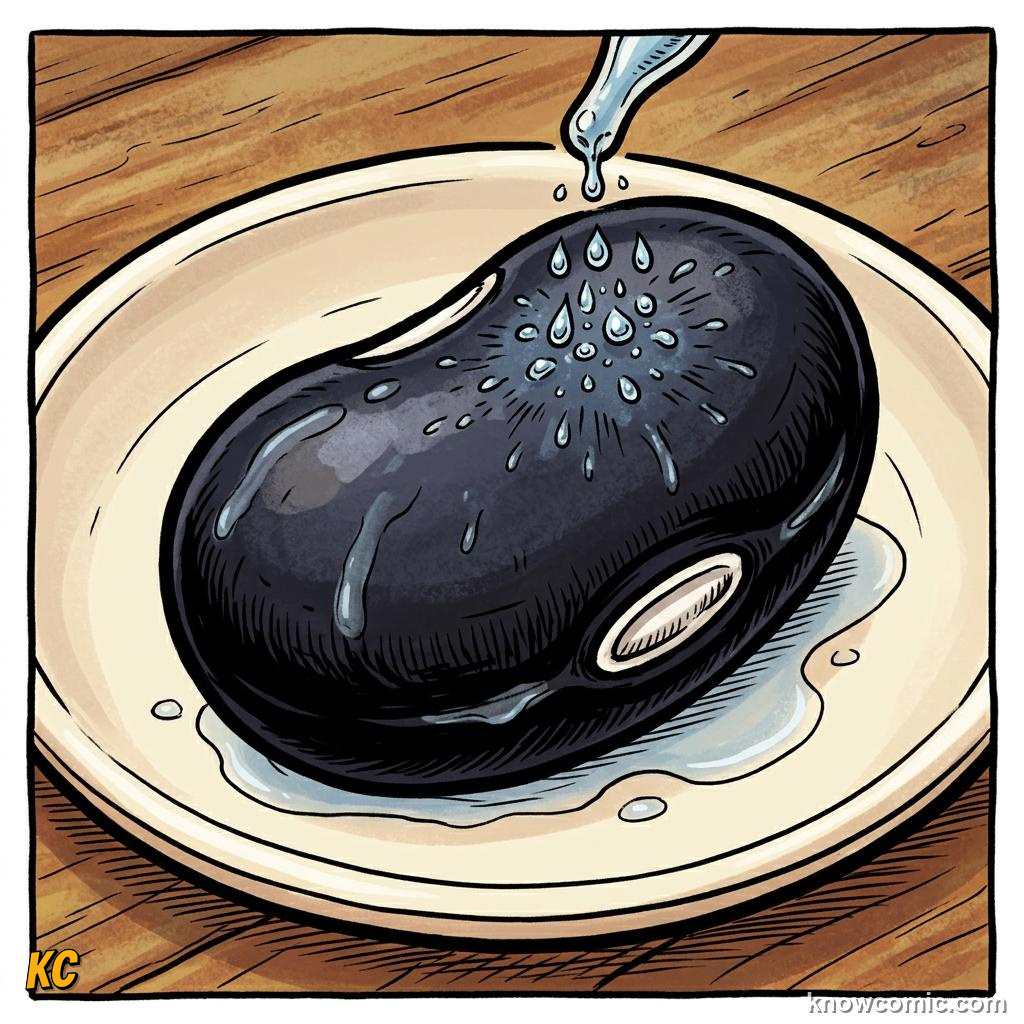
💧 Imbibition means the seed swells as it drinks water.
🧪 Enzymes wake up and start breaking down stored food.
🧪 Enzymes wake up and start breaking down stored food.
WARMTH
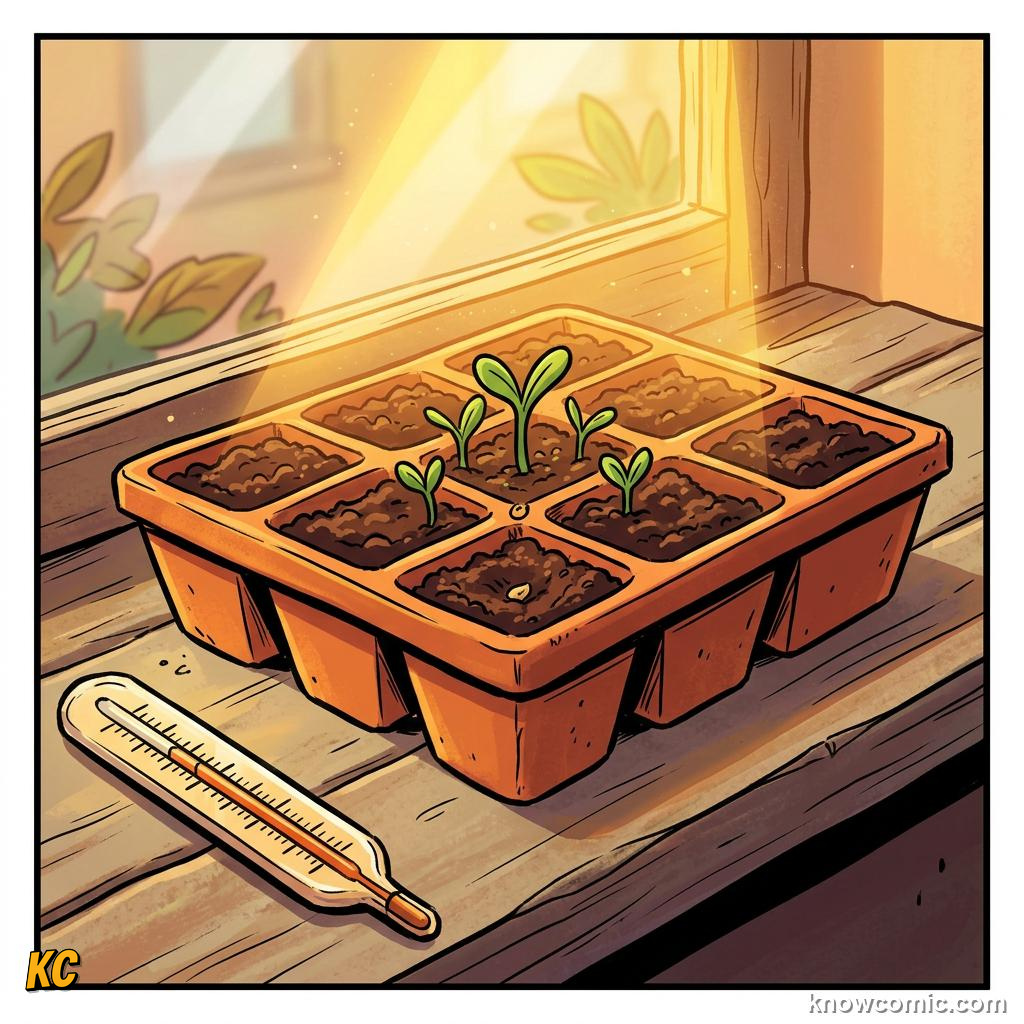
🌡️ Most garden seeds germinate best around room temperature.
☀️ Cold soil slows sprouting, so pick a warm windowsill.
☀️ Cold soil slows sprouting, so pick a warm windowsill.
ROOT FIRST
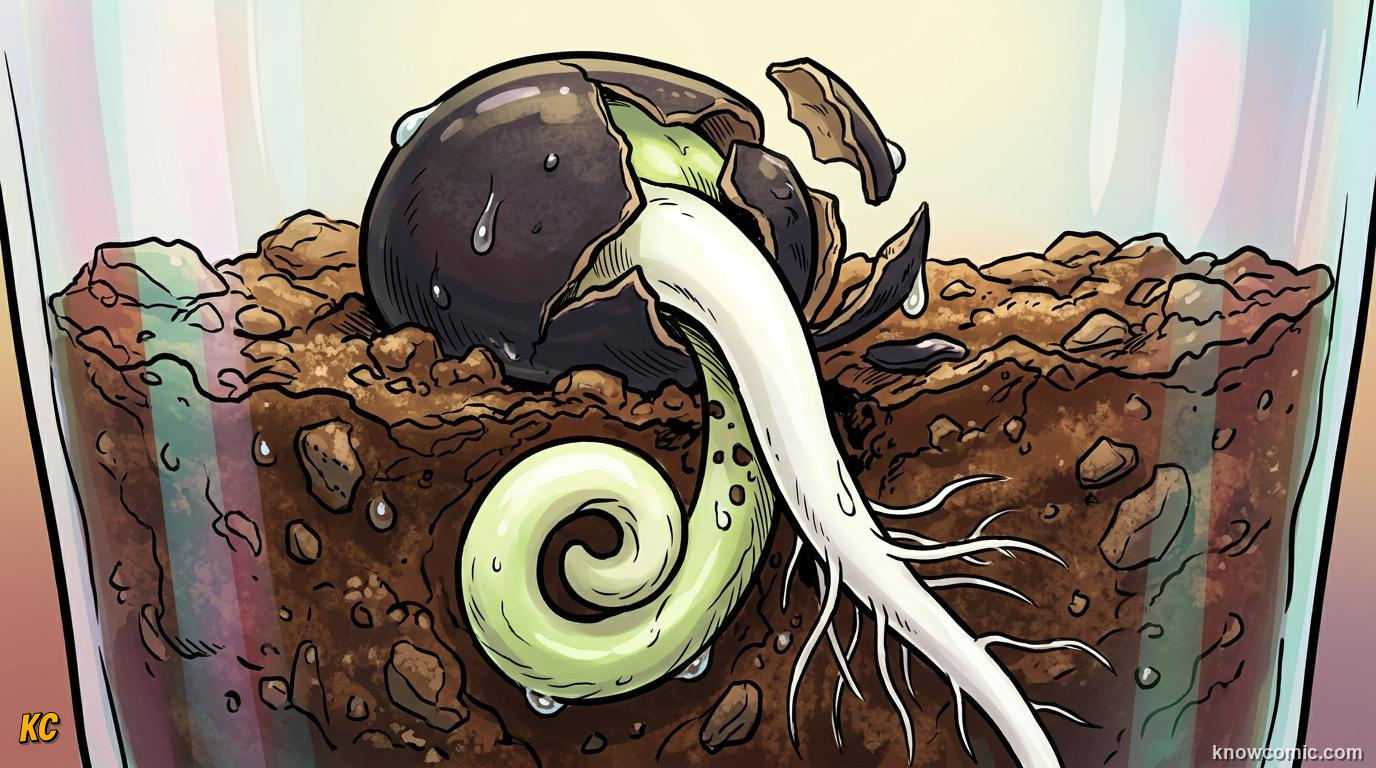
THE RADICLE LEADS
Germination is the moment dormancy ends and growth begins. First the seed absorbs water and swells, cracking its coat. The radicle, or embryonic root, pushes downward to anchor the plant and drink more moisture. Only after roots grab hold does the shoot bend upward toward light. This order is smart: a stem above ground with no roots below would dry out fast. Watch a bean in a clear cup and you will see the white root hook appear days before green leaves unfurl.
⚡ DID YOU KNOW?
Gravity helps roots grow down and shoots grow up. Even in the dark, seedlings sense which way is up through special cells that respond to gravity.
SPROUT!
PAGE 4 OF 5, SEEDS ON THE MOVE
DISPERSE
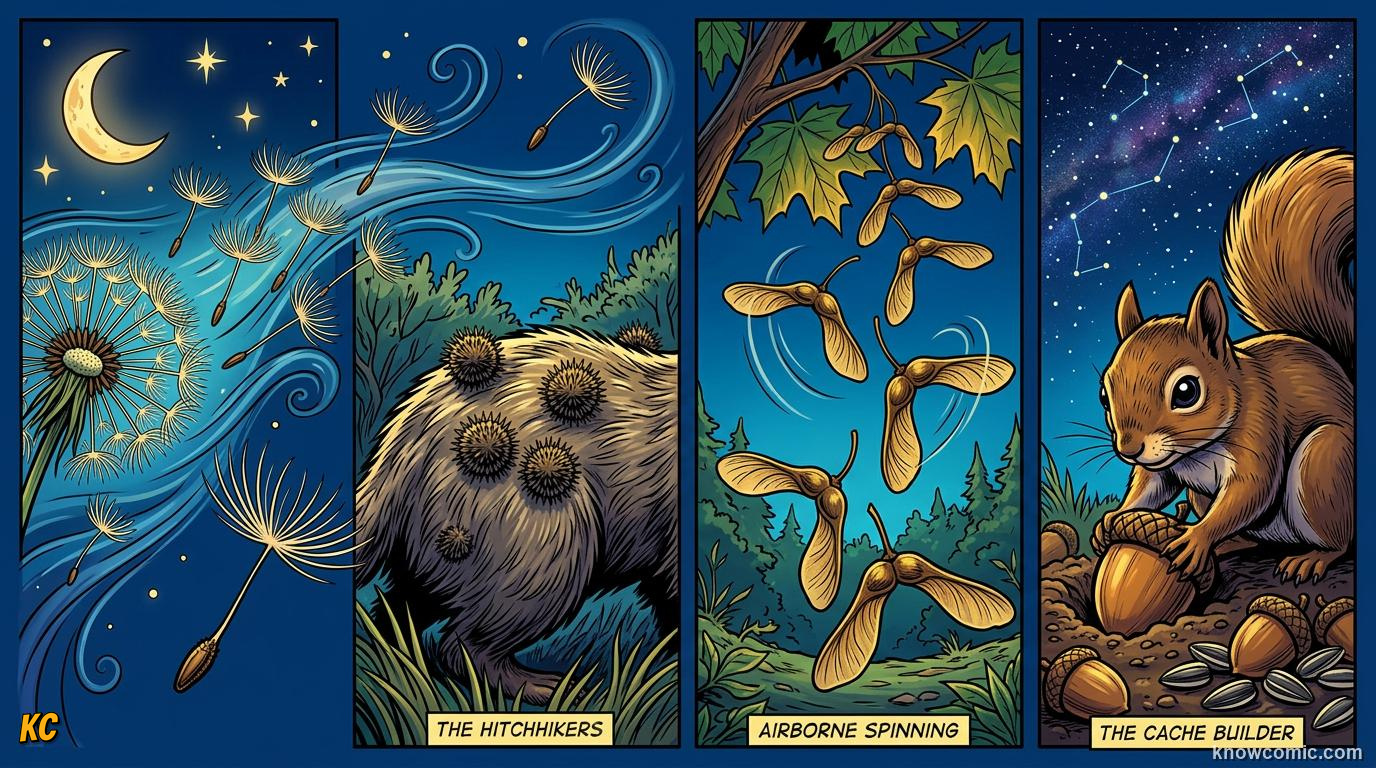
TRAVEL BEFORE THEY GROW
Plants cannot walk to new homes, so they build seeds that travel instead. Dandelion parachutes ride the wind. Burrs cling to animal fur and fall off far away. Squirrels bury acorns and forget some, which sprout into oak trees. Coconut seeds float across oceans inside waterproof husks. Dispersal spreads plants across meadows, forests, and riverbanks so they do not all compete for the same patch of soil. When you plant a seed in a pot, you are continuing a journey that nature perfected millions of years ago.
⚡ DID YOU KNOW?
Maple seeds spin like helicopters on thin wings called samaras, slowing their fall so wind can carry them farther from the parent tree.
FLY!
WIND
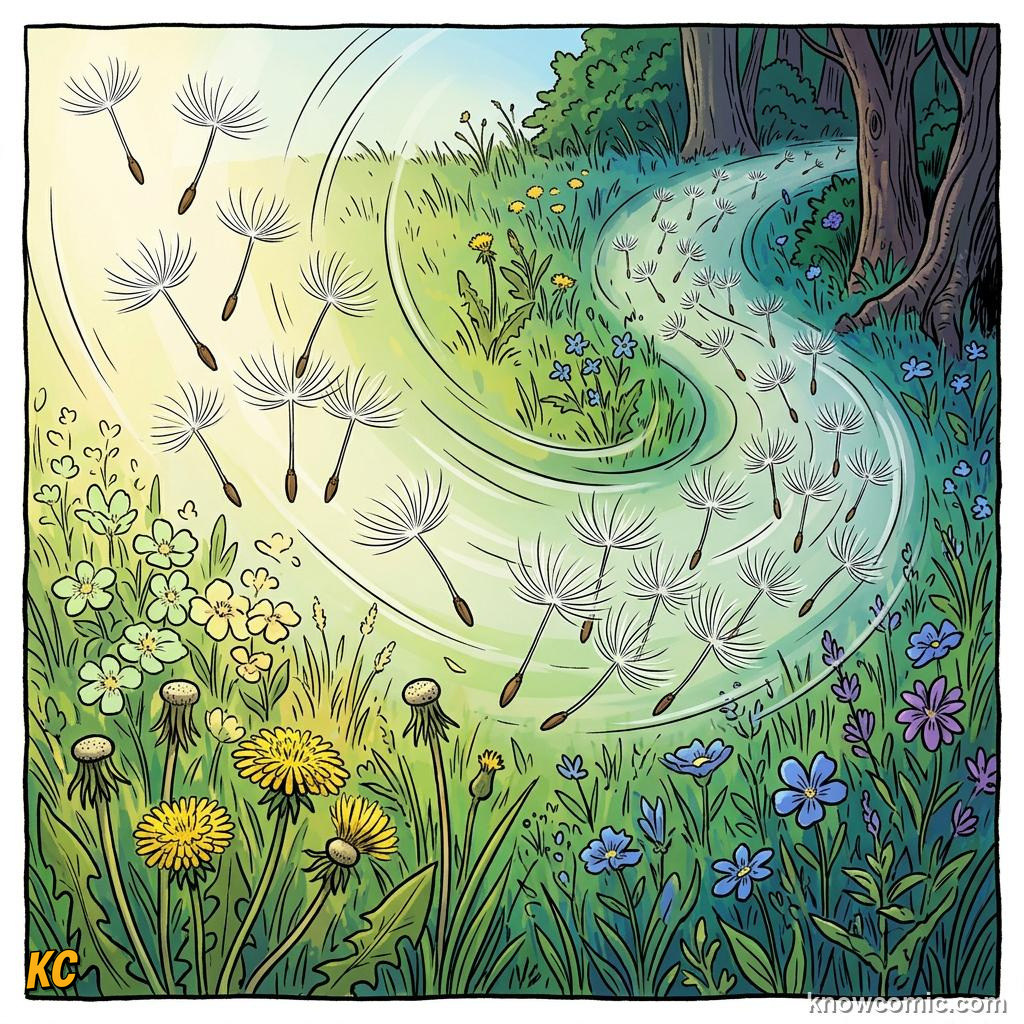
🌬️ Light fluffy seeds catch breezes like tiny gliders.
🪶 Some orchid seeds are smaller than a grain of dust.
🪶 Some orchid seeds are smaller than a grain of dust.
ANIMALS
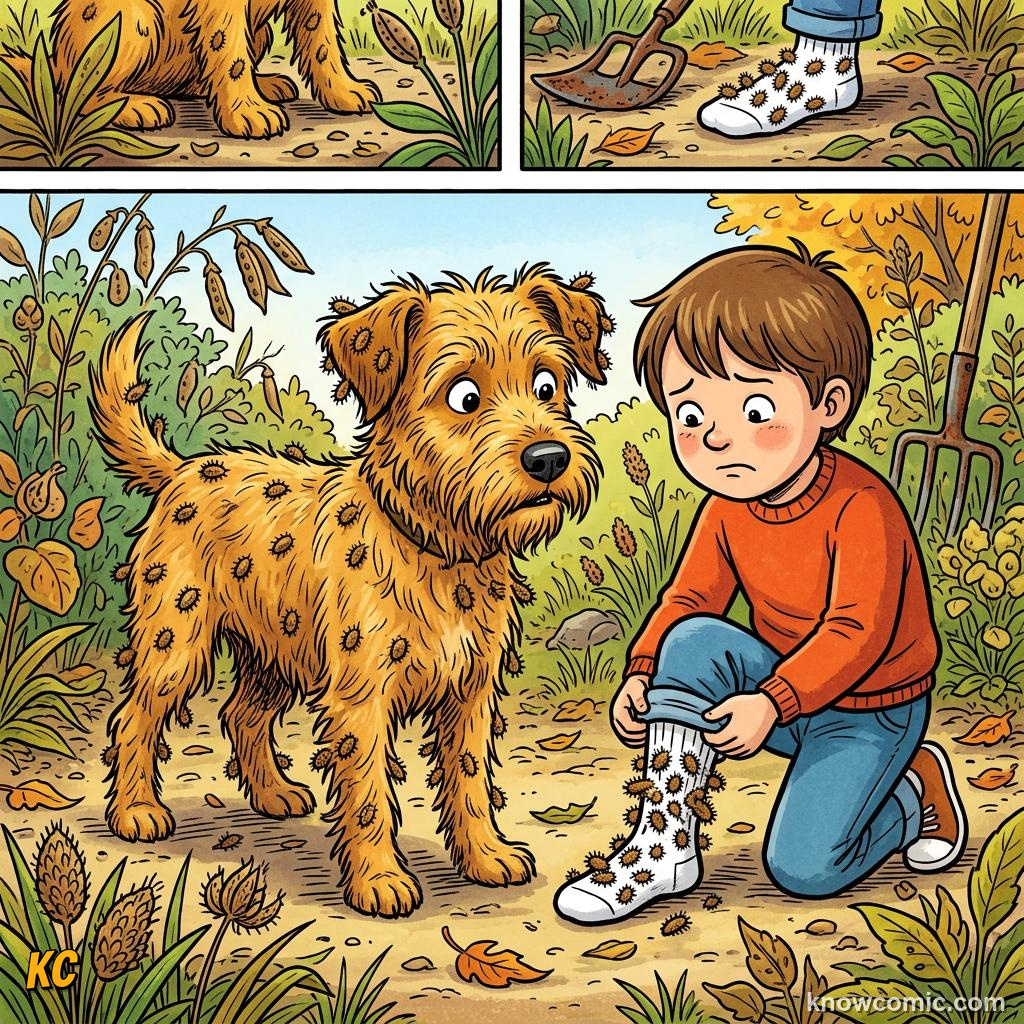
🐦 Birds eat berries and drop seeds miles away in droppings.
🦔 Burrs hitch rides on socks and pet fur.
🦔 Burrs hitch rides on socks and pet fur.
BURIED
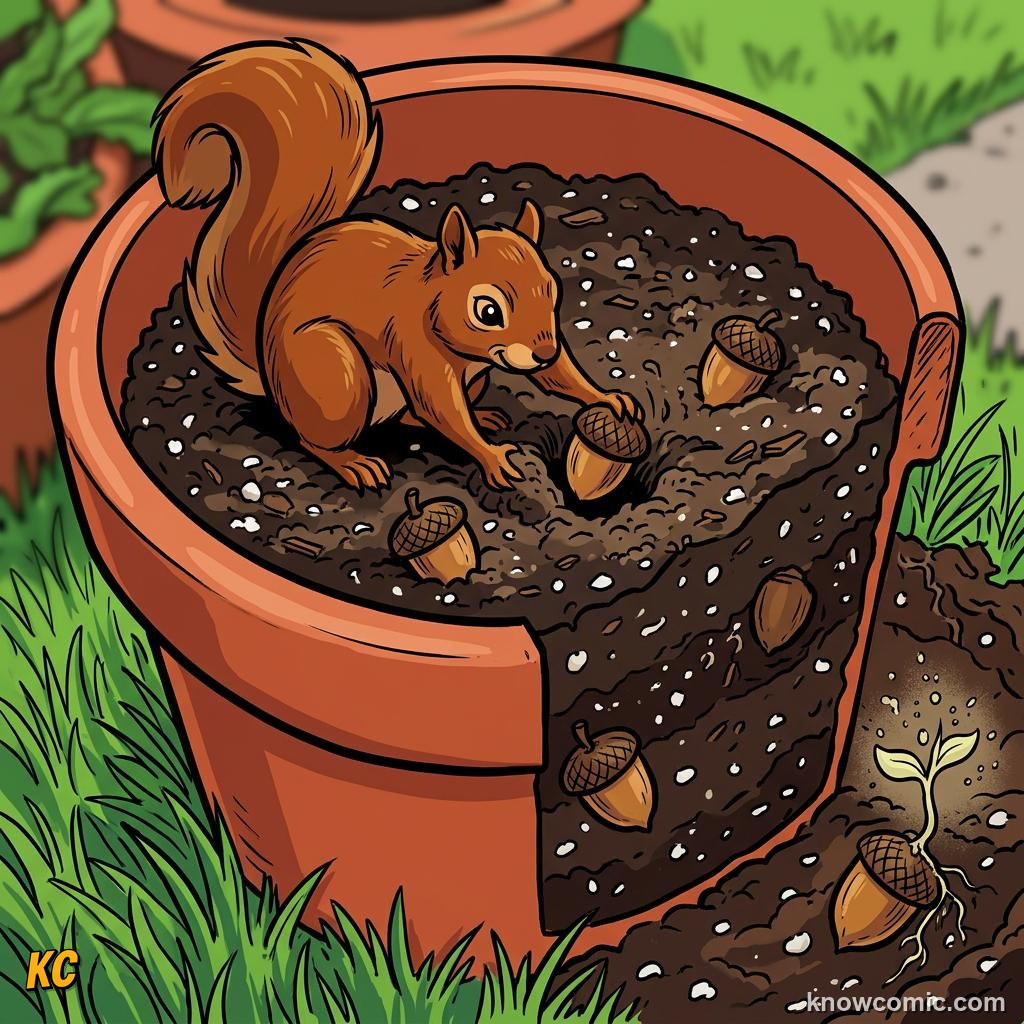
🐿️ Cache-hiding animals plant trees by accident.
🌰 Nuts buried too deep may wait years to sprout.
🌰 Nuts buried too deep may wait years to sprout.
PAGE 5 OF 5, PLANT YOUR OWN
YOUR TURN
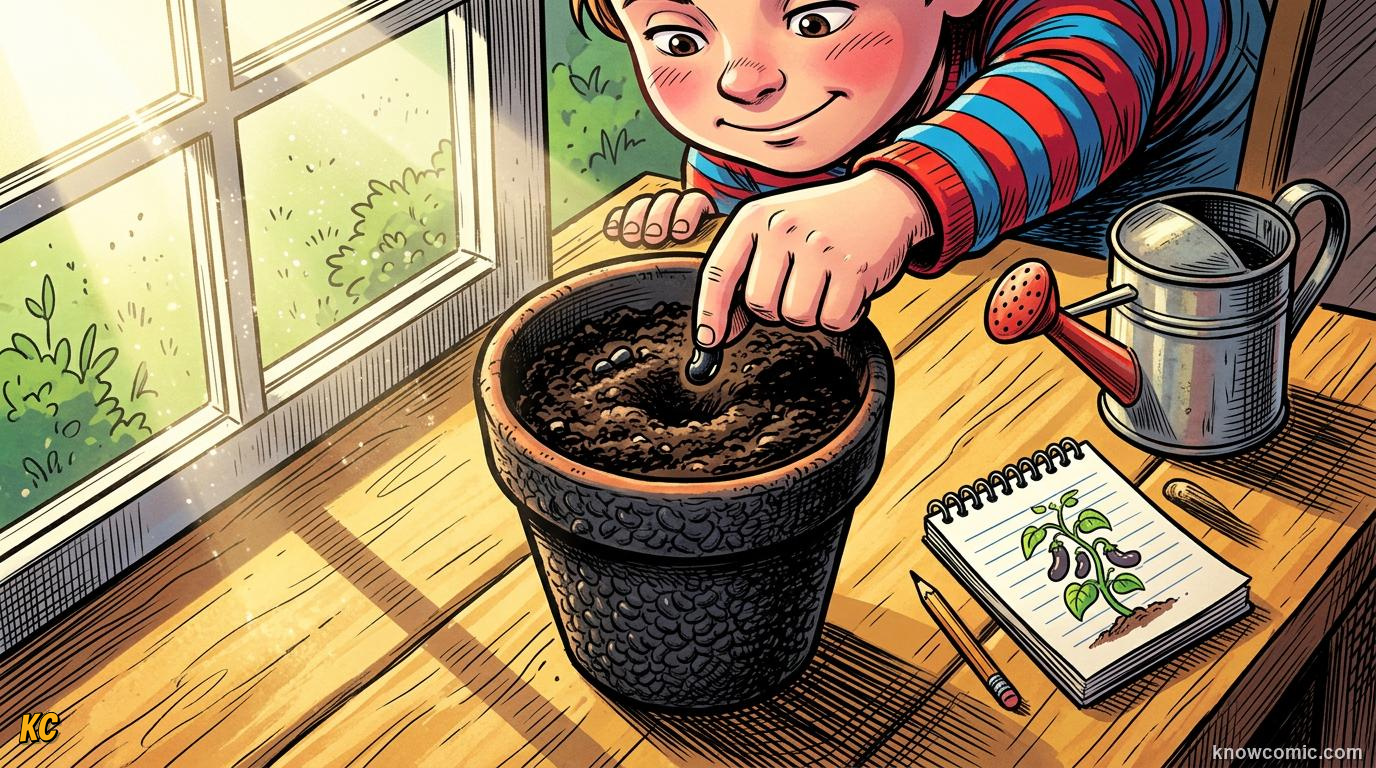
START A SEED JOURNAL
Fill a pot with moist potting mix and poke a bean seed about two centimeters deep, then cover gently. Place the pot on a sunny windowsill and keep the soil damp like a wrung-out sponge, never flooded. Draw what you see each morning: Day 0 dry seed, Day 3 swollen seed, Day 5 white root, Day 7 green stem. Measure stem height with a ruler and note which side tilts toward the window. You are doing real science: observing, recording, and asking why. Every farmer on Earth started by watching one seed wake up.
GROW!
SHARE
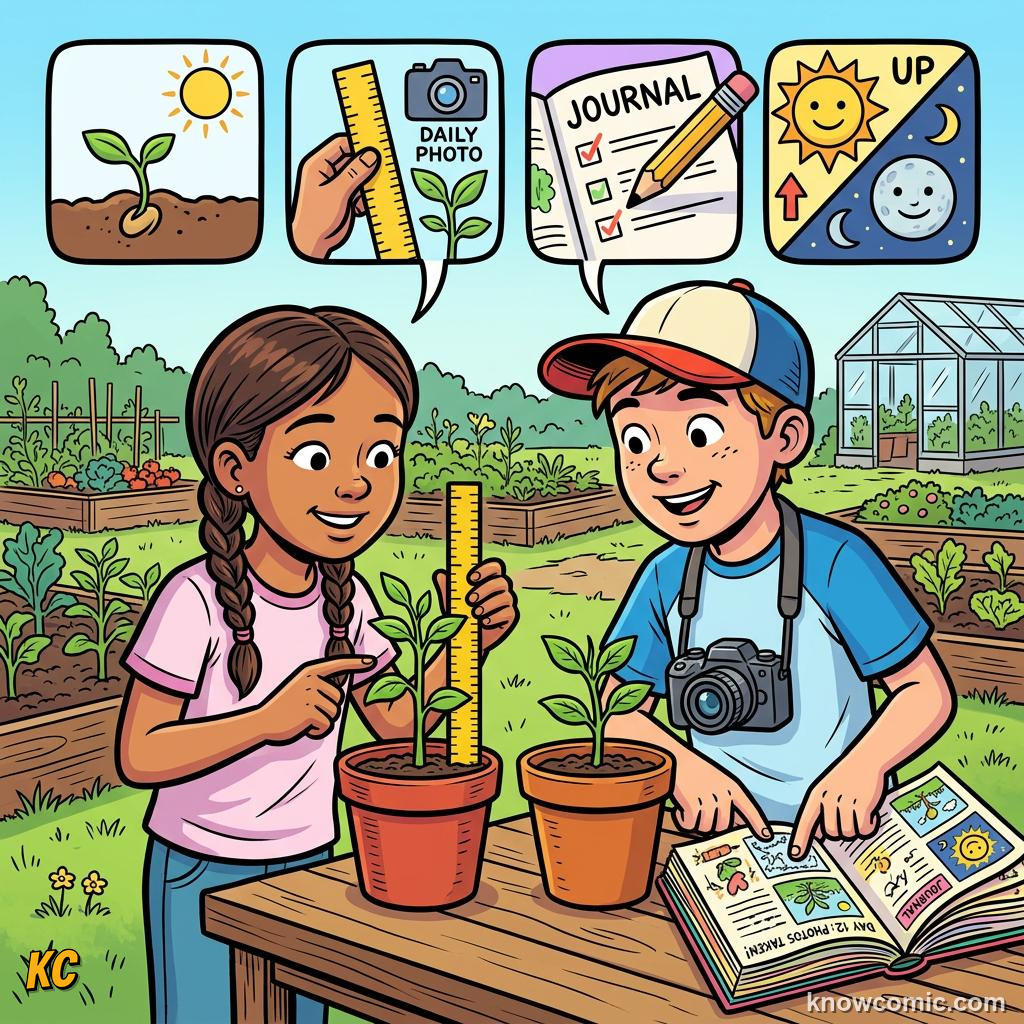
📸 Snap daily photos and flip them into a time-lapse movie.
🤝 Challenge a friend to a tallest-seedling contest.
🤝 Challenge a friend to a tallest-seedling contest.
REMEMBER
🌱 KEY FACTS
Seeds hold DNA plus stored food in dormancy. Water and warmth trigger germination. Roots grow down before shoots reach for light. Label your pots and check moisture every day.
✅ Use large seeds so you can see every stage.
✅ Keep soil moist, not muddy.
✅ Draw or photograph changes to build a seed journal.
✅ Keep soil moist, not muddy.
✅ Draw or photograph changes to build a seed journal.
🧠 QUIZ TIME!
THE MAGIC OF SEEDS · 5 QUESTIONS
QUESTION 01
What does a dormant seed contain?
QUESTION 02
What usually triggers a seed to leave dormancy and germinate?
QUESTION 03
During germination, which part of the seedling typically appears first?
QUESTION 04
What is the main job of the seed coat?
QUESTION 05
Why do seeds store food inside them?
0/5
LOADING...