🏝️ FLUVIAL LANDFORMS: LOWER COURSE
PAGE 1 OF 5 — THE RIVER'S OLD AGE
LOWER COURSE
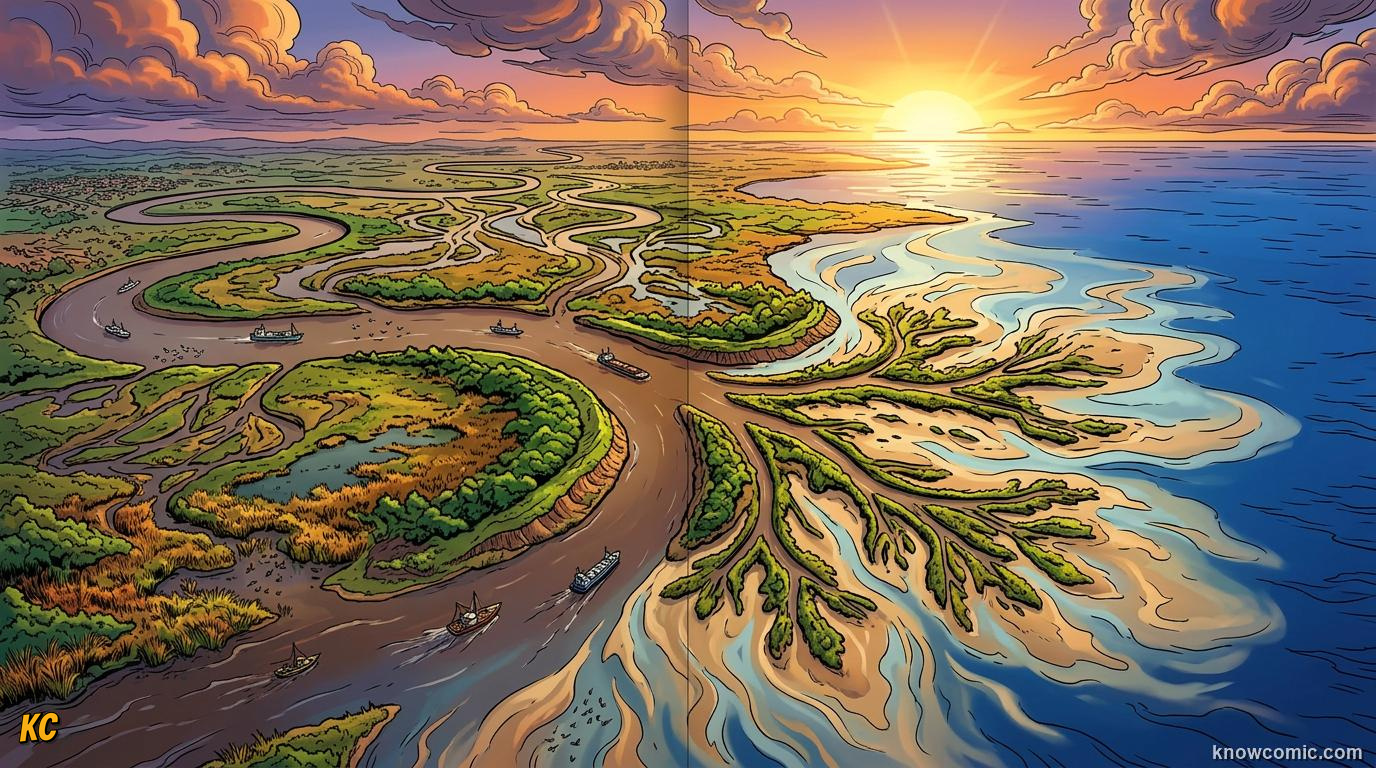
WHERE RIVERS SLOW AND DEPOSIT
The lower course is the final section of a river before it reaches the sea or a lake. It lies downstream of the middle course you studied in Topic 11, where meanders and floodplains already began to form. Here the gradient is very gentle, so velocity and erosive power are low. Deposition now dominates over erosion as the river loses energy and drops its load of sand, silt, and clay. The channel is wide and deep, and the floodplain may stretch many kilometres on either side. Discharge is at its maximum because many tributaries have joined the main river since the steep upper course in Topic 10. On the Bradshaw Model, the lower course represents the river's old age: very low gradient, slow flow, and landforms built mainly by deposition rather than cutting. The river is nearing the end of its long profile, preparing to enter the sea.
📦 DEPOSITION DOMINANT
When a river slows down, it loses energy to carry sediment. Coarse material is deposited first, then finer silt and clay. In the lower course, deposition builds up the floodplain, levees, and delta.
DEPOSIT!
VERY LOW GRADIENT
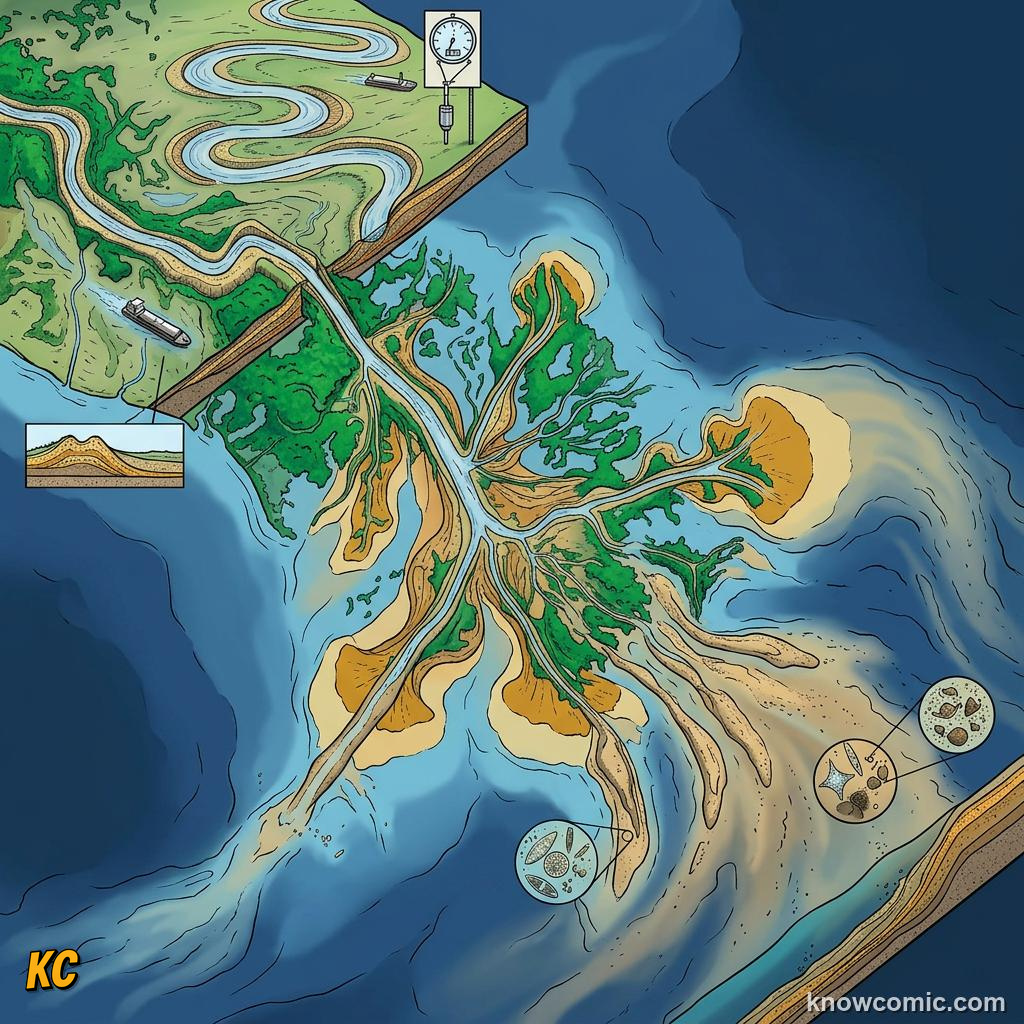
- A very low gradient means the river loses height slowly, so flow velocity falls compared with the upper and middle courses.
- Low velocity reduces the river's ability to erode bedrock and transport large load, so sediment settles on the channel bed.
- The cross-section becomes efficient and wide, allowing high discharge to pass through without much vertical downcutting.
WIDE FLOODPLAIN
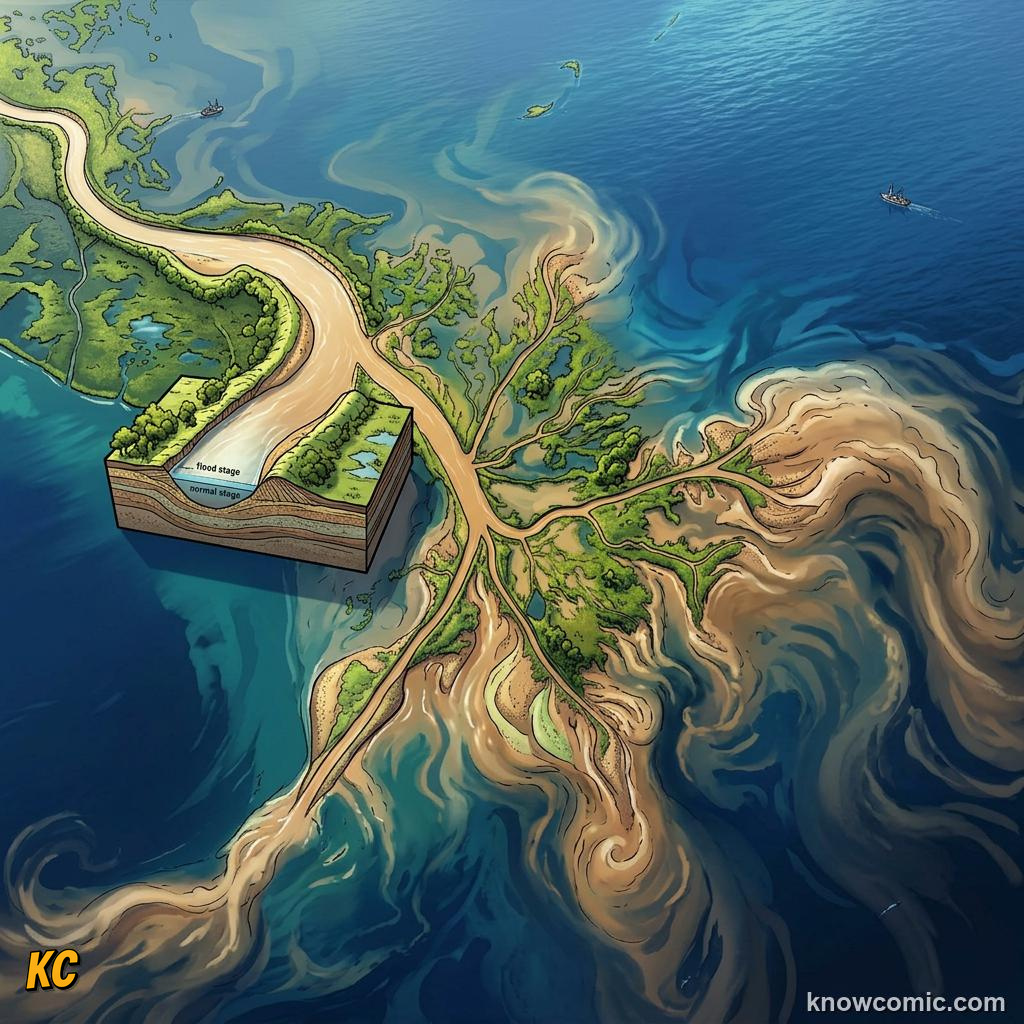
- The floodplain reaches its greatest width in the lower course, built by centuries of overbank deposition during floods.
- Repeated flooding spreads fine silt across the valley floor, creating some of the most fertile farmland on Earth.
- Meanders may still migrate slowly, but deposition on the floodplain outpaces erosion in this old-age stage.