🧊 GLACIAL DEPOSITION: MORAINES
PAGE 1 OF 5 — WHEN ICE DROPS ITS LOAD
GLACIAL DEPOSITION
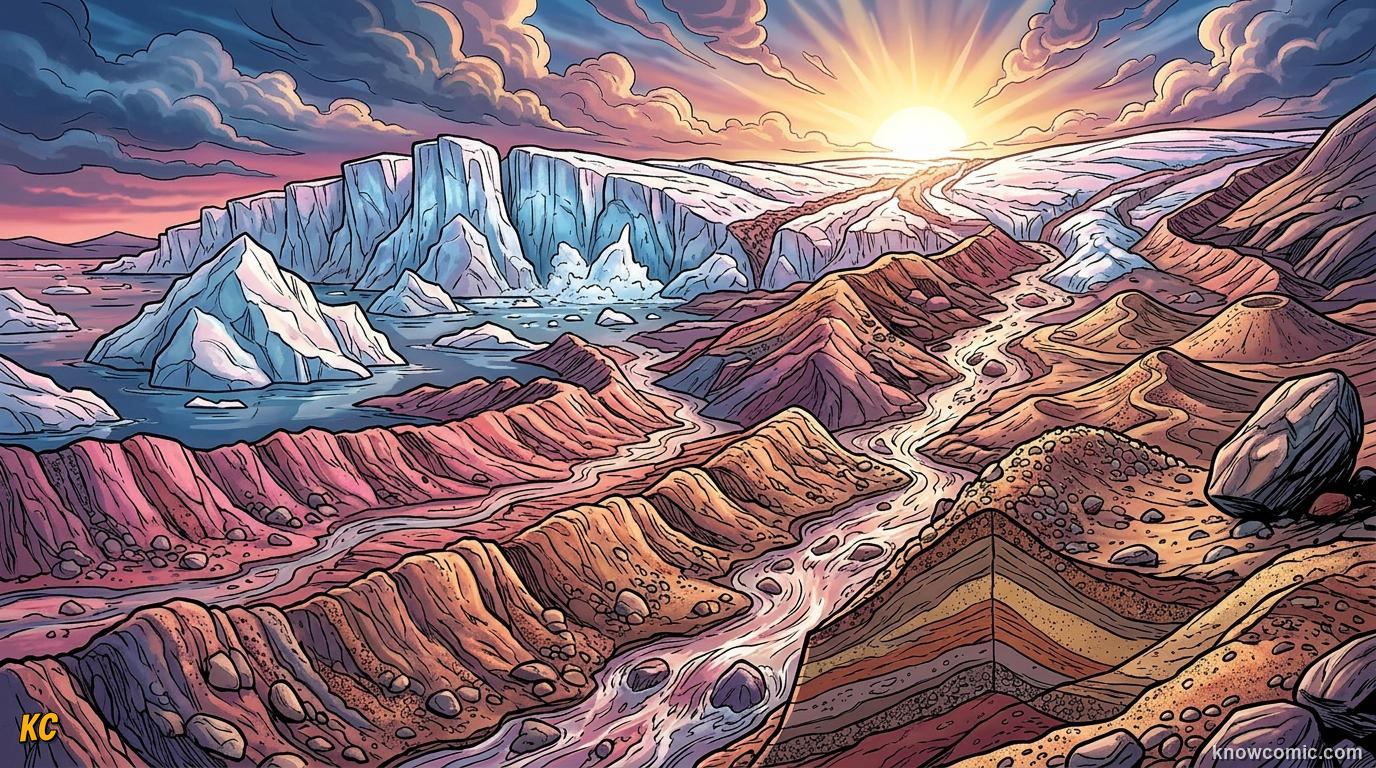
FROM EROSION TO DEPOSITION
While glaciers erode landscapes through plucking and abrasion (see Topic 13), they also transport huge amounts of rock debris frozen inside the ice or dragged along the base. When the climate warms and the glacier retreats, melting ice can no longer carry this load, so sediment is dropped on the ground. All material deposited directly by ice or by meltwater from a glacier is called glacial drift. Drift deposited straight from the ice, without sorting by water, is called till. Till is characteristically unsorted: it contains mixed sizes from clay to boulders, often angular and scratched from contact with bedrock. Deposition creates distinctive landforms that reveal where ice sheets once stood. Geographers read moraines and drift deposits like a history book of past glaciations.
🪨 DRIFT VS TILL
Glacial drift is all material deposited by ice or glacial meltwater. Till is drift dropped directly from the ice without water sorting. It is unsorted and often called boulder clay.
DROP!
UNSORTED TILL
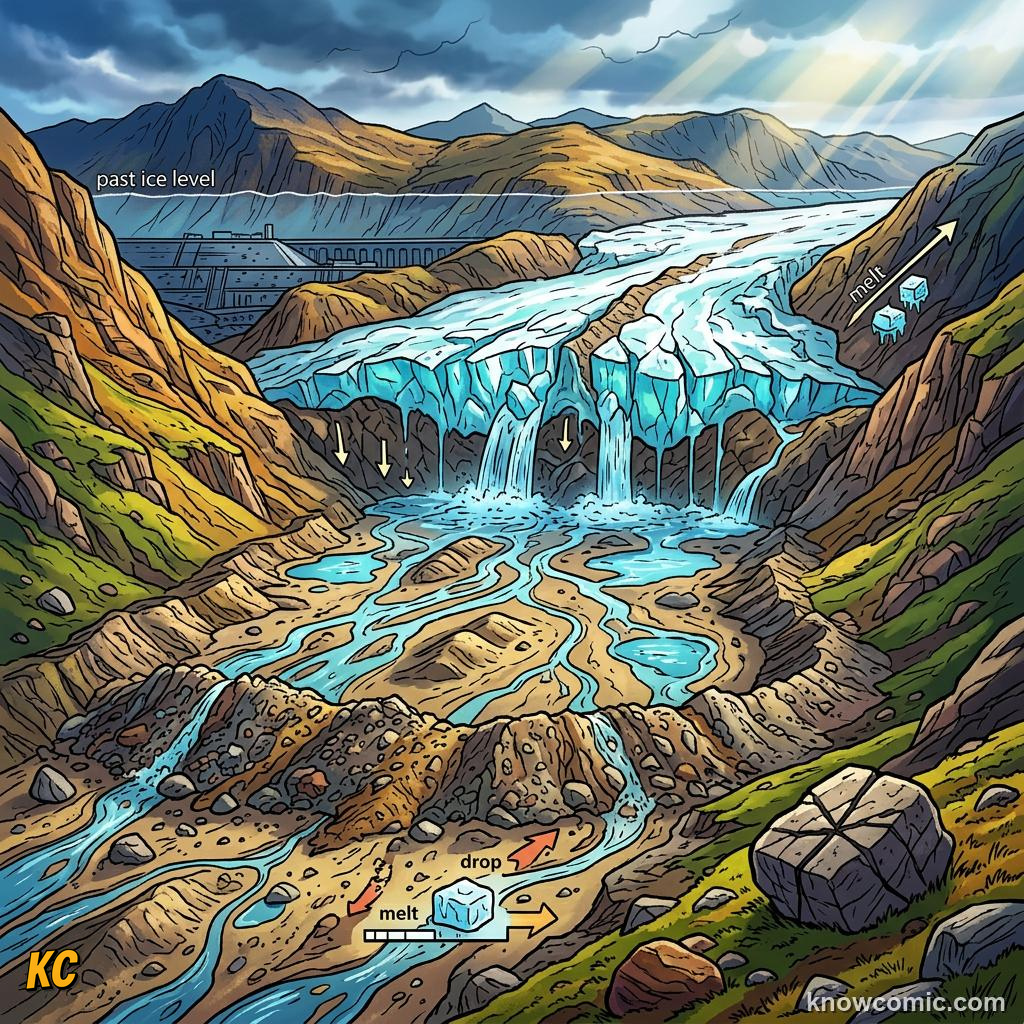
- Unsorted material means particles of many sizes are mixed together with no layers by grain size.
- Unlike river or beach deposits, till is not rounded or layered because ice does not sort sediment like flowing water.
- Scratch marks (striations) on embedded stones show the direction the glacier moved across bedrock.
GLACIAL RETREAT
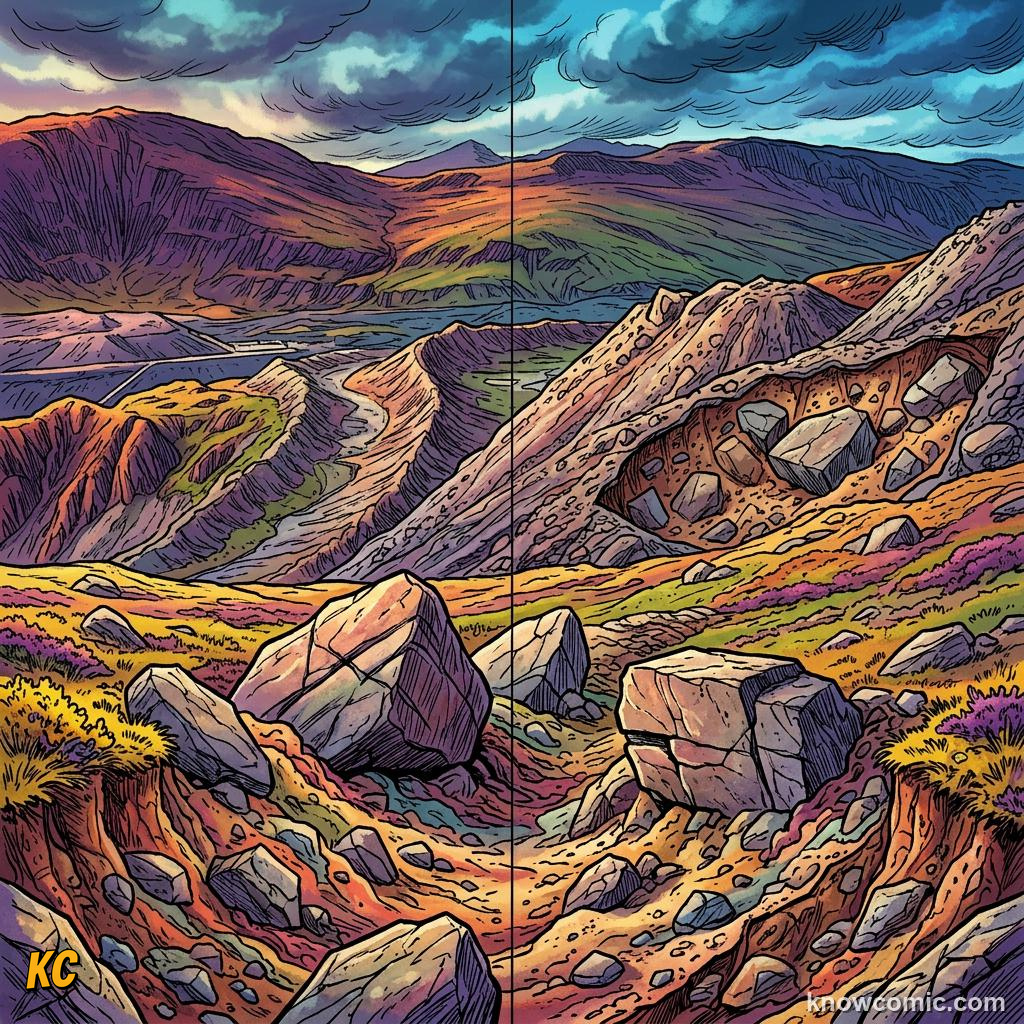
- During the last ice age, ice sheets covered large parts of North America, northern Europe, and mountain ranges worldwide.
- When glaciers retreat, they leave behind ridges and sheets of till that mark former ice positions.
- These deposits help geographers reconstruct how far ice advanced and which direction it flowed.