🌍 SEISMOLOGY: EARTHQUAKE MECHANICS
PAGE 1 OF 5 — WHEN ROCKS BREAK
EARTHQUAKE ENERGY
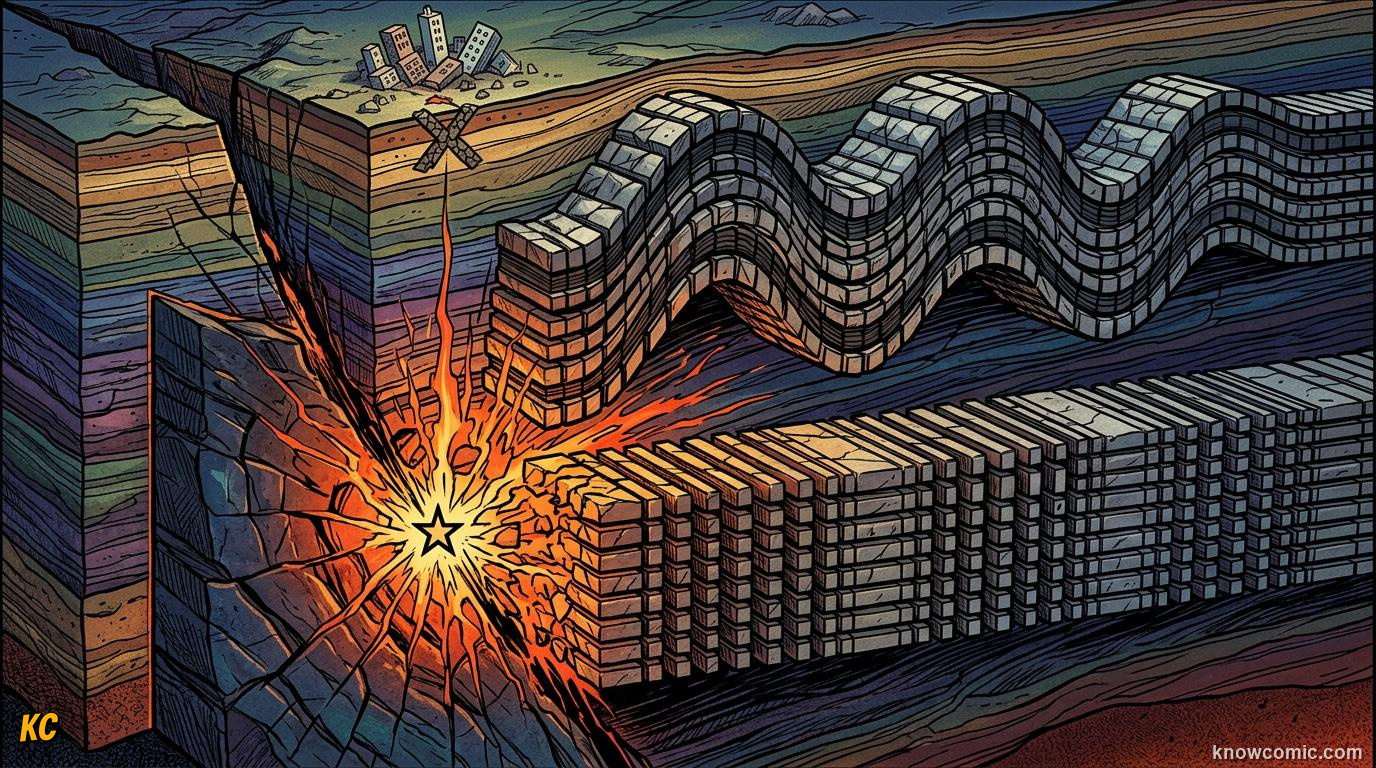
WHAT IS AN EARTHQUAKE?
An earthquake is a sudden release of stored elastic energy when rocks along a fault break and slip. Tectonic plates grind past, collide, or pull apart at plate boundaries, building stress over years or centuries. When friction is overcome, the fault ruptures and seismic waves radiate outward. The underground starting point is the focus (hypocenter). The point on the surface directly above it is the epicenter, where shaking is often strongest. Transform faults like the San Andreas, studied in Topic 5, produce shallow strike-slip earthquakes as plates slide horizontally. Subduction zones and rifts also generate major tremors, but the physics of wave travel is the same everywhere. Seismology is the science of measuring and interpreting these vibrations to understand Earth's interior and assess hazard.
📍 FOCUS VS EPICENTER
The focus is where the fault actually slips deep underground. The epicenter is the surface point above the focus. News reports often name the epicenter city or region.
RUMBLE!
ELASTIC REBOUND
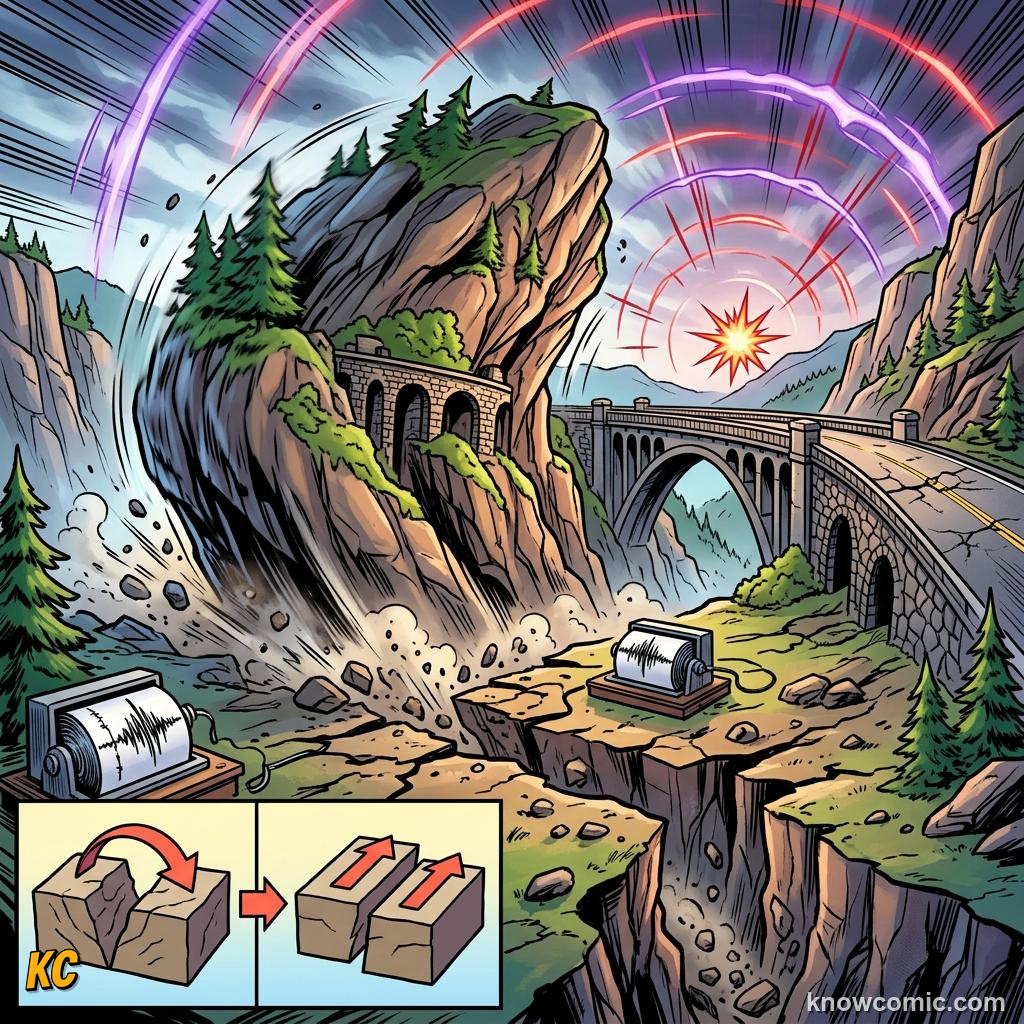
- Elastic rebound theory explains how rocks bend slowly, then snap back when a fault slips.
- Each earthquake relieves only part of the total plate motion, so the same fault can rupture again.
- Transform boundaries accumulate strike-slip stress for decades before a major release, as in Topic 5.
AFTERSHOCKS
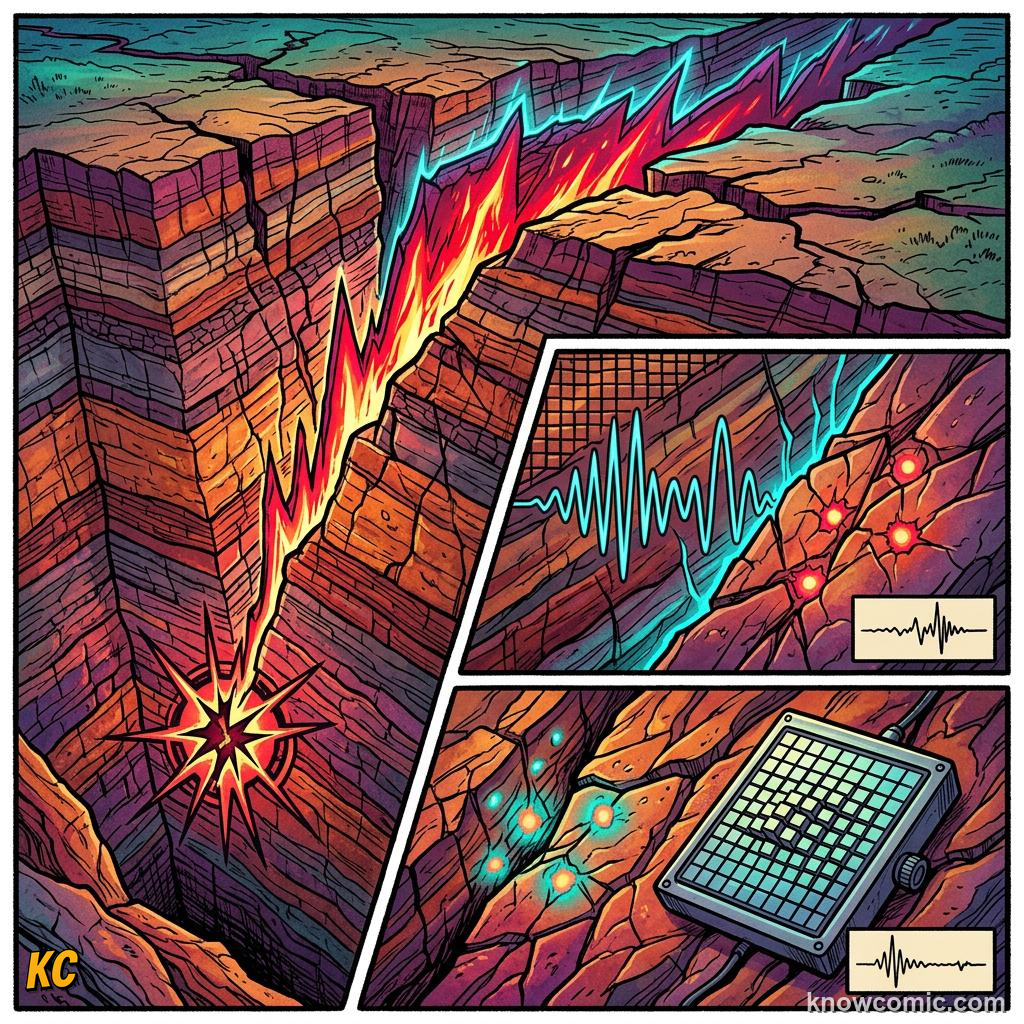
- Aftershocks are smaller tremors that follow the main shock as the crust adjusts.
- They can continue for days or months and may cause extra damage to weakened buildings.
- A large foreshock sometimes precedes an even bigger main earthquake, but prediction remains difficult.