😴 THE SCIENCE OF DREAMS
PAGE 1 OF 5 — WHY DO WE SLEEP AT ALL?
EVERY SINGLE NIGHT
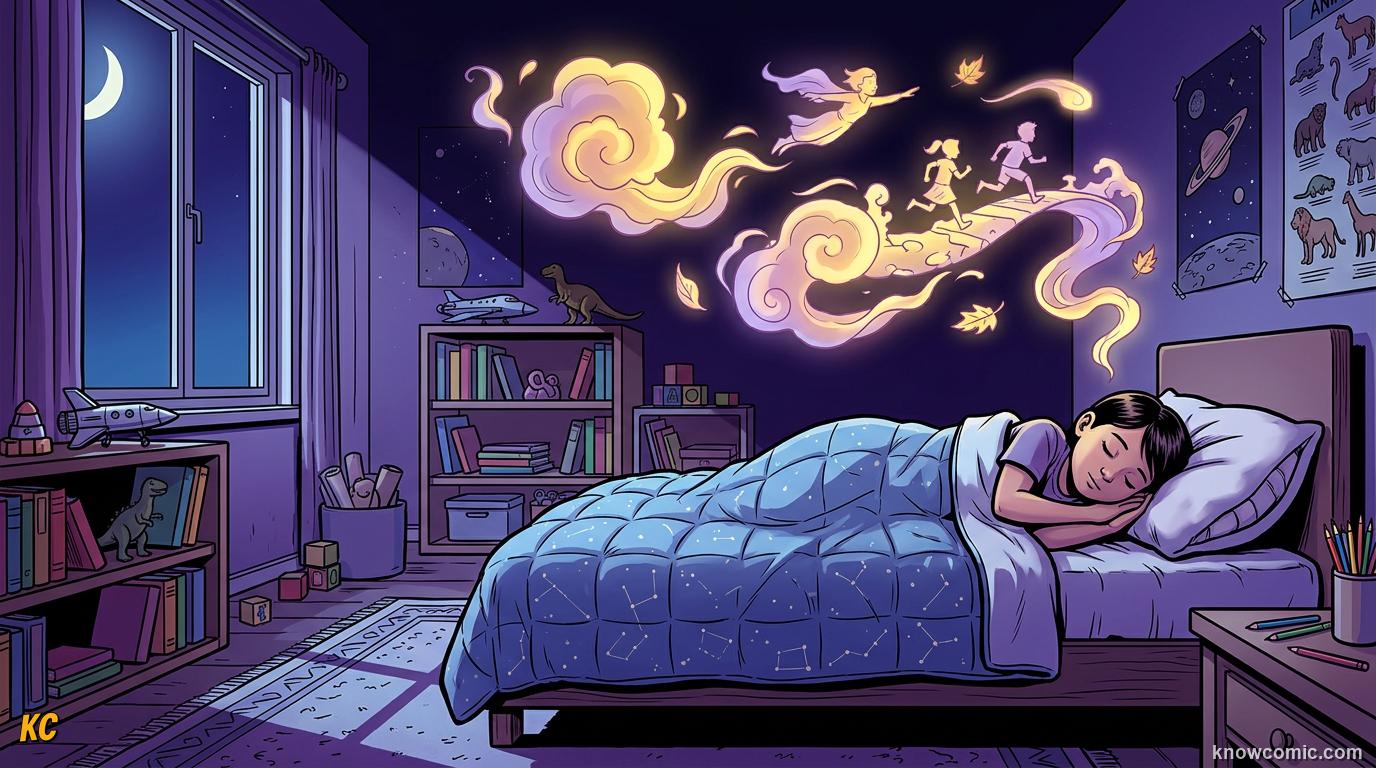
YOU SLEEP FOR A THIRD OF YOUR LIFE
Close your eyes tonight and you join the strangest habit in nature. If you live to be ninety, you will have spent about thirty years asleep. That sounds like a huge waste of time. It is not. While you lie still, your brain is running a night shift. It sorts the things you learned today and files the ones worth keeping. It washes away waste chemicals that built up while you were awake. It repairs your muscles and grows your bones. Scientists know sleep matters because of what happens without it, and that part is genuinely alarming.
⚡ DID YOU KNOW?
Over the winter of 1963 to 1964 a 17 year old student named Randy Gardner stayed awake for 264 hours, which is 11 days. He began seeing things that were not there and could not think straight. Nobody should ever try this.
ZZZ!
THE NIGHT SHIFT
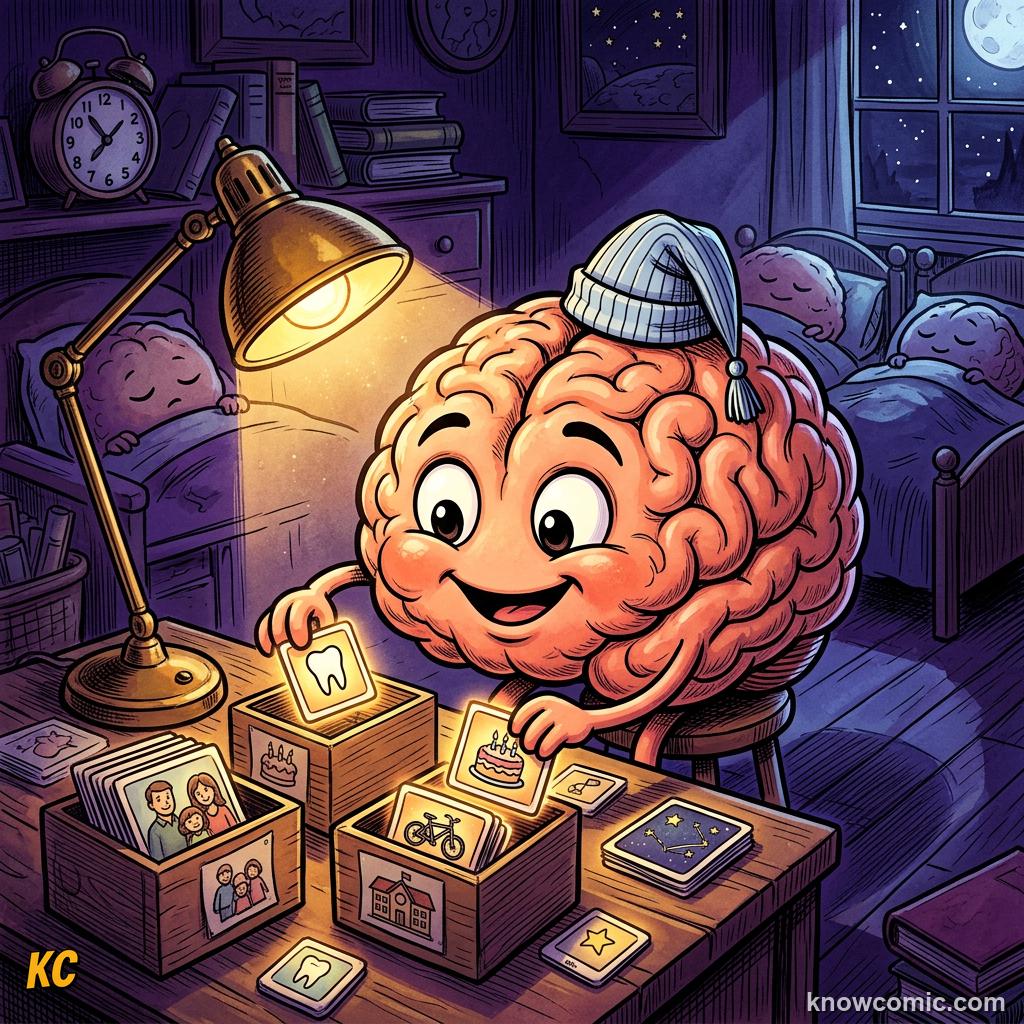
🧠 Your brain is not switched off at night, it is busier in some stages than when you are awake.
🧹 A cleaning system flushes waste chemicals out of your brain while you sleep.
🧹 A cleaning system flushes waste chemicals out of your brain while you sleep.
MEASURING SLEEP
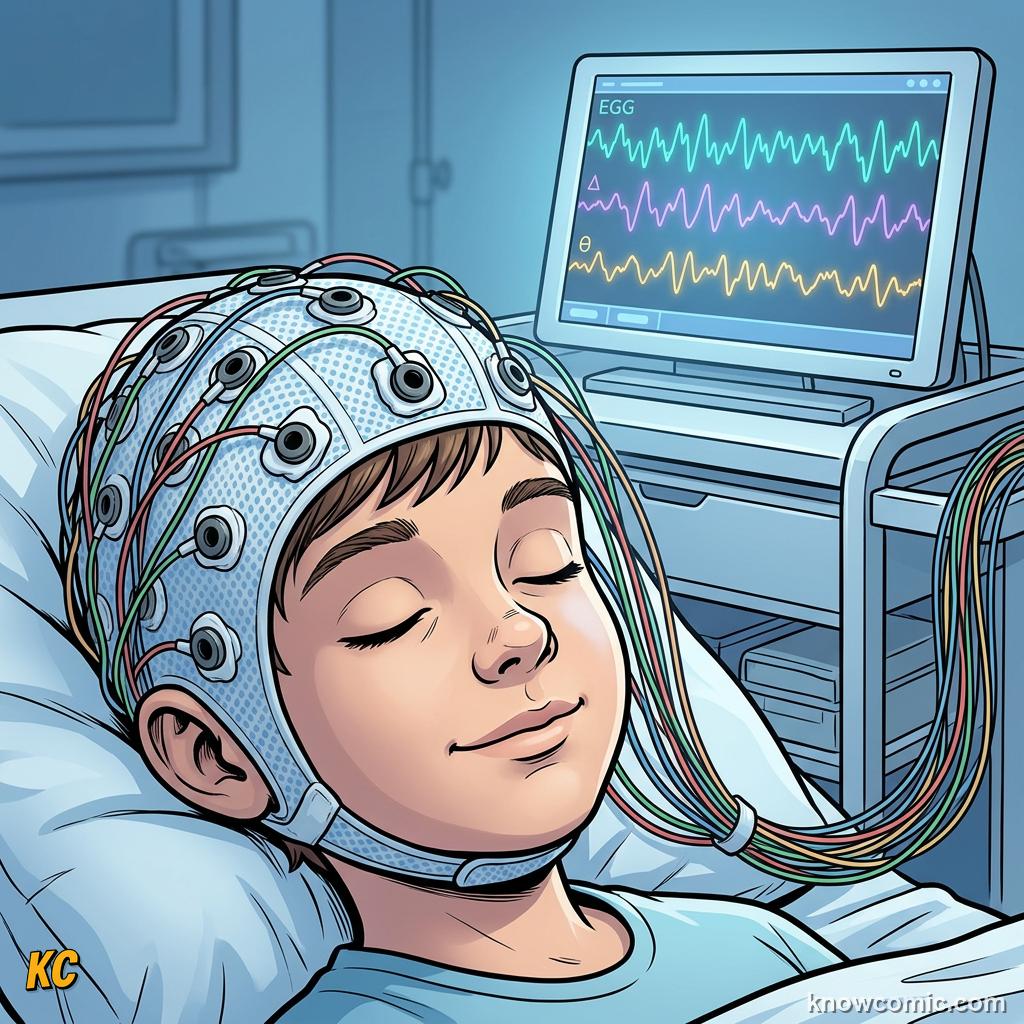
📡 Sensors stuck to the head record tiny electrical waves your brain makes as you sleep.
📊 Those wavy lines let scientists tell exactly which stage of sleep you are in.
📊 Those wavy lines let scientists tell exactly which stage of sleep you are in.
PAGE 2 OF 5 — THE STAIRCASE OF SLEEP
ROUND AND ROUND
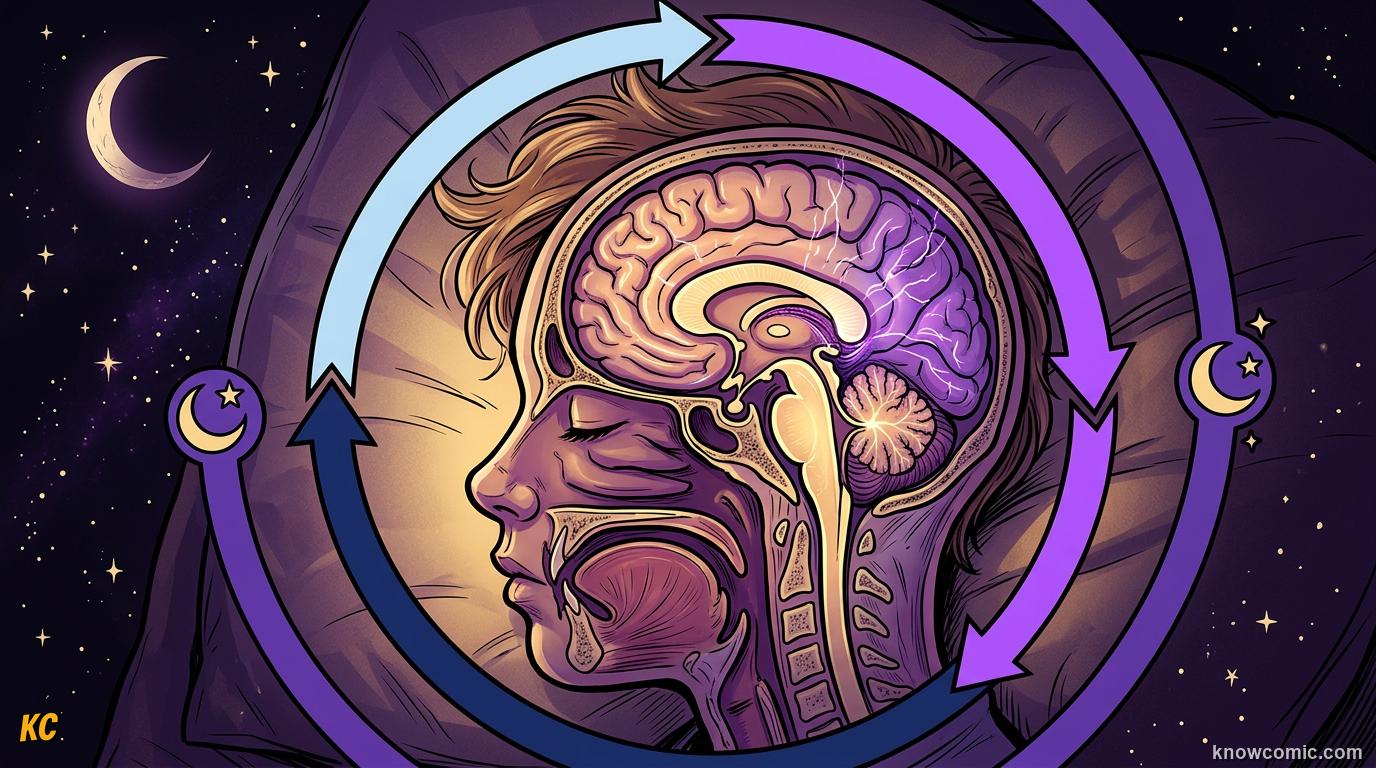
SLEEP GOES IN CIRCLES, NOT A STRAIGHT LINE
Falling asleep is not like switching off a lamp. It is more like walking down a staircase and then back up again, over and over. One full trip takes about ninety minutes, and you make that trip four to six times a night. First you drift into light sleep, where a small noise can still wake you. Then you sink into deep sleep, where your body does its repair work. Then you climb back up into a strange stage where your eyes flick about behind your closed lids. That last stage is where most of your vivid dreams happen. Each time you go round, you spend a little less time deep down and a little longer dreaming.
CYCLE!
STAGE ONE
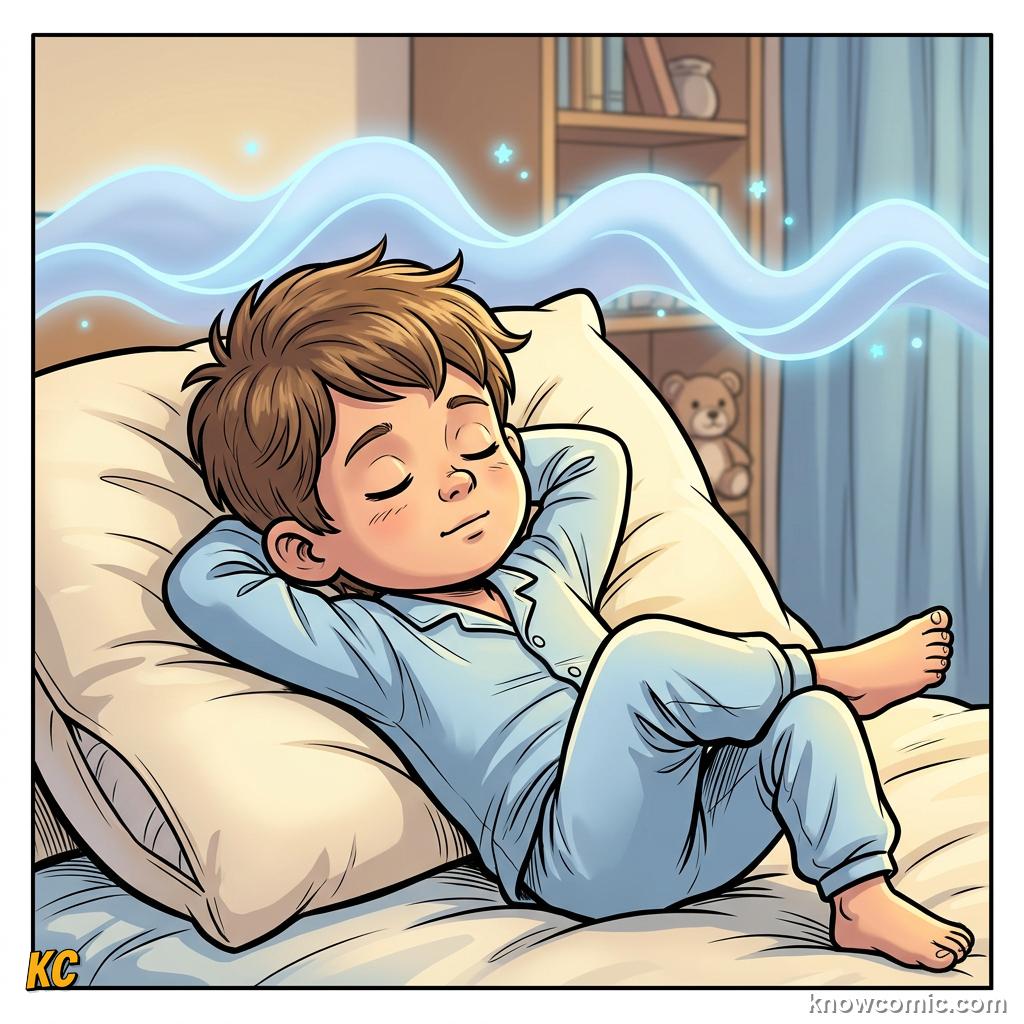
🌕 Light sleep is the doorway, and you can be woken from it very easily.
🥋 That falling feeling that jolts you awake happens right here.
🥋 That falling feeling that jolts you awake happens right here.
DEEP SLEEP
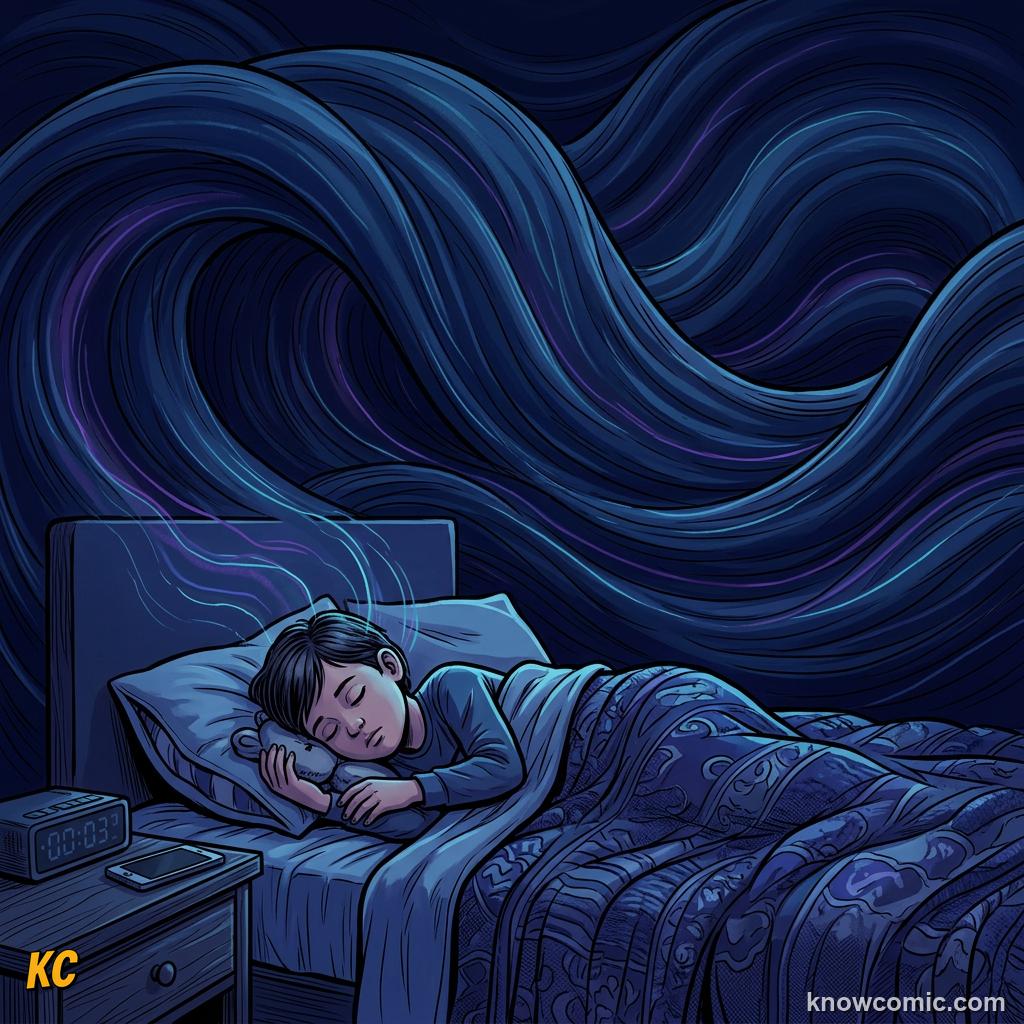
🔨 Deep sleep is when your body repairs itself and growing happens.
🔊 It is the hardest stage to wake from, so you feel groggy if someone tries.
🔊 It is the hardest stage to wake from, so you feel groggy if someone tries.
REM SLEEP
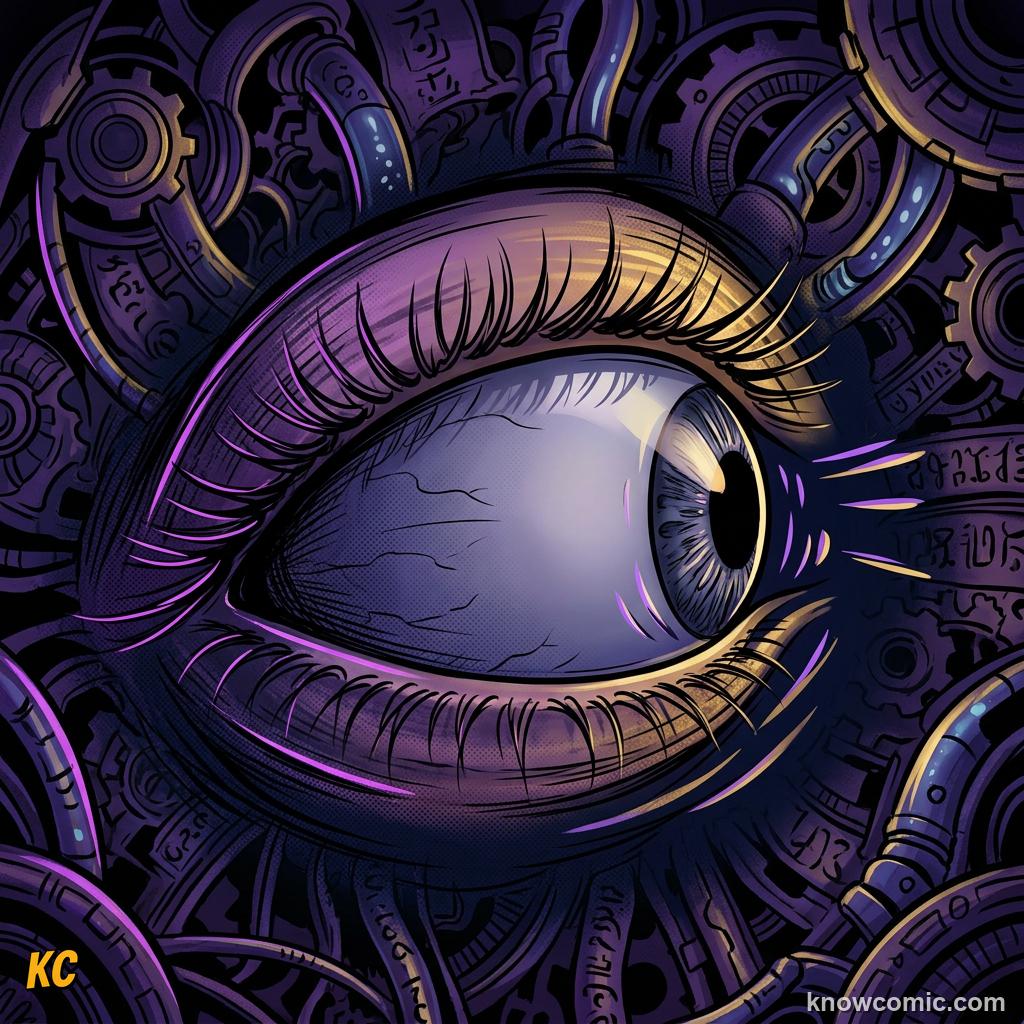
👁️ REM stands for rapid eye movement, because your eyes dart about under the lids.
🎨 Your brain becomes almost as active as when you are wide awake.
🎨 Your brain becomes almost as active as when you are wide awake.
PAGE 3 OF 5 — INSIDE A DREAM
SAME OLD STORIES
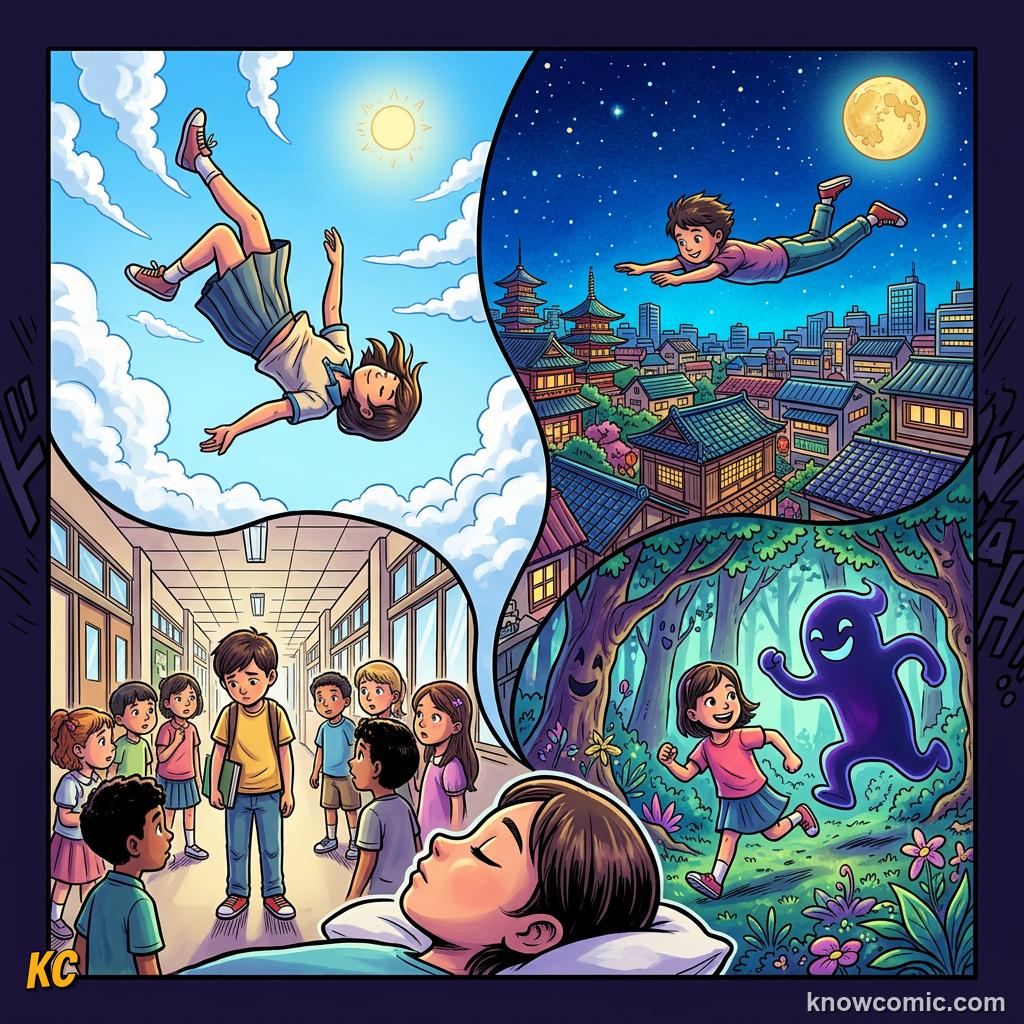
🏃 People all over the world report the same dreams, like falling, flying or being chased.
🏫 Turning up somewhere unprepared is another one almost everybody has had.
🏫 Turning up somewhere unprepared is another one almost everybody has had.
GONE BY BREAKFAST
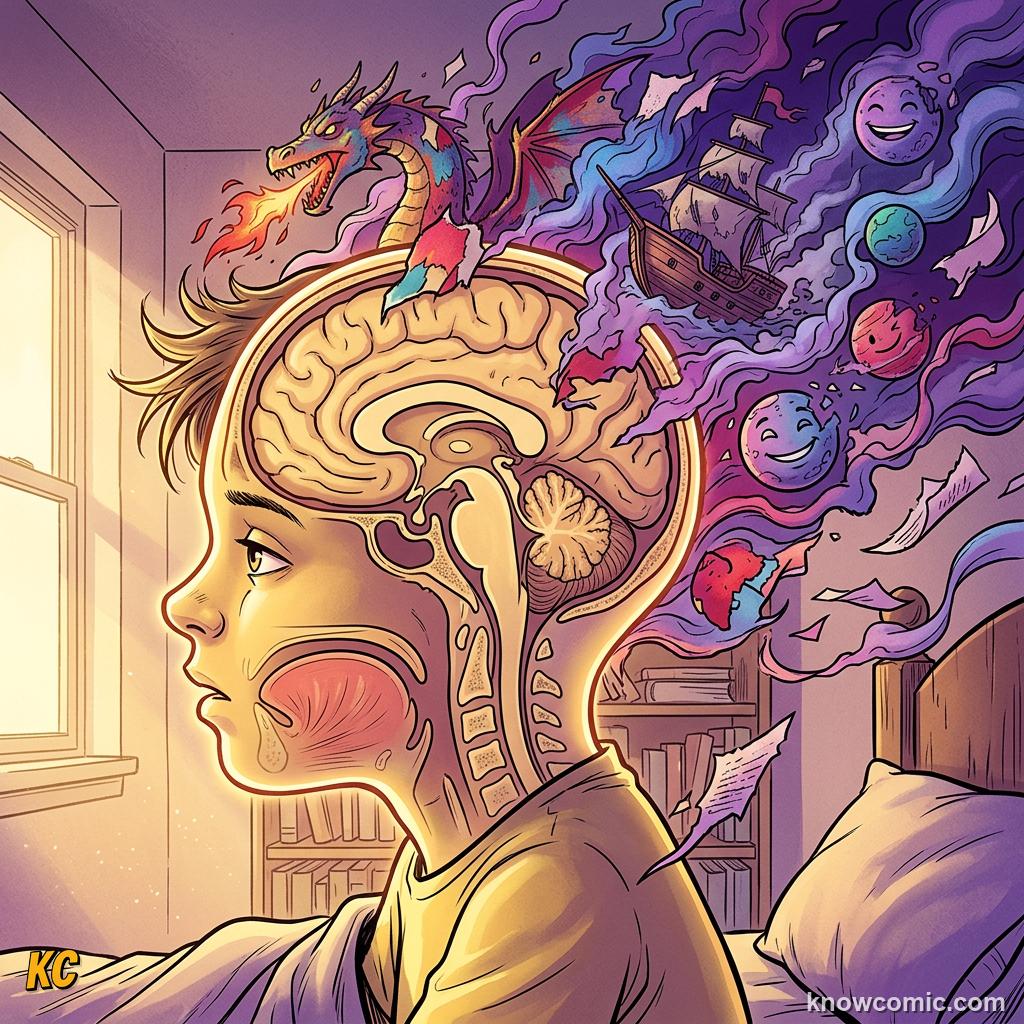
💨 Most dreams are forgotten within minutes of opening your eyes.
📝 The parts of the brain that save new memories work slowly while you dream.
📝 The parts of the brain that save new memories work slowly while you dream.
THE 1953 DISCOVERY
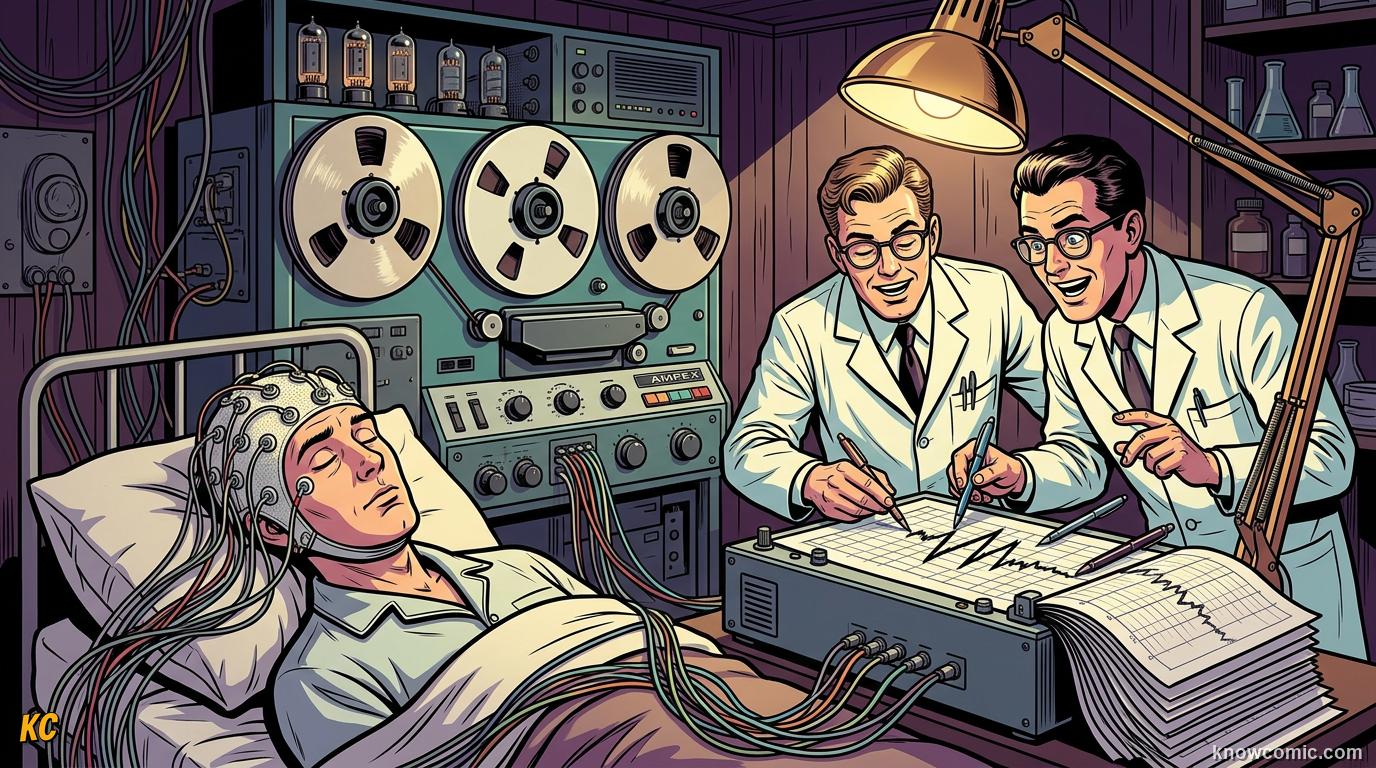
THE NIGHT SOMEBODY NOTICED THE EYES
For thousands of years nobody could study a dream, because a dream leaves no trace. Then in 1953 two scientists in Chicago, Eugene Aserinsky and Nathaniel Kleitman, spotted something odd. At certain moments in the night, a sleeper's eyes began flicking rapidly from side to side. They woke people during those moments and asked what was happening. Almost every time, the answer was a vivid dream. For the first time ever, there was a signal on the outside that told you a dream was running on the inside. Dream science had a doorway at last.
👶 BABIES DREAM MOST
Newborn babies spend about half of their sleep in REM, far more than grown ups do. Scientists think all that REM helps the brand new brain wire itself up.
FLICK!
PAGE 4 OF 5 — TAKING THE CONTROLS
AWAKE INSIDE A DREAM
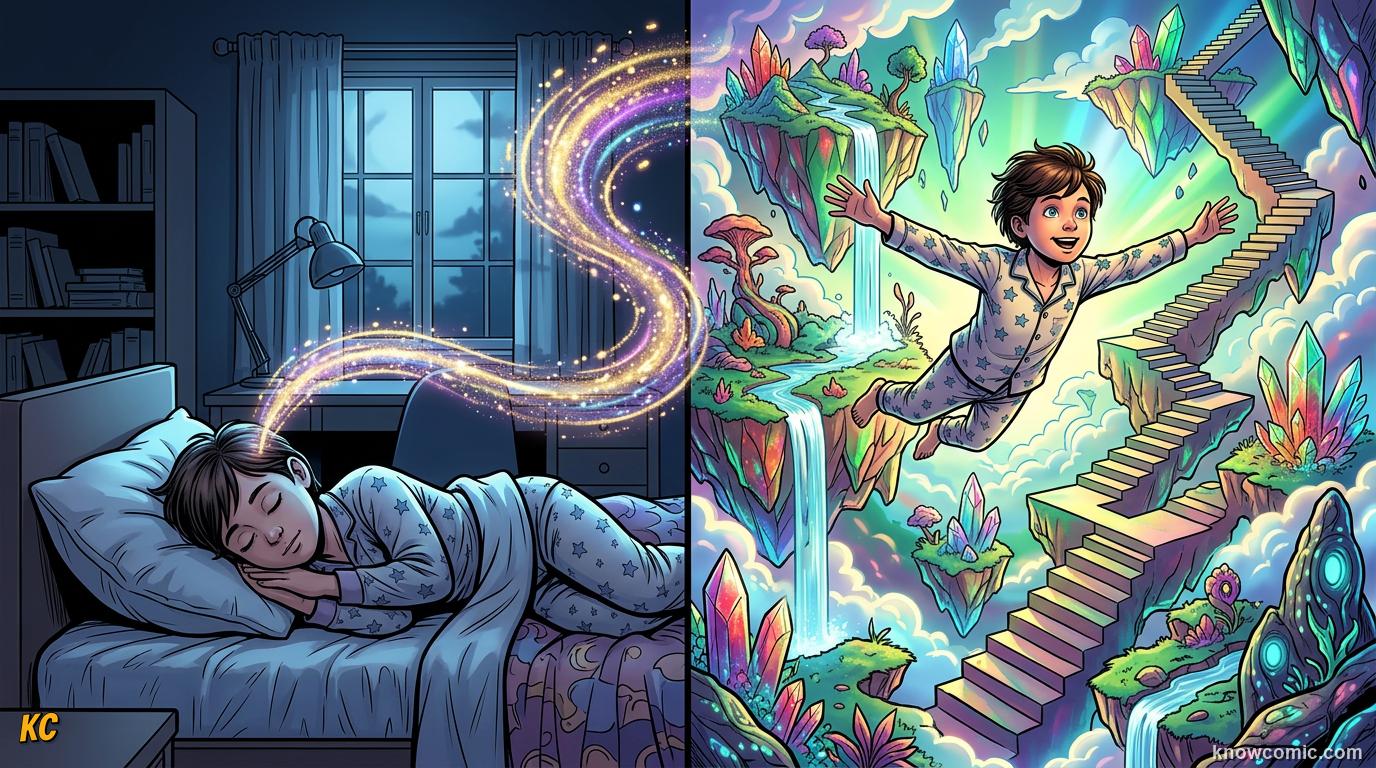
LUCID DREAMING IS REAL, AND IT WAS PROVED IN A LAB
Sometimes a sleeper suddenly realises that none of this is real. That is called a lucid dream, and once it happens some people can steer the dream like a story they are writing. For years scientists argued about whether it truly existed. The problem was obvious: a dreamer cannot exactly shout across to the laboratory. Then in 1975 a researcher named Keith Hearne found a clever way round it. He knew the eyes still move during REM, so he asked a volunteer to signal with deliberate left and right eye movements the moment he realised he was dreaming. The signal arrived, right there on the recording, while the man was fast asleep. It was a message sent out of a dream.
WAKE UP!
REALITY CHECKS
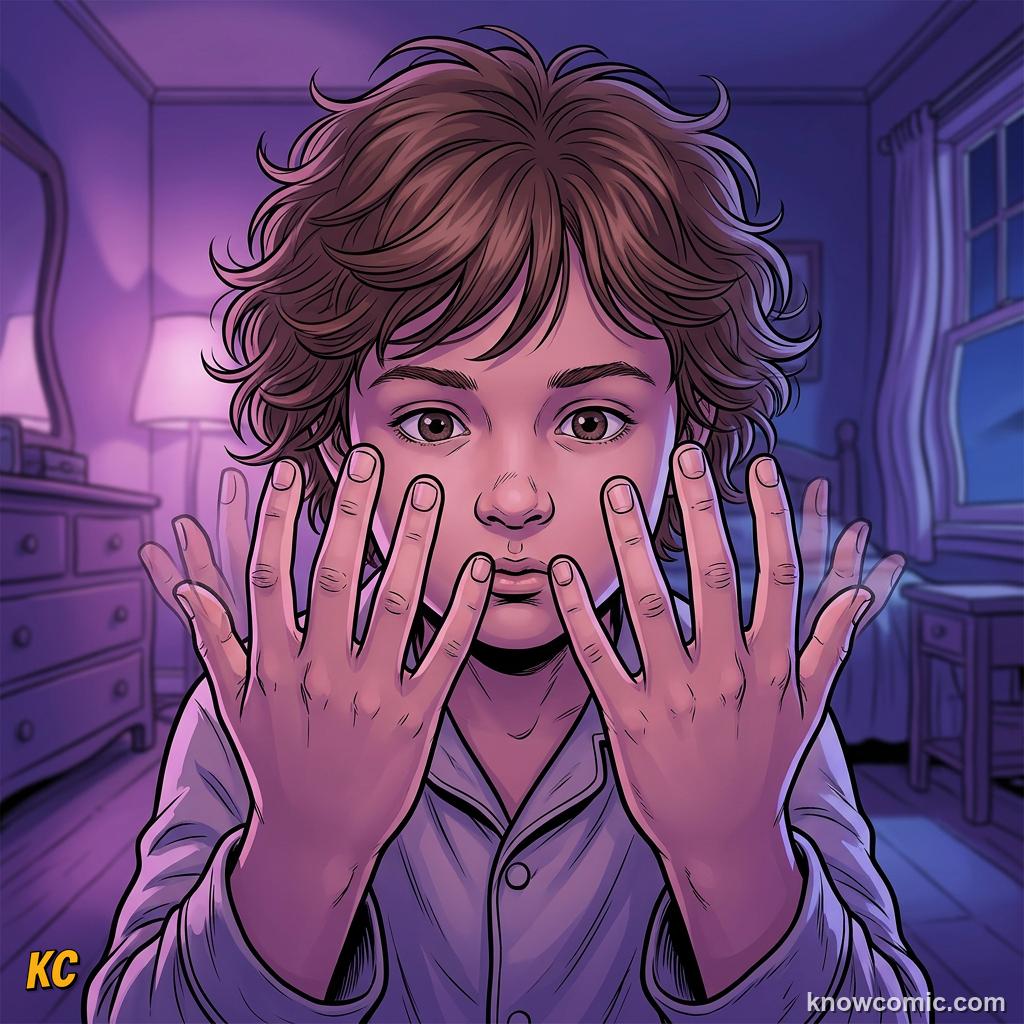
🖐 Dreamers often check if they are dreaming by staring hard at their own hands.
🕐 Clocks and writing tend to look wrong or keep changing inside a dream.
🕐 Clocks and writing tend to look wrong or keep changing inside a dream.
DREAM JOURNALS
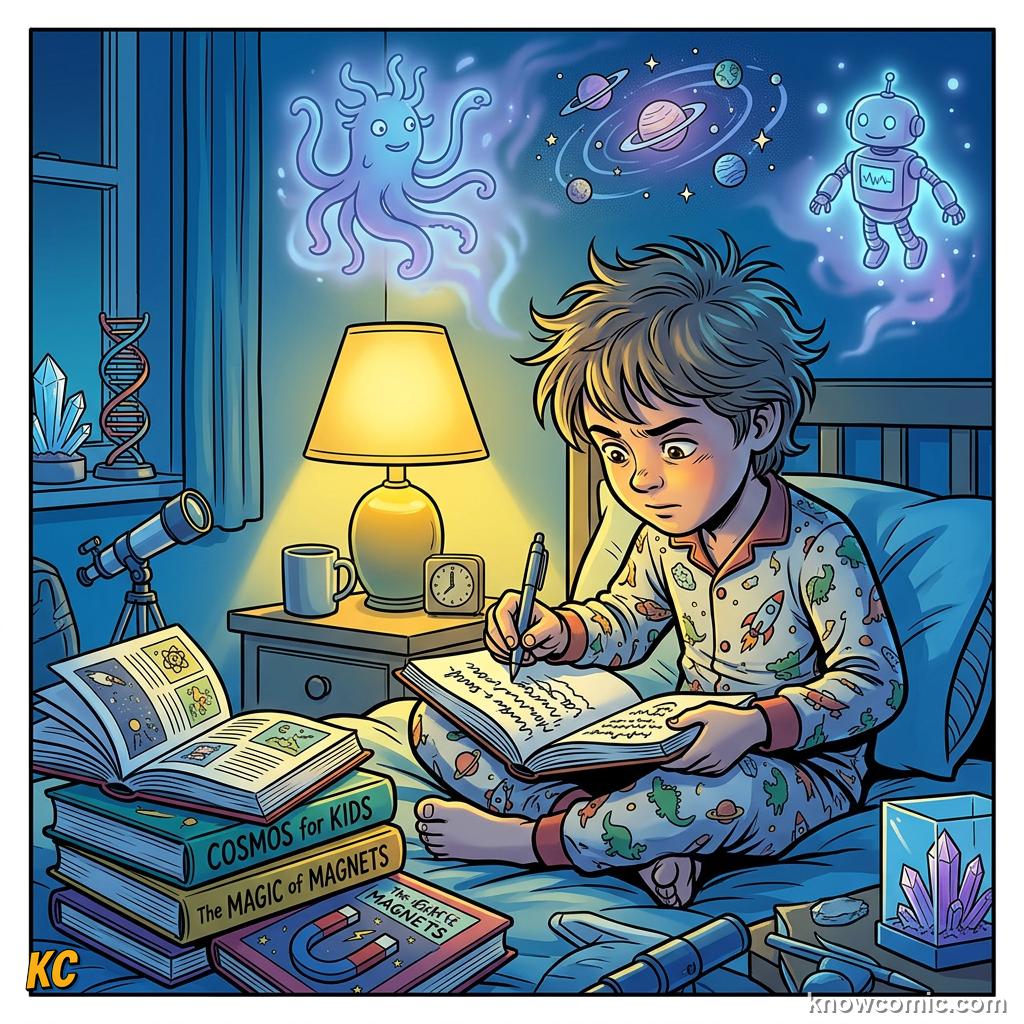
📝 Writing your dream down the second you wake helps you remember far more of it.
📈 Keep it up and you start spotting patterns that repeat night after night.
📈 Keep it up and you start spotting patterns that repeat night after night.
SLEEP PARALYSIS
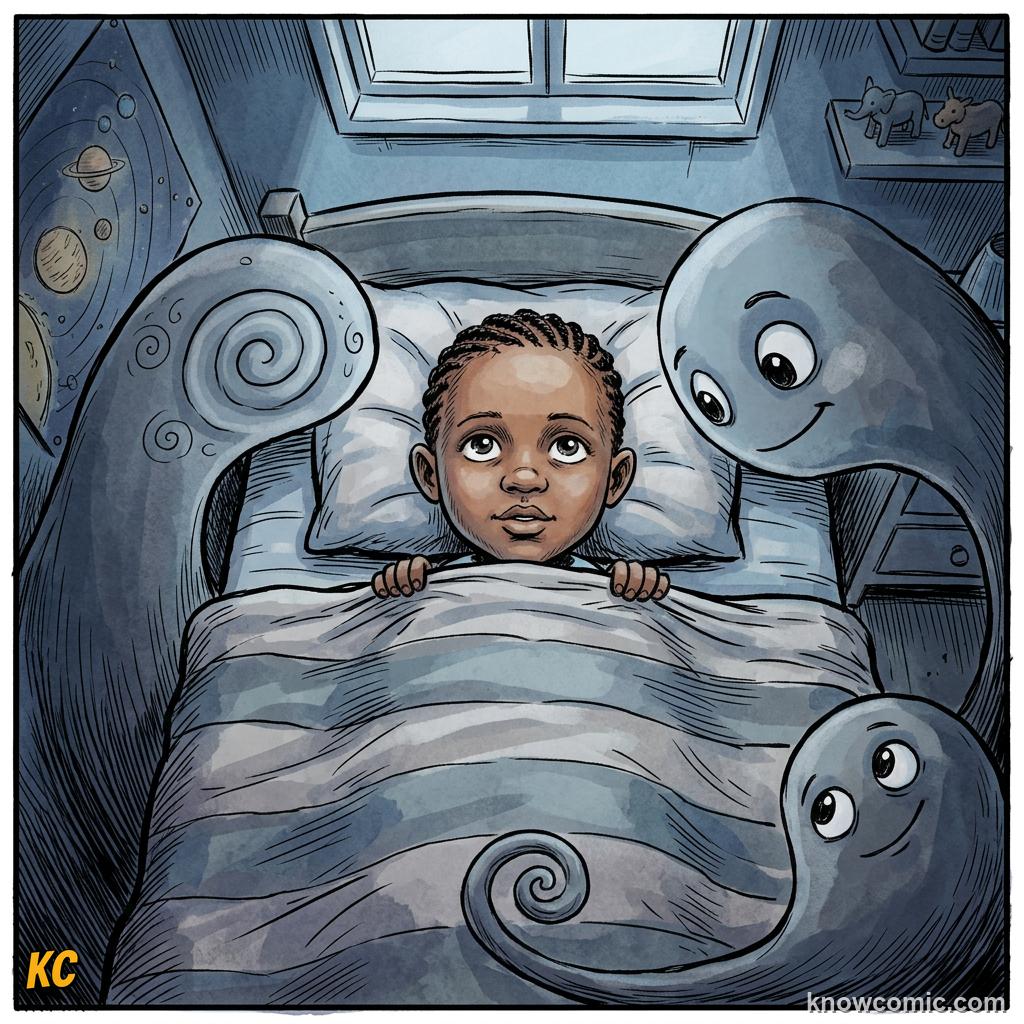
🚫 Your body switches your muscles off during REM so you cannot act your dreams out.
😴 If your mind wakes before the switch flips back, you cannot move for a few seconds.
😴 If your mind wakes before the switch flips back, you cannot move for a few seconds.
PAGE 5 OF 5 — SO WHY DO WE DREAM?
THE BIG QUESTION
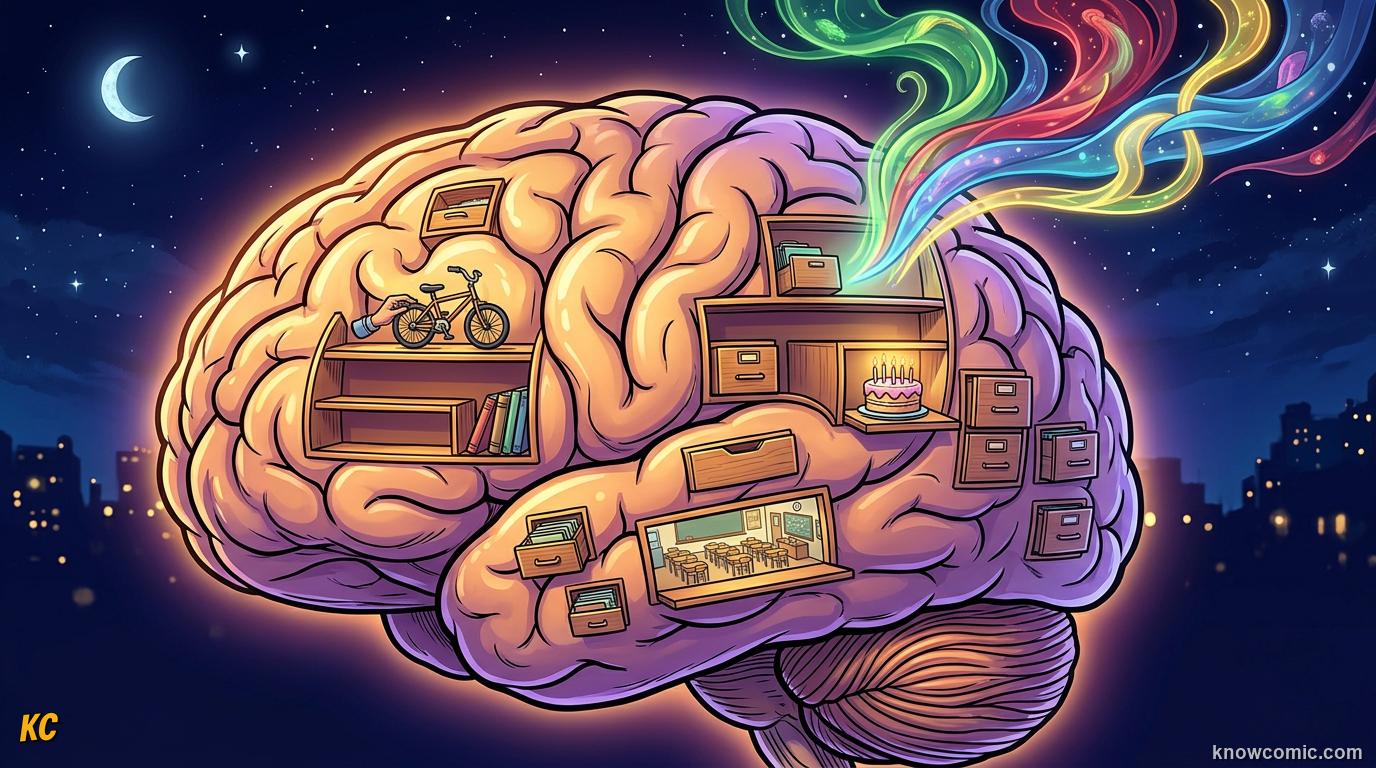
NOBODY HAS FULLY SOLVED THIS YET
Here is the honest answer: science does not know for certain why we dream. There are good ideas competing. One says dreaming is how your brain practises frightening situations in a safe place, so you cope better when they happen for real. Another says dreams are what you notice while your brain sorts and stores the day's memories overnight. A third says the sleeping brain fires off signals almost at random, and the storytelling part of you stitches them into a tale that feels like it makes sense. These ideas can all be partly right at once. That is what makes dreams such a brilliant thing to study, because the answer is still out there waiting.
🧠 TEST IT YOURSELF
Keep a notebook by your bed for two weeks and write down whatever you remember the instant you wake. Most people are amazed how much more they recall by the end.
DREAM ON!
THE OLD ANSWER
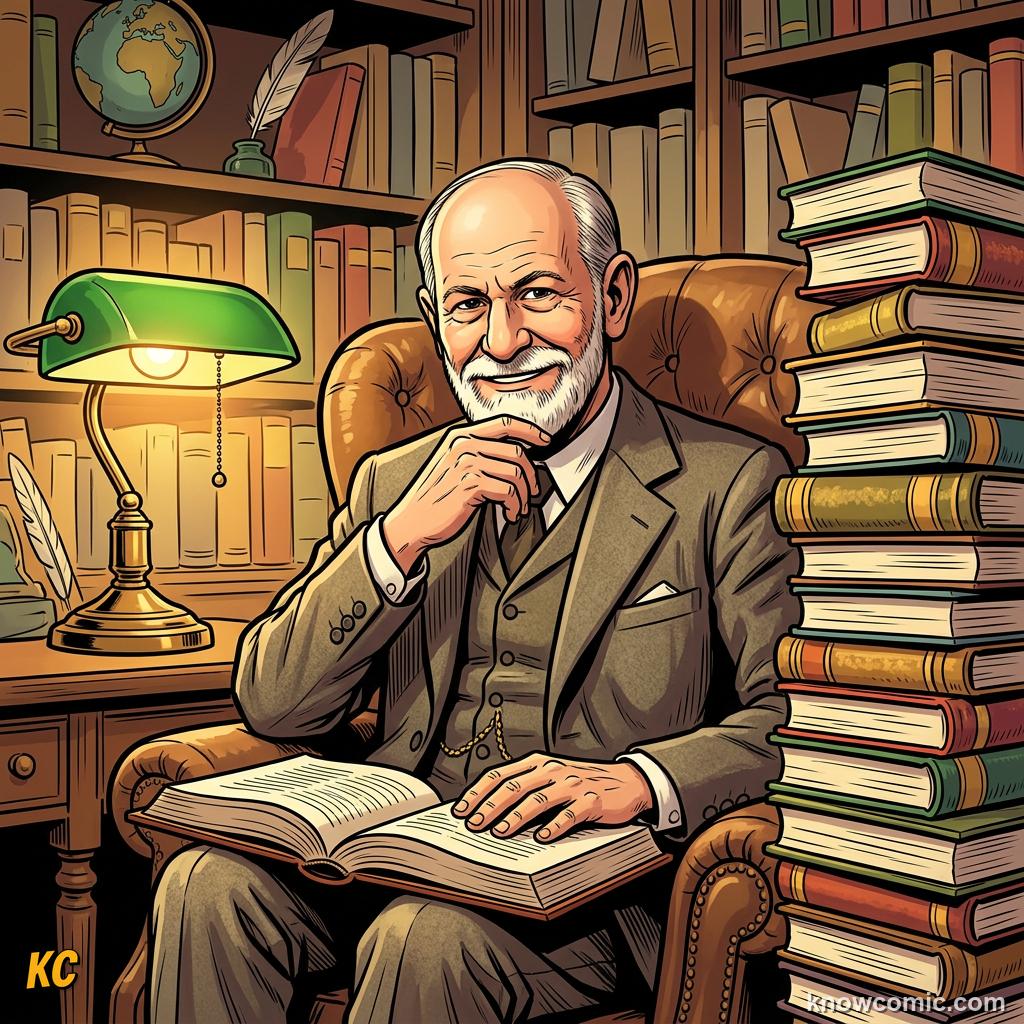
📖 In 1900 Sigmund Freud claimed dreams were secret wishes in disguise.
🤷 Most scientists today think he was wrong, but he did get people studying dreams.
🤷 Most scientists today think he was wrong, but he did get people studying dreams.
REMEMBER
😴 KEY FACTS
Sleep runs in cycles of about ninety minutes. Vivid dreams mostly happen in REM sleep. REM was discovered in 1953, and lucid dreaming was proved in a laboratory in 1975.
🧠 Your brain sorts memories while you sleep
👁️ Darting eyes are the outside clue to a dream
❓ Why we dream is still an open question
👁️ Darting eyes are the outside clue to a dream
❓ Why we dream is still an open question
🧠 QUIZ TIME!
THE SCIENCE OF DREAMS · 5 QUESTIONS
QUESTION 01
About how long does one full sleep cycle take?
QUESTION 02
What does REM stand for?
QUESTION 03
In 1953, what did Aserinsky and Kleitman notice in sleeping people?
QUESTION 04
Why can you usually not move during sleep paralysis?
QUESTION 05
What do scientists say for certain about why we dream?
0/5
LOADING...