📖 250 Topics🆓 FREE + PRO⏱️ 5 min per comic🧠 Quiz included
📌
PIVOT
The turning point
→
📏
DISTANCE
From pivot to push
→
💪
FORCE
The push you apply
→
🚪
DOORS
Handles far from hinge
→
✨
TODAY
Tools and balance
🔧 MOMENTS & TORQUES
TOPIC 15 · SCIENCE · FORCES & MOTION
PAGE 1 OF 5 — TURNING POWER
WHAT IS A MOMENT?
FORCE THAT TWISTS
A moment, also called a torque, measures how much a force tends to turn an object around a pivot. In a simple case, moment equals force times the perpendicular distance from the pivot to the line of the force. Push farther from the hinge and you get more turning effect for the same force.
🔧 M = F × d
Moment (torque) is force times perpendicular distance from the pivot.
TWIST!
PIVOT
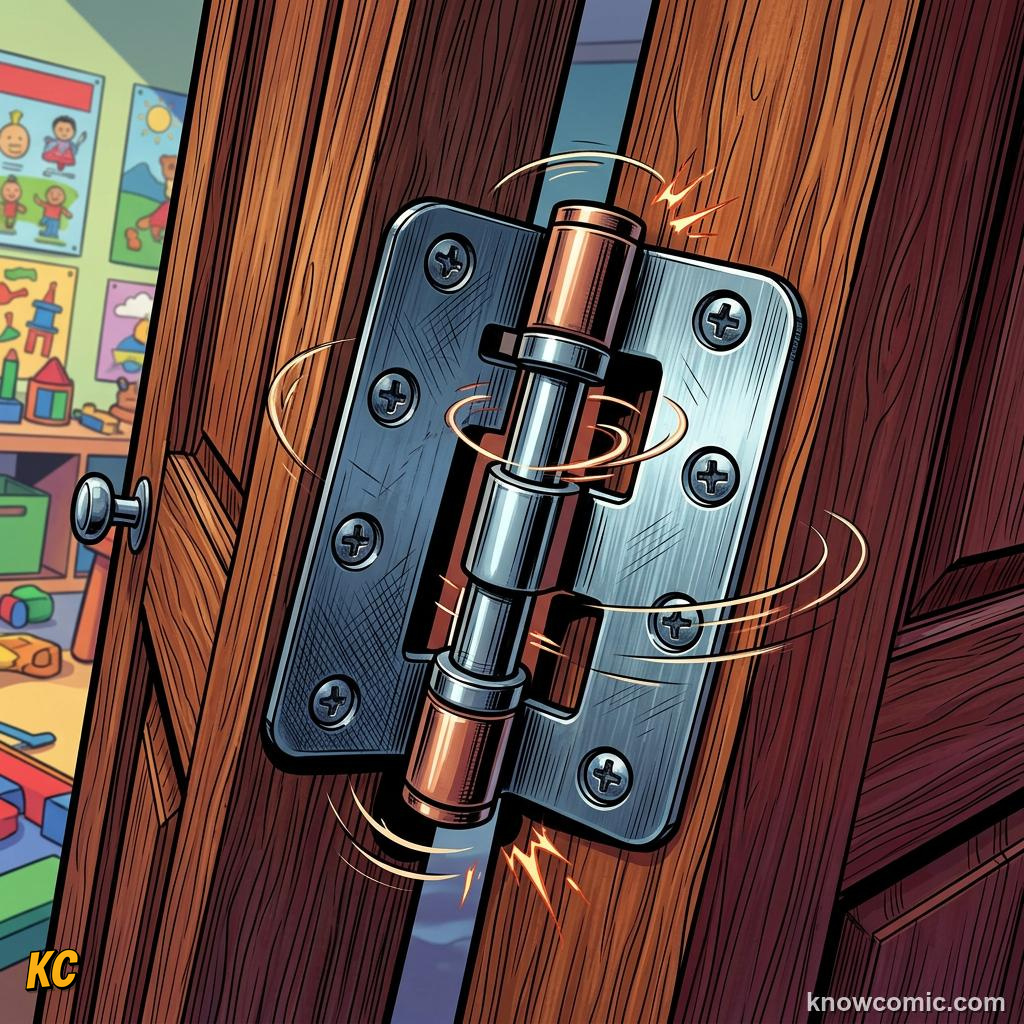
📌 Turning needs a pivot point 🚪 Hinges are everyday pivots
LEVER
📏 Longer arm, bigger moment 💪 Same force, more turn
PAGE 2 OF 5 — LONG HANDLES
WHY SPANNERS ARE LONG
DISTANCE IS YOUR FRIEND
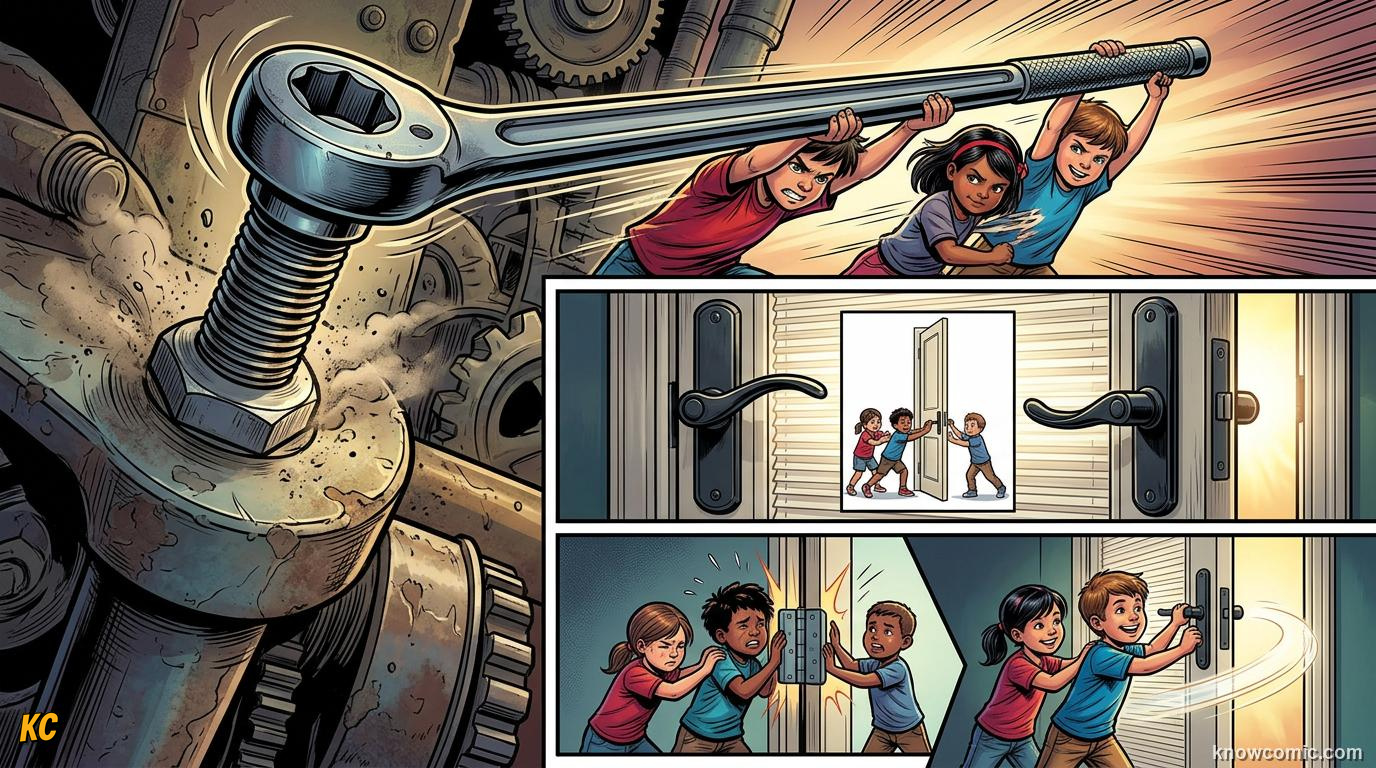
A long wrench handle lets you apply force far from the bolt. That larger distance creates a larger moment, so a stubborn nut can turn with a smaller push. Push near the bolt and you need a much bigger force for the same turning effect. Tool designers choose handle length on purpose.
🔧 REACH
Longer handle distance increases moment, so less force is needed to turn a fastener.
EASY!
WRENCH
🔧 Long handle multiplies turn 🔩 Stubborn bolts need distance
NEAR
😅 Short grip needs huge force 🛠️ Design chooses the length
SAFE
👀 Do not over-leverage soft parts 🧤 Keep steady footing
PAGE 3 OF 5 — DOORS AND SEESAWS
DOOR
🚪 Handle far from hinge 🤏 Near-hinge push feels weak
SEESAW
⚖️ Equal moments = balance 👧 Distance trades with weight
EVERYDAY MOMENTS
BALANCE AROUND A PIVOT
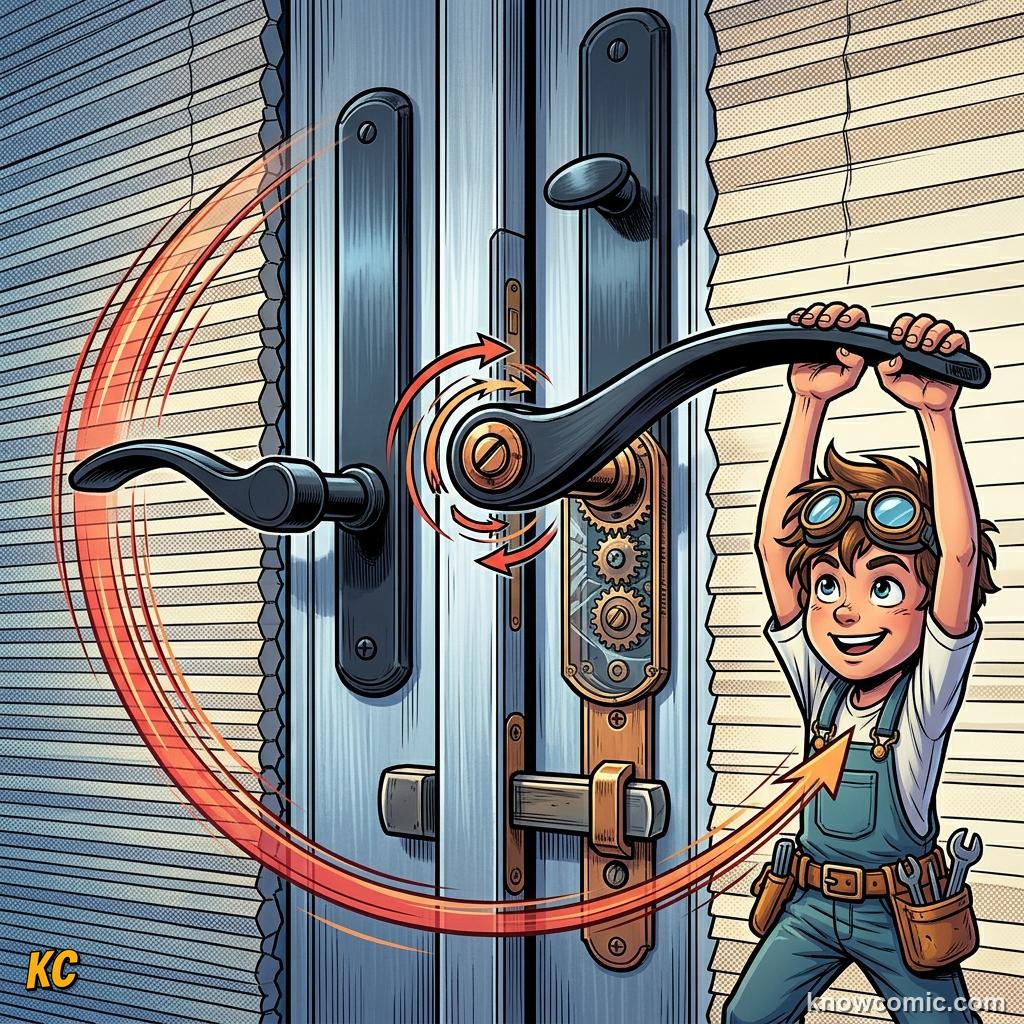
Door handles sit far from the hinges so a gentle pull opens a heavy door. Push near the hinge and the door feels stubborn. A seesaw balances when clockwise and anticlockwise moments are equal. Sit farther from the fulcrum and you can balance a heavier friend closer in.
🚪 HANDLE
Door handles are placed far from hinges to increase moment and make opening easier.
OPEN!
PAGE 4 OF 5 — CLOCKWISE AND ANTICLOCKWISE
COMPETING TURNS
WHICH WAY WINS?
Moments have direction: they can try to turn an object clockwise or anticlockwise. If the total turning effects cancel, the object does not start spinning. If one side wins, rotation begins. Engineers balance moments in bridges, cranes, and robots so structures stay steady or move on purpose.
🔄 NET
When opposing moments cancel, there is no net turning. When they do not, rotation starts.
SPIN!
CLOCK
⏰ Clockwise versus anticlockwise ⚖️ Cancel for steady balance
CRANE
🏗️ Counterweights fight tip moments 🤖 Robots plan joint torques
CHECK
🧪 Add moments around one pivot 📐 Perpendicular distance matters
PAGE 5 OF 5 — MOMENT FACTS
WRAP UP
FORCE TIMES DISTANCE
A moment is a turning effect: force times distance from the pivot. Long handles and far door handles make turning easier. Seesaws balance when moments cancel. Think pivot, force, and distance whenever something twists.
TURN!
TRY
🚪 Open a door near and far from the hinge 🔧 Notice wrench handle length
REMEMBER
⚗️ KEY FACTS
Moment = force × perpendicular distance from pivot. Longer distance means more turning for the same force. Balance means opposing moments cancel.
📌 Need a pivot to turn 📏 Distance multiplies the effect 🚪 Handles sit far from hinges