📖 250 Topics🆓 FREE + PRO⏱️ 5 min per comic🧠 Quiz included
🔔
SWING
Back and forth
→
⏳
PERIOD
Time per swing
→
📏
LENGTH
Controls the beat
→
🌍
GRAVITY
Pulls the bob
→
✨
TODAY
Clocks and demos
🕰️ PENDULUMS
TOPIC 16 · SCIENCE · FORCES & MOTION
PAGE 1 OF 5 — THE SWINGING SECRET
GALILEO'S IDEA
A STEADY BEAT
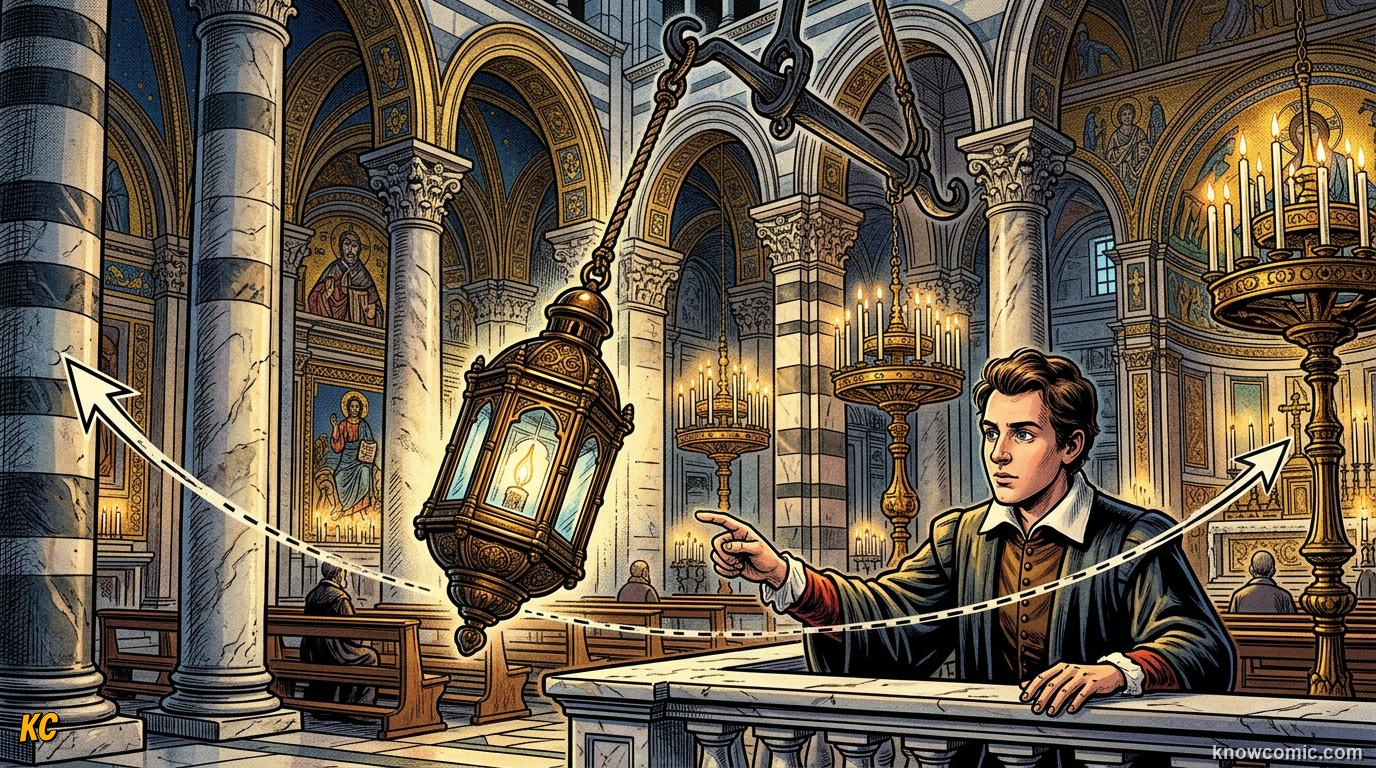
A pendulum is a mass, called a bob, hanging from a string or rod that can swing. Stories say Galileo watched a cathedral lamp and noticed the swings kept a steady rhythm. For small angles, the time of one full swing, the period, stays nearly the same even if the swing is a bit wider or narrower. That near-steady beat is why pendulums became timekeepers.
⏳ PERIOD
For small swings, pendulum period is nearly independent of amplitude.
TICK!
LAMP

🔔 Swinging lamps inspired study 🧪 Galileo tested the idea
BEAT
⏳ Small swings keep similar timing 🕰️ Great for clocks
PAGE 2 OF 5 — WHAT CHANGES THE PERIOD
LENGTH AND GRAVITY
MASS DOES NOT RULE
Make a simple pendulum longer and the period gets longer: it swings more slowly. Stronger gravity makes the period shorter. For a simple pendulum at small angles, the bob's mass does not change the period. Heavy and light bobs on the same length string keep nearly the same beat.
📏 LENGTH
Period depends on length and gravity. Longer pendulum, slower beat. Mass cancels out for a simple pendulum.
SLOW!
LONG
📏 Longer string, longer period ⚡ Stronger g, quicker swings
MASS
🧱 Heavy or light, same beat 🧪 Famous classroom demo
SMALL
📐 Rule works best for small angles ⚠️ Huge swings change timing a bit
PAGE 3 OF 5 — CLOCKS
GEARS
⚙️ Pendulum regulates the escape 🕰️ Hands step in steady time
LONG
🏠 Tall clocks use long pendulums ⏳ Calm beat, clear seconds
KEEPING TIME
FROM IDEA TO TICK
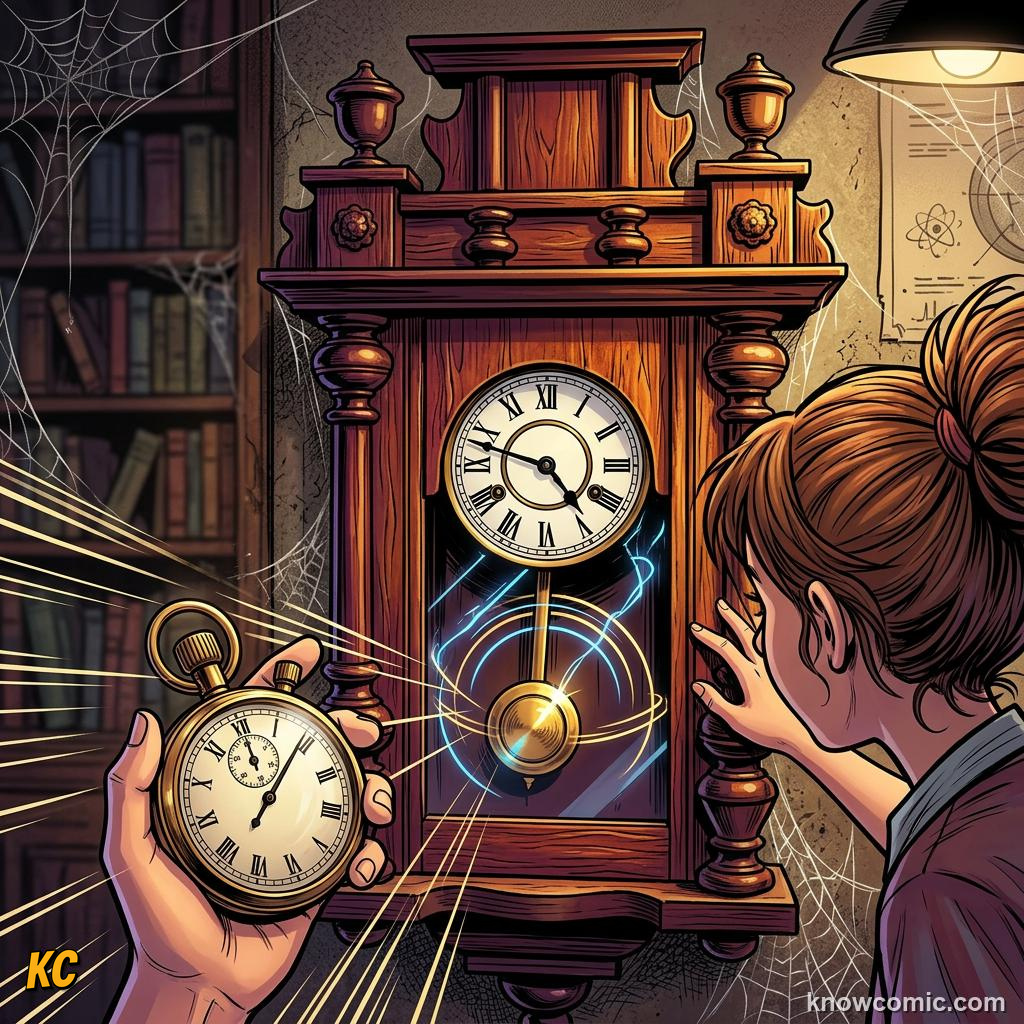
Pendulum clocks use a swinging bob to regulate the escape of gears so the hands move in steady steps. Christiaan Huygens built a working pendulum clock in the 1650s, a huge leap for accurate timekeeping. Grandfather clocks still show the idea: a long pendulum for a calm, regular beat.
🕰️ HUYGENS
Huygens developed a practical pendulum clock in the 1650s, improving timekeeping a lot.
TICK!
PAGE 4 OF 5 — LIMITS OF THE RULE
NOT PERFECT FOREVER
SMALL ANGLES HELP
Galileo thought the timing stayed the same for all swing sizes, but modern physics shows that is only a good approximation for small angles. Very wide swings take a bit longer. Real clocks keep the swing small and steady. Air drag and friction also slowly steal energy, so clocks need a little push each cycle.
⚠️ APPROX
Isochronism is approximate for small swings. Large amplitudes change the period a little.
REAL!
ANGLE
📐 Small swings are the sweet spot 📏 Huge arcs drift in timing
DRAG
🌬️ Air and friction slow the bob 🔧 Clocks add a tiny drive push
SCIENCE
🧪 Approximate laws still power tech ✅ Good enough made great clocks
PAGE 5 OF 5 — PENDULUM FACTS
WRAP UP
LENGTH SETS THE BEAT
Pendulums swing with a period that, for small angles, depends on length and gravity, not bob mass. That steady beat helped invent accurate clocks. Keep swings small for the simple rule to work well.
SWING!
TRY
🧵 Time a homemade string pendulum 📏 Compare short and long strings
REMEMBER
⚗️ KEY FACTS
For small swings, period depends on length and gravity, not mass. Galileo spotted the steady beat. Huygens turned it into clocks. Large swings are only approximately the same.
⏳ Period ≈ set by length and g 🧱 Mass does not change simple period 🕰️ Clocks need small steady swings
🧠 QUIZ TIME!
🕰️ PENDULUMS · 5 QUESTIONS
QUESTION 01
For small swings, what mainly sets a simple pendulum's period?
QUESTION 02
Does bob mass change the period of a simple pendulum (small angles)?
QUESTION 03
What happens if you make the pendulum longer?
QUESTION 04
Who developed an important early pendulum clock in the 1650s?
QUESTION 05
Is pendulum timing exactly the same for every swing size?