📖 250 Topics🆓 FREE + PRO⏱️ 5 min per comic🧠 Quiz included
🔥
EXHAUST
Gas pushed back
→
🚀
THRUST
Ship pushed forward
→
🌌
VACUUM
No air needed
→
🌍
ORBIT
Falling around Earth
→
✨
TODAY
Launch and explore
🚀 ROCKETS
TOPIC 17 · SCIENCE · FORCES & MOTION
PAGE 1 OF 5 — ACTION AND REACTION
NEWTON'S THIRD LAW
EQUAL AND OPPOSITE
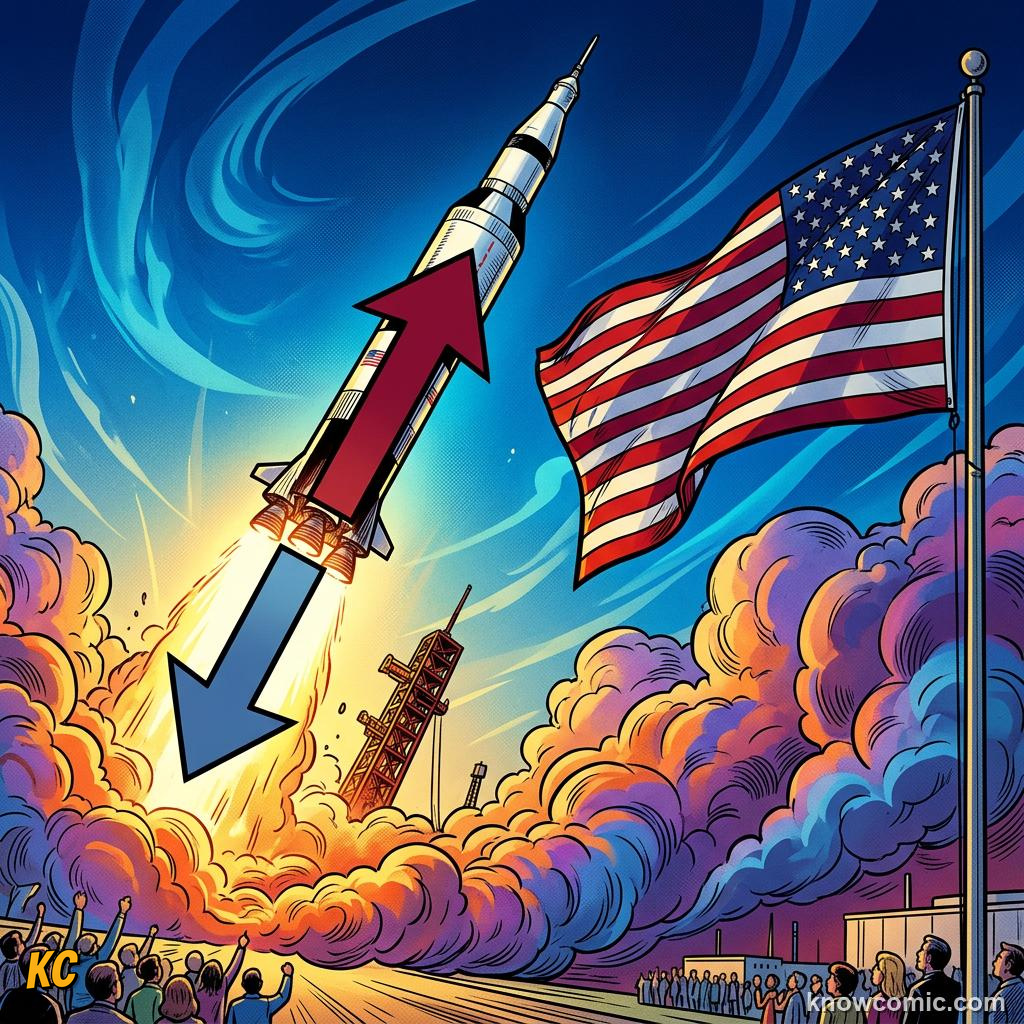
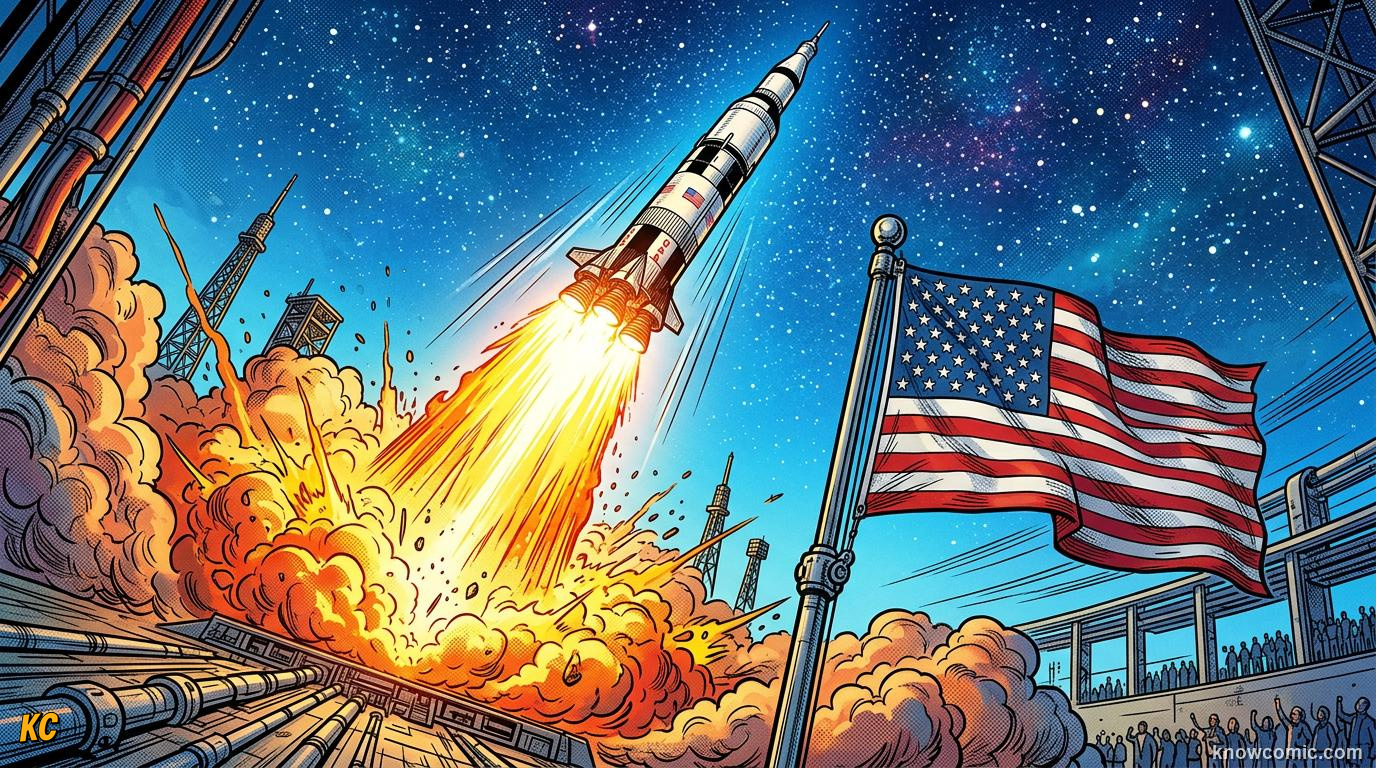
Newton's third law says that when object A pushes on object B, object B pushes back on A with equal force in the opposite direction. A rocket engine blasts hot gas backward. The gas feels a push one way; the rocket feels an equal push the other way. That forward push is thrust.
🚀 3RD LAW
Action and reaction forces come in equal and opposite pairs on two different objects.
⚖️ Forces are equal and opposite 🎯 They act on different objects
PAGE 2 OF 5 — WHY SPACE IS FINE
NO GROUND NEEDED
PUSH THE EXHAUST
A common myth says rockets need air to push against. They do not. The important push is between the rocket and its own exhaust. In the vacuum of space there is no air, yet rockets still accelerate because they throw mass backward and gain momentum forward. Atmosphere can add drag near Earth, but it is not required for the basic thrust idea.
🌌 VACUUM
Rockets work in space because they push on their exhaust, not on outside air.
MYTH!
AIR
❌ Not needed to push against ✅ Exhaust provides the reaction
DRAG
🌬️ Air near Earth can slow you 🚀 Space thrust still works
MASS
📦 Throwing mass backward moves you 🔥 Hot gas is that thrown mass
PAGE 3 OF 5 — THRUST AND FUEL
LAUNCH
🌍 Thrust fights weight first 📈 Then speed builds upward
STAGE
🧩 Empty stages drop away 🪶 Less mass, easier acceleration
HEAVY TANKS
LIGHTENING AS YOU GO
Thrust must overcome weight at liftoff and then keep accelerating the vehicle. Rockets carry fuel and oxidizer so they can burn without outside air. As fuel burns away, the rocket's mass drops, so the same thrust can accelerate it more. Staging drops empty tanks to shed even more mass.
⛽ FUEL
Rockets carry fuel and oxidizer. Burning propellant both makes thrust and reduces mass.
LIFT!
PAGE 4 OF 5 — ORBITS
FALLING AROUND EARTH
FAST SIDEWAYS
Orbit is not floating with engines always on. An orbital spacecraft moves so fast sideways that as gravity pulls it down, the curve of Earth falls away beneath it. It is continuous free fall around the planet. Rockets provide the speed to reach orbit; once there, coasting can continue for a long time with only small boosts.
🌍 ORBIT
Orbit is falling around Earth at high sideways speed so you keep missing the ground.
FALL!
SPEED
💨 Fast horizontal velocity 🌍 Gravity curves the path
COAST
🛰️ Engines can rest in orbit 🔧 Small burns adjust the path
HOME
🏠 Reentry needs careful slowing 🔥 Atmosphere becomes a brake
PAGE 5 OF 5 — ROCKET FACTS
WRAP UP
PUSH EXHAUST, GO FORWARD
Rockets move by action and reaction: exhaust back, ship forward. They work in vacuum because they push on their own gas. Fuel provides thrust and drops mass as it burns. Orbit is high-speed falling around Earth.
LAUNCH!
REMEMBER
🔥 Exhaust one way 🚀 Motion the other way
REMEMBER
⚗️ KEY FACTS
Newton's third law powers rockets. No outside air is required. Thrust comes from pushing exhaust backward. Orbit is fast sideways free fall around Earth.
⚖️ Action and reaction pairs 🌌 Works in vacuum 🌍 Orbit = falling while missing Earth
🧠 QUIZ TIME!
🚀 ROCKETS · 5 QUESTIONS
QUESTION 01
What law explains rocket thrust pairs?
QUESTION 02
Do rockets need air to push against?
QUESTION 03
What is thrust for a rocket?
QUESTION 04
Why does burning fuel help acceleration later in flight?