🔥 FRICTION: THE SLOWING FORCE
PAGE 1 OF 5 · WHY THINGS GRAB AND DRAG
THE FORCE BEHIND EVERY GRIP
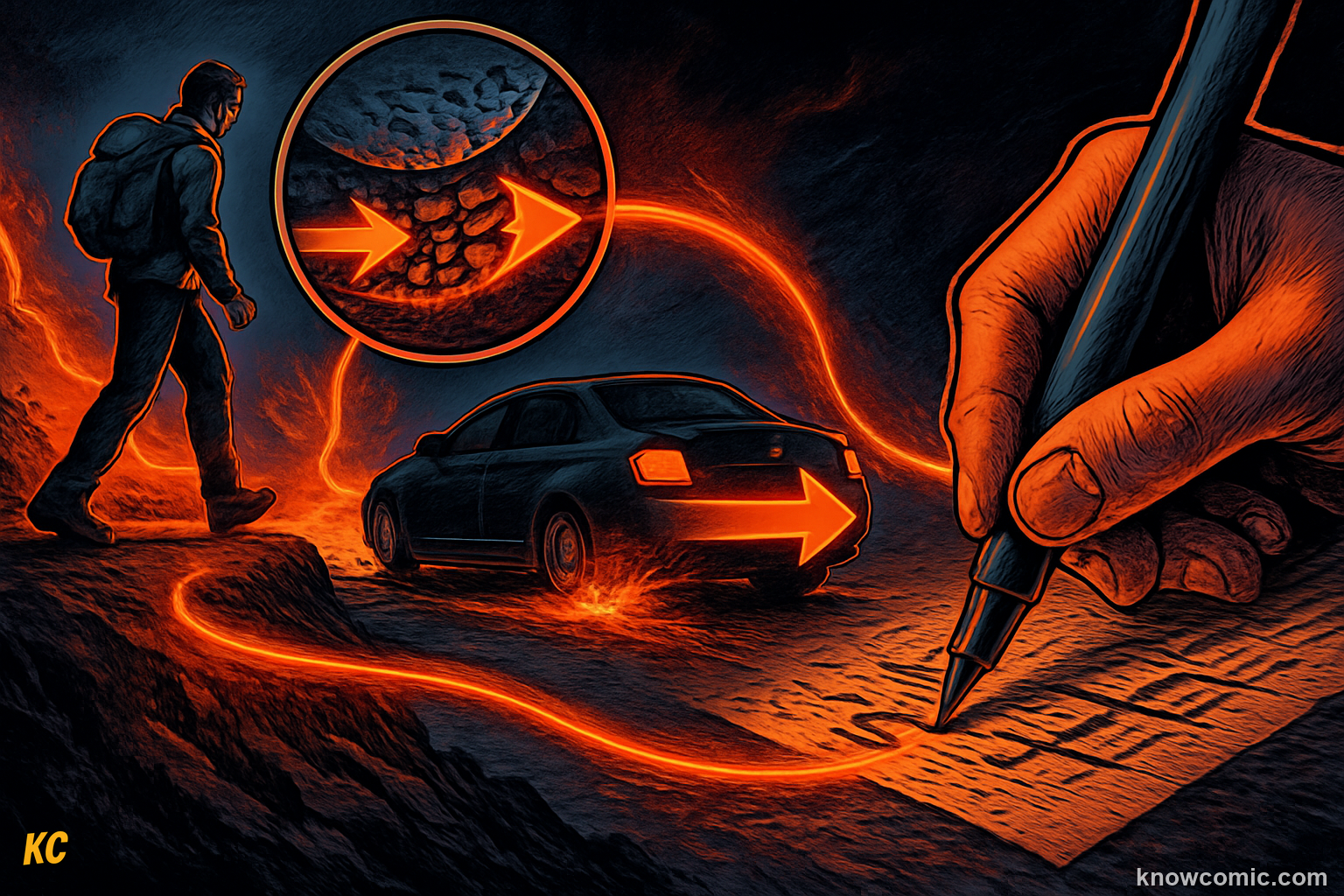
A TINY BRAKE ON EVERY SLIDE
When two things touch and try to skid past each other, they put up a fight. We call that fight friction. It is a sideways push that slows the slide. Shoes and sidewalk, pen and paper, brake pad and spinning disc, all use this idea so you can stand, draw, and stop.
Even a “smooth” table is lumpy under a microscope. Little hills catch on other hills when you press down. More weight, more catch. Rougher skin on the road, more catch. With zero friction, you could not even take a step without slipping like a cartoon on ice.
Even a “smooth” table is lumpy under a microscope. Little hills catch on other hills when you press down. More weight, more catch. Rougher skin on the road, more catch. With zero friction, you could not even take a step without slipping like a cartoon on ice.
"A little rub is how you steer. No rub, no steer."
GRIP!
WHAT CREATES FRICTION?
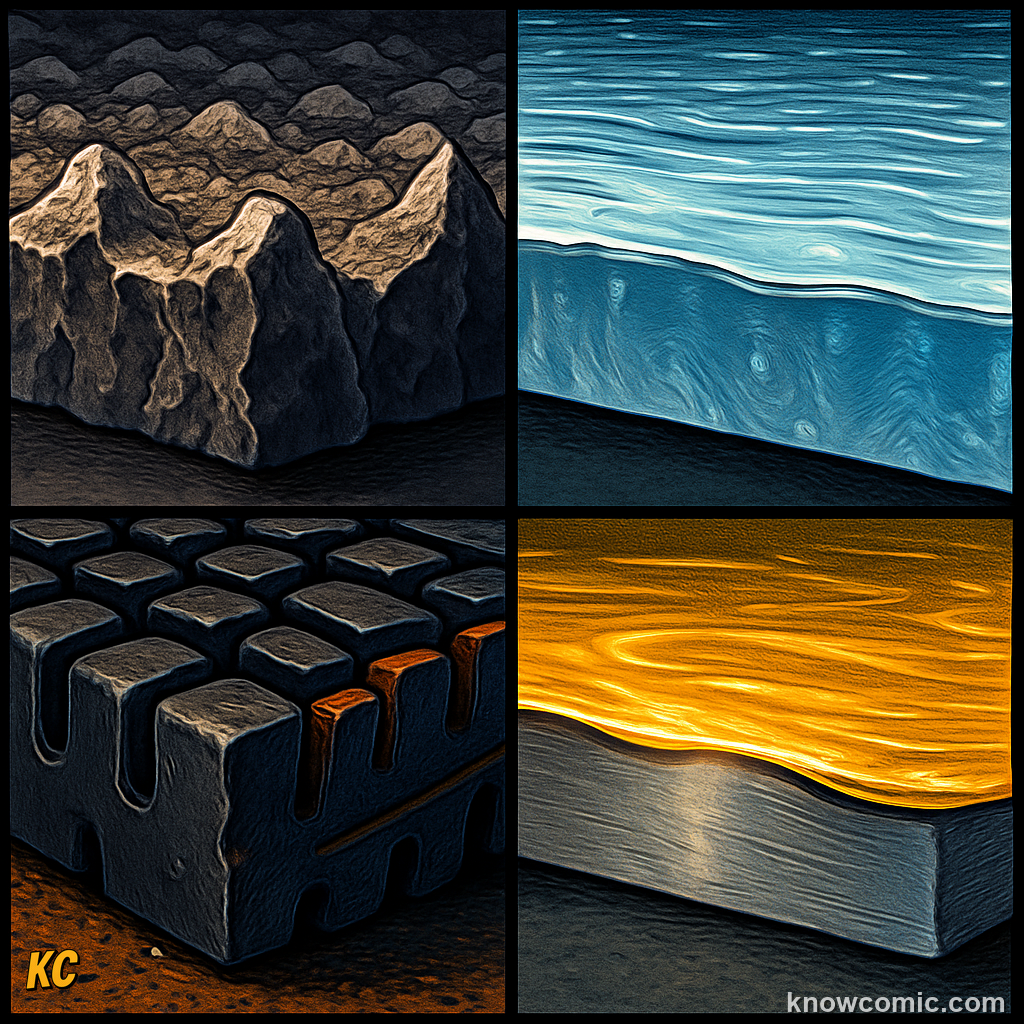
🔴 Microscopic bumps on every surface
⚒️ Heavier object = more friction
🌍 Rough surface = more friction
📅 Smooth/oiled surface = less friction
⚒️ Heavier object = more friction
🌍 Rough surface = more friction
📅 Smooth/oiled surface = less friction
FRICTION'S FORMULA
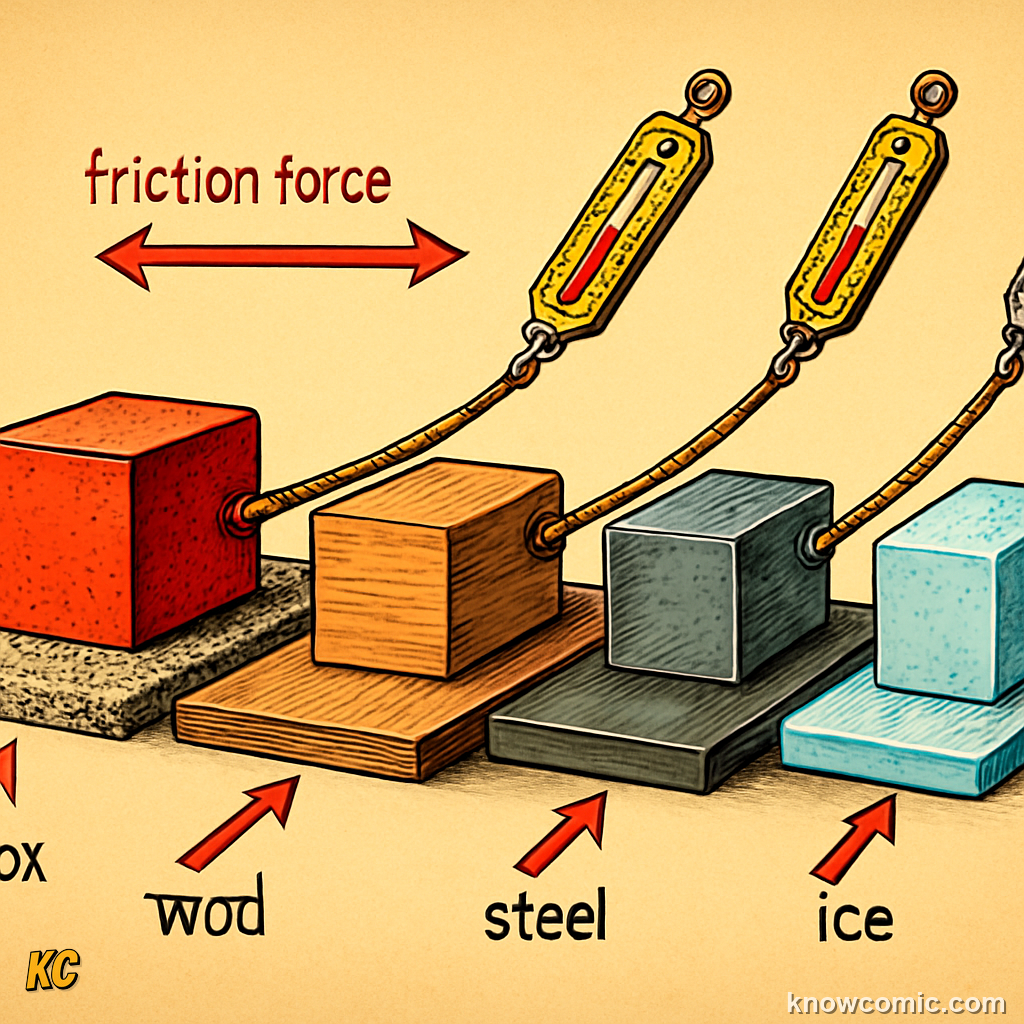
🧩 F = μ × N
🔺 μ = coefficient of friction
🔺 N = normal force (weight pressing down)
📈 Higher μ = rougher, grippier surface
🔺 μ = coefficient of friction
🔺 N = normal force (weight pressing down)
📈 Higher μ = rougher, grippier surface