📖 250 Topics🆓 FREE + PRO⏱️ 5 min per comic🧠 Quiz included
🪵
LEVER
Bar on a fulcrum
→
📐
RAMP
Inclined plane
→
🛞
WHEEL
Wheel and axle
→
🪢
PULLEY
Rope and wheel
→
✨
TODAY
Everywhere around you
⚙️ SIMPLE MACHINES
TOPIC 08 · SCIENCE · FORCES & MOTION
PAGE 1 OF 5 — WORK HELPERS
FORCE MULTIPLIERS
MACHINES THAT CHANGE FORCE
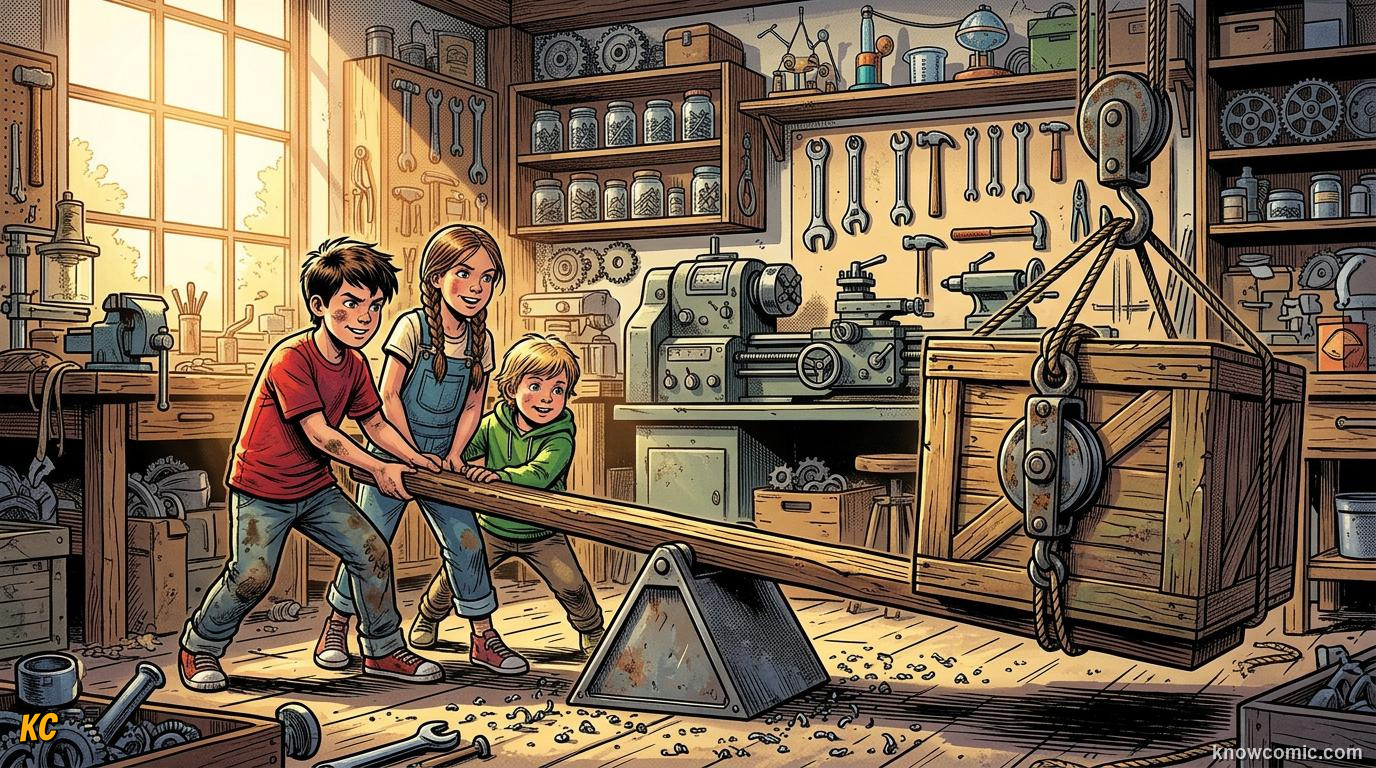
A simple machine is a basic tool that changes how a force works. It can make a push feel smaller, change the direction of a pull, or spread work over a longer path. You still put energy in. The machine helps you trade a big hard shove for a longer, easier push. Builders, sailors, and inventors have used these ideas for thousands of years.
⚙️ SIX
The six classical simple machines are the lever, wheel and axle, pulley, inclined plane, wedge, and screw.
LIFT!
LEVER
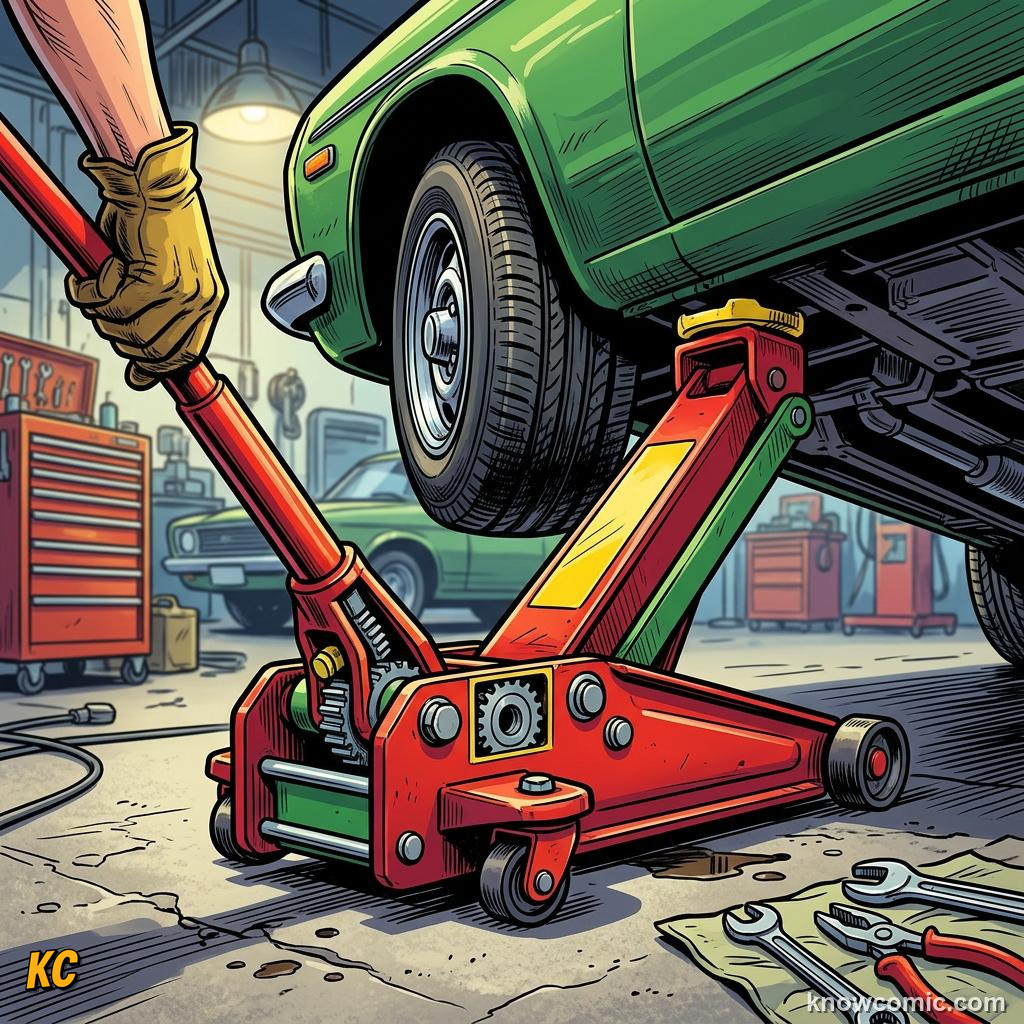
🪵 Bar pivots on a fulcrum 🚗 Jacks help lift heavy cars
RAMP
📐 Inclined plane spreads the climb 🏗️ Stairs are stacked ramps
PAGE 2 OF 5 — THE CLASSIC SIX
MEET THE TEAM
SIX TOOLS, ENDLESS JOBS
Renaissance scientists listed six classical simple machines. A lever is a bar that turns on a fulcrum, like a seesaw. A wheel and axle turns together, like a bike wheel. A pulley uses a wheel and rope to lift or redirect a load. An inclined plane is a ramp. A wedge is two ramps back to back that split things. A screw is a ramp wrapped around a cylinder.
🔧 TRADE
Simple machines often give mechanical advantage: less force, but you move farther.
SIX!
WHEEL
🛞 Wheel and axle turn together 🚲 Bikes and doorknobs use them
PULLEY
🪢 Rope over a wheel lifts loads 🏗️ Cranes stack many pulleys
WEDGE
🪓 Axes and knives are wedges 🔩 Screws are wrapped ramps
PAGE 3 OF 5 — LEVERS AND RAMPS
SEESAW
⚖️ Fulcrum in the middle 👧 Kids balance with levers
SLOPE
📦 Push up, not straight lift 🏗️ Builders love gentle ramps
EVERYDAY HEROES
SEESAWS AND SLOPES
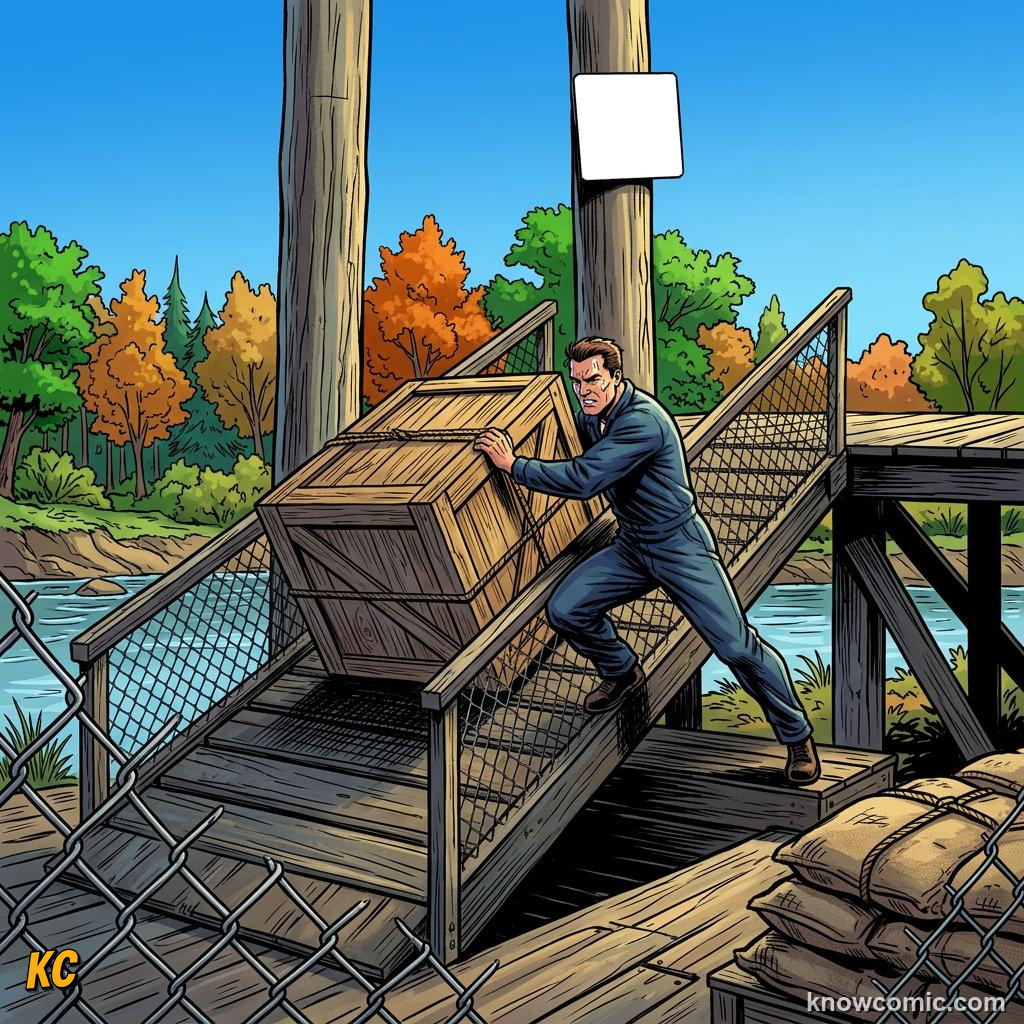
A seesaw is a class-one lever: the fulcrum sits between the effort and the load. Crowbars and scissors also use lever ideas. A ramp, or inclined plane, lets you push a heavy box up a gentle slope instead of lifting it straight up. You travel a longer path, but each step needs less force. That is why wheelchair ramps and loading docks exist.
📐 PATH
On a ramp you push a smaller force over a longer distance to raise the same load.
EASY!
PAGE 4 OF 5 — WORK AND ENERGY
NO FREE LUNCH
FORCE VERSUS DISTANCE
Simple machines do not create free energy. Ignoring friction, the work you put in (force times distance) roughly matches the work that comes out. If the machine multiplies force, you must move farther. Friction wastes some energy as heat, so real tools need a little extra push. Still, the right machine can turn an impossible shove into a doable job.
⚖️ WORK
Work is force times distance. Machines rearrange that trade, they do not erase it.
🔥 Friction steals some energy 🛠️ Oil and smooth surfaces help
BUILD
🏛️ Pyramids used ramps and levers 🚢 Ships use pulleys and winches
PAGE 5 OF 5 — MACHINE FACTS
WRAP UP
TOOLS THAT BUILT THE WORLD
Simple machines change force or direction so hard jobs become possible. The six classics are lever, wheel and axle, pulley, inclined plane, wedge, and screw. Levers and ramps show up in playgrounds, tools, and buildings. Remember the trade: less force usually means more distance.
TOOLS!
LOOK
🔍 Spot machines in your kitchen 🏫 Find them at school too
REMEMBER
⚗️ KEY FACTS
Six classical simple machines change force or direction. Levers pivot on a fulcrum. Ramps are inclined planes. You trade force for distance, and work is roughly conserved without friction.
⚙️ Six classics: lever, wheel, pulley, ramp, wedge, screw 📐 Ramps make climbs gentler 🪵 Levers multiply effort around a fulcrum
🧠 QUIZ TIME!
SIMPLE MACHINES · 5 QUESTIONS
QUESTION 01
How many classical simple machines are usually listed?