PAGE 1 OF 5, DRAISINE, VELOCIPEDE, "THE SCOOTER THAT GREW UP"
BEFORE PEDAL CRANKS
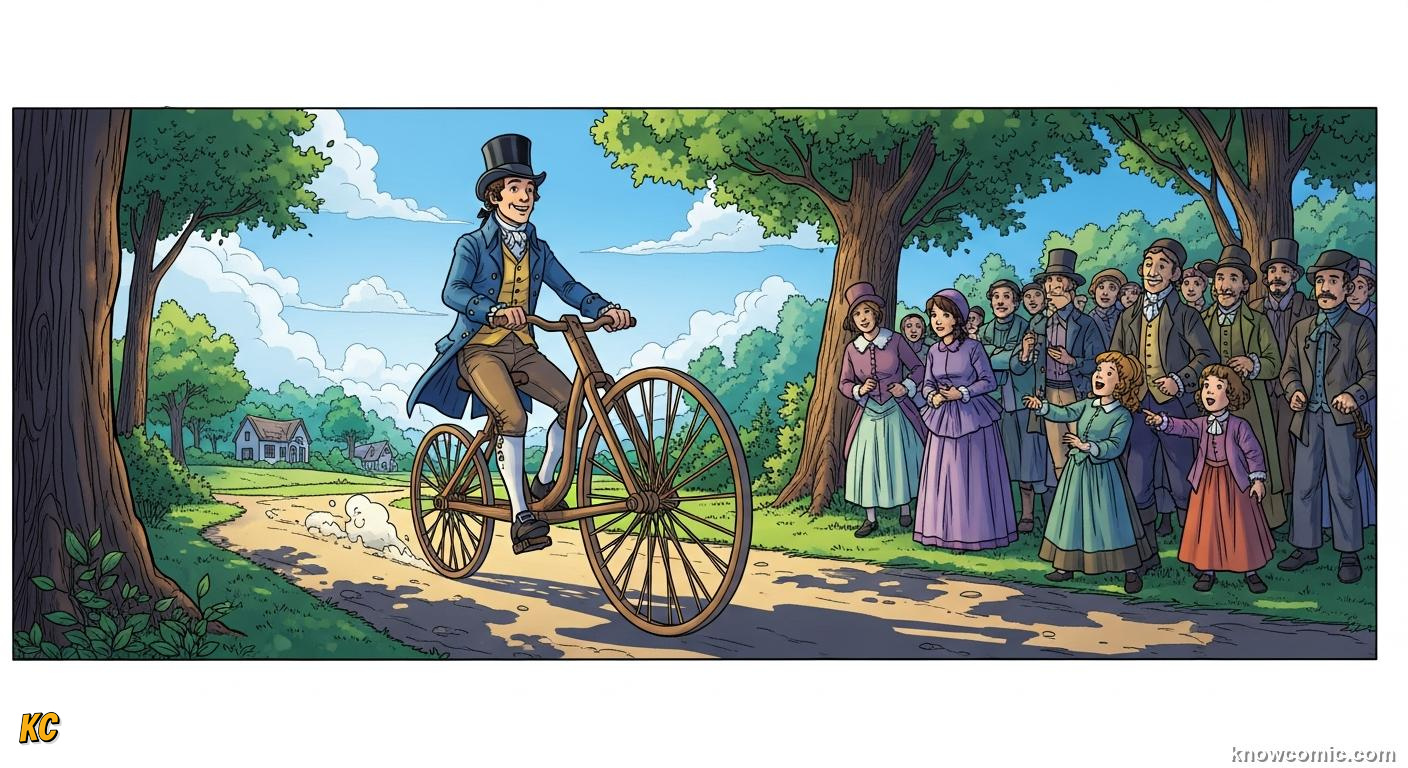
RUNNING BIKE, NOT A MOTORCYCLE (YET)
In the early 1800s, a German inventor, Karl von Drais, built a wooden two-wheeler you straddled and pushed with your feet — the "Laufmaschine" (running machine), nicknamed a draisine. No chain, no pedals — you scooted like a kid on a balance bike, but faster on good paths. Tinkerers in France, Scotland, and England then bolted on crank handles to front wheels, inventing a clunky, metal velocipede the newspapers mocked as a "boneshaker" (think wooden wheels + iron roads = drama). Topic 1's wheel is back, but this time you are the only fuel tank.
📌 BIG PICTURE
Dates are a quarrel in books, but a classroom line is: the 1810s–1860s are the awkward school photo era of the bicycle — weird, loud, and already addictive.
SCOOT…
WOOD
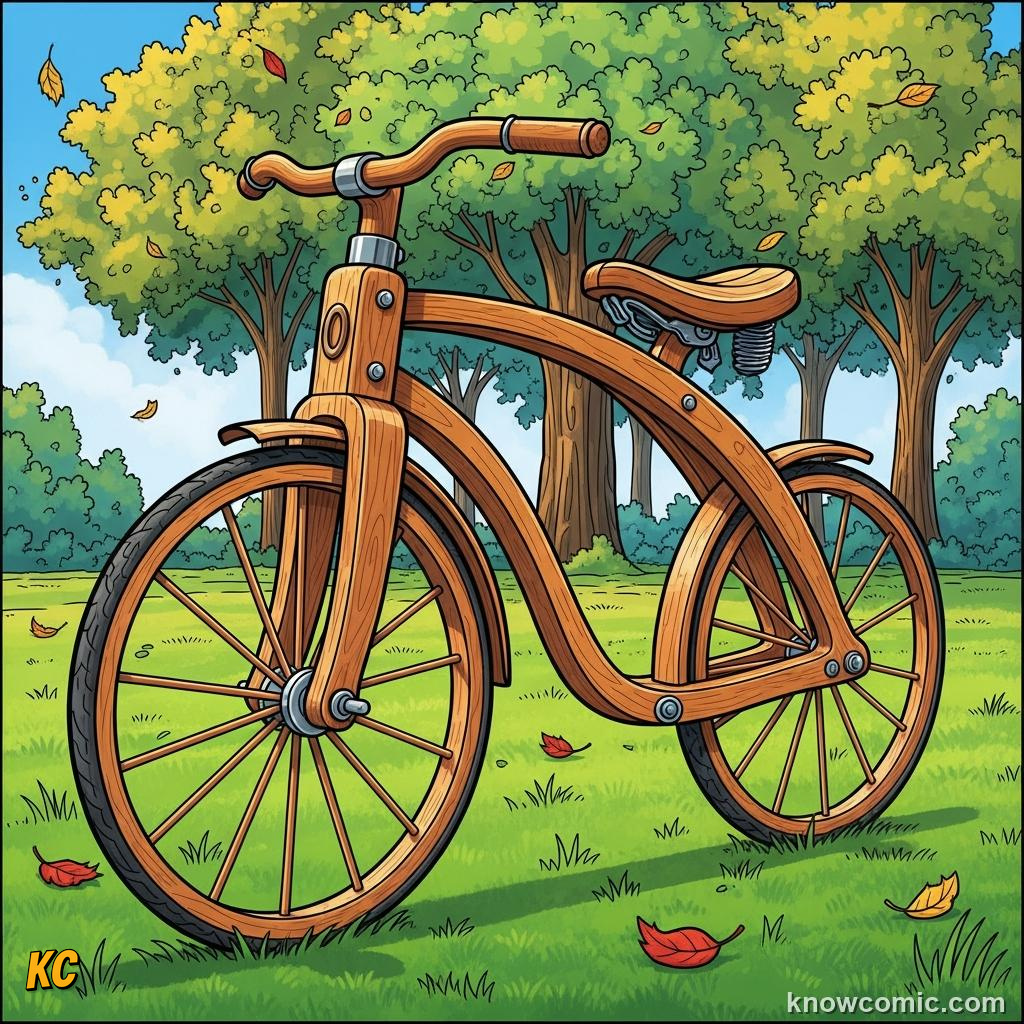
Draisine: lean, step, roll
BUMP
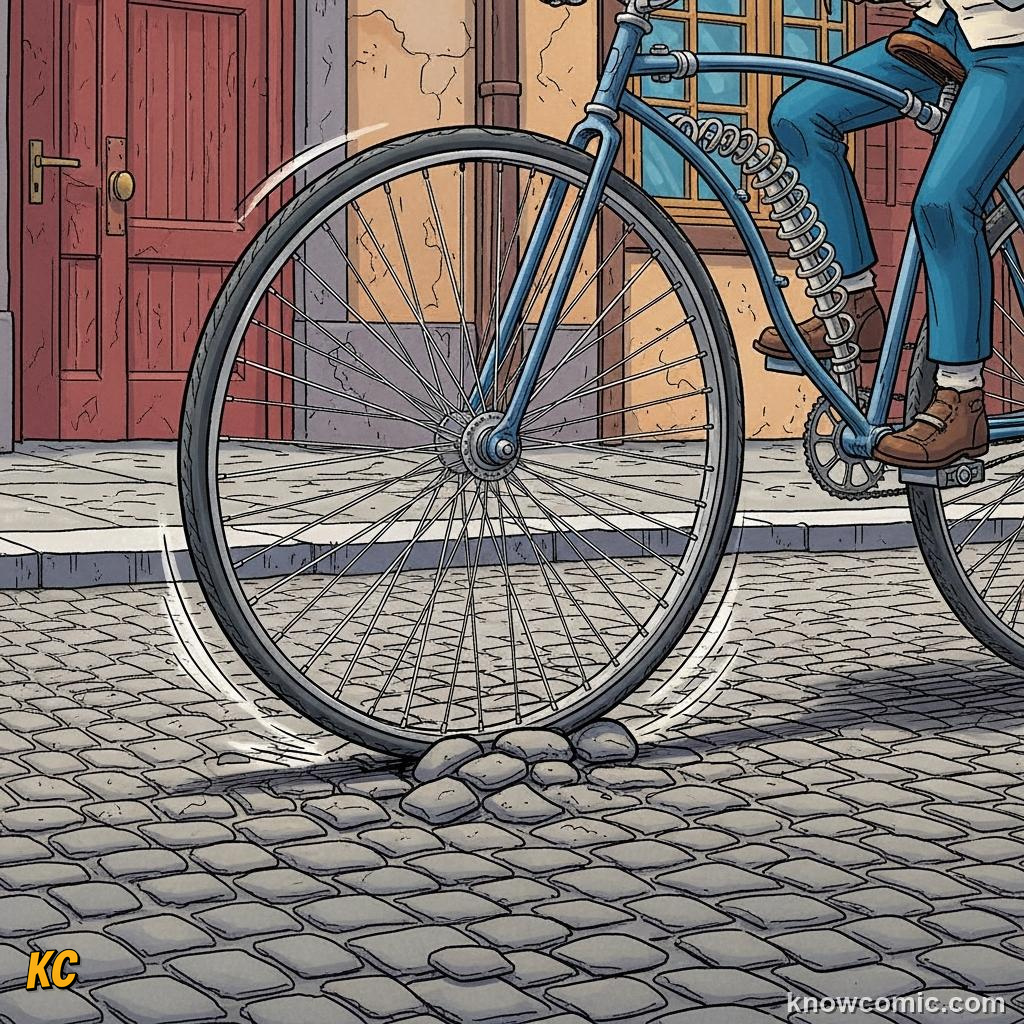
Boneshaker: iron + cobbles = ouch
PAGE 2 OF 5, PENNY, CHAIN, AND THE BIRTH OF "SAFETY"
BIG WHEEL, BIG DRAMA
PENNY-FARTHING: FAST, COOL, & TERRIFYING
Bicycle designers noticed a cheat code: on a direct drive (pedals on the wheel hub, no gears to shift), one big front wheel = one long pedal stroke = higher top speed — the penny-farthing (enormous front wheel, tiny rear) looked steampunk fabulous and won races — but fell like a top hat in a windstorm if you braked wrong. Starley and other engineers in England then fixed the physics with the "safety bicycle" (mid-1880s): two similar wheels, chain to the back (gearing without growing your wheel to the size of a moon), plus rubber and ball bearings making the ride quiet at last. Pneumatic tyres (a Dunlop family story) turned cobbles into a grumble, not a lawsuit.
SPIN!
GEAR
Chain: spin small, go far
RUBBER
Air in tyres: vibration turned whisper
BRAKE
Coaster: rest your ankles
PAGE 3 OF 5, BLOOMERS, SHIFT WHISTLE, "DEMOCRATIC" SPEED
SPOKE
Wheels: spokes share the load (Topic 1 again)
VOTE
Suffrage: pedals in politics
FREE
CHEAP = WHO CAN RIDE, NOT WHO OWNS A STABLE
A safety bicycle cost months of a worker's pay at first — still less than a horse, carriage, and groom. Factory clerks, shop apprentices, and students could own their commute in countries building decent paths. Women used bikes for work, family errands, and quiet independence — in many places, long skirts caught in spokes, so reformers pushed shorter "bloomers" and brighter public arguments about who gets to move in public. Bicycles became posters in suffrage parades in some countries — a portable claim that mobility is political. "Democratic" here is not a government label; it means the crowd can afford the ticket.
ROLL!
PAGE 4 OF 5, GREEN MACHINE: EFFICIENCY IN HUMAN WATTS
NO TAILPIPE, BIG APPETITE FOR DISTANCE
MOST FOOD ENERGY TURNS INTO FORWARD MOTION
Physics class will show you: a trained human on a light bike is wildly efficient compared with walking the same distance — rolling beats lifting your whole body every step. No petrol tank, no steam boiler: the CO₂ story is mostly about what feeds the rider and how the frame was made, not a cloud out of a tailpipe every block. Cities today paint bike lanes, rent share-bikes, and argue about helmets because a billion machines already prove the idea: short trips love two wheels. E-bikes are the new chapter — still lighter than a car for many chores.
WHEE!
LANE
Paint: space is a policy choice
GRID
Asia, Europe, Africa: cargo bikes matter
AMP
E-bike: hill, meet battery
PAGE 5 OF 5, A BILLION FRAMES, AND THE NEXT STRAIGHTAWAY
STILL THE CLASS CHAMP OF EFFICIENCY
FROM DANDY TOOL TO GLOBAL DEFAULT
Roughly one billion bicycles share the planet today — more than any other vehicle type in many head-counts — carrying kids, farmers, couriers, racers, and tourists. The Olympic sprint and the market run with mangoes in a basket use the same basic machine: triangle frame, two wheels, human heart. What changes is policy, pavement, and courage. Topic 06 — motorways and highways widens the lens to national belts of concrete — how states poured rivers of lane markings — often competing with quiet bike paths for the same strip of Earth.