🌊 TSUNAMI GENERATION & PHYSICS
PAGE 1 OF 5 — WHAT IS A TSUNAMI?
OCEAN ENERGY PULSE
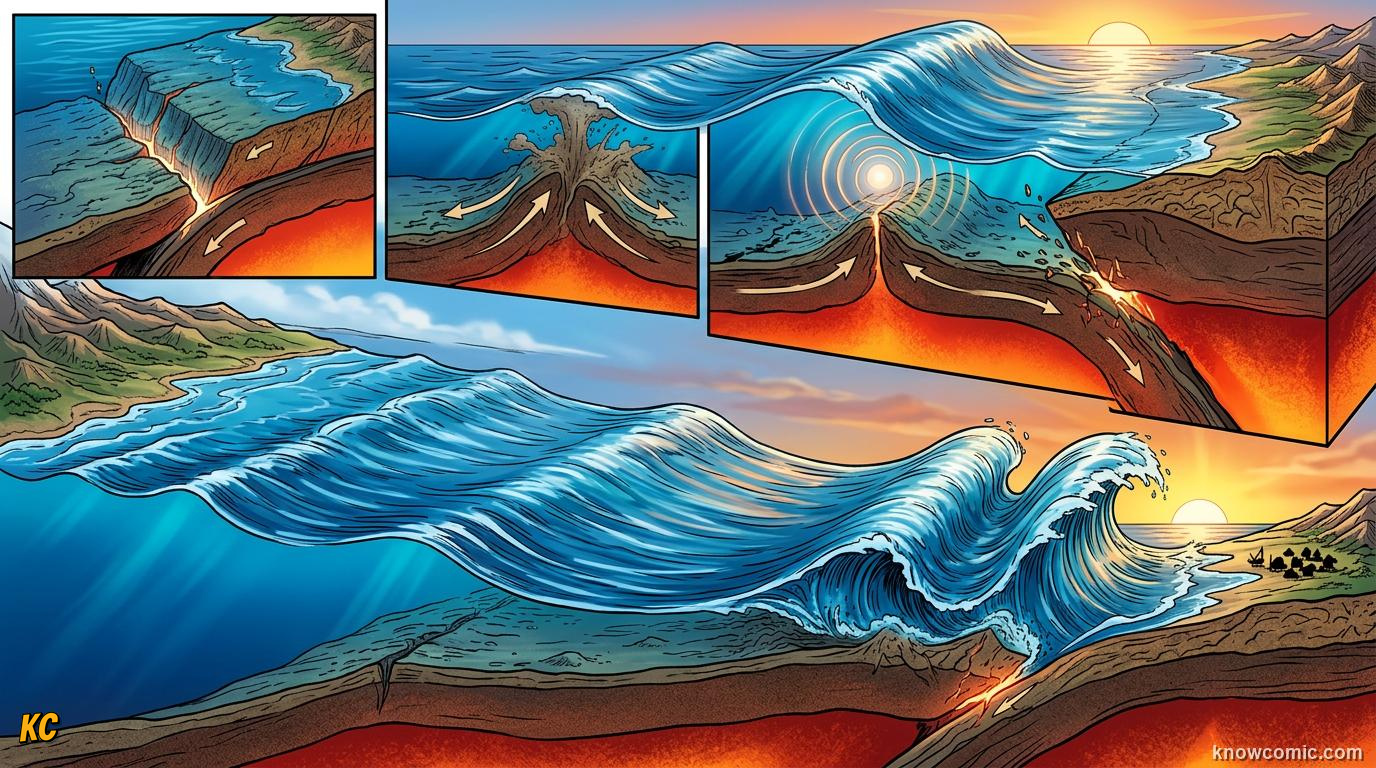
NOT A NORMAL WAVE
A tsunami is a series of long ocean waves caused by a sudden displacement of a large volume of water. Unlike wind-driven surf that breaks on a beach in seconds, a tsunami is a gravity wave powered by the whole water column moving up or down. The most common trigger is a subduction thrust earthquake where one tectonic plate slides beneath another, as you studied in Topic 3. When the locked fault ruptures, the overriding plate can snap upward and lift the seafloor by metres in seconds. That vertical push shoves water outward as a pulse of energy. The earthquake itself releases seismic waves through rock, covered in Topic 7, but the tsunami is a separate hazard travelling through the ocean. Not every undersea quake makes a tsunami: the fault must move the seabed up or down, not just sideways.
🌊 TSUNAMI VS TIDAL WAVE
Tsunami means "harbour wave" in Japanese. It has nothing to do with daily tides. Tsunamis are triggered by earthquakes, landslides, or volcanic collapse, not by the Moon's pull.
SURGE!
SUBDUCTION THRUST
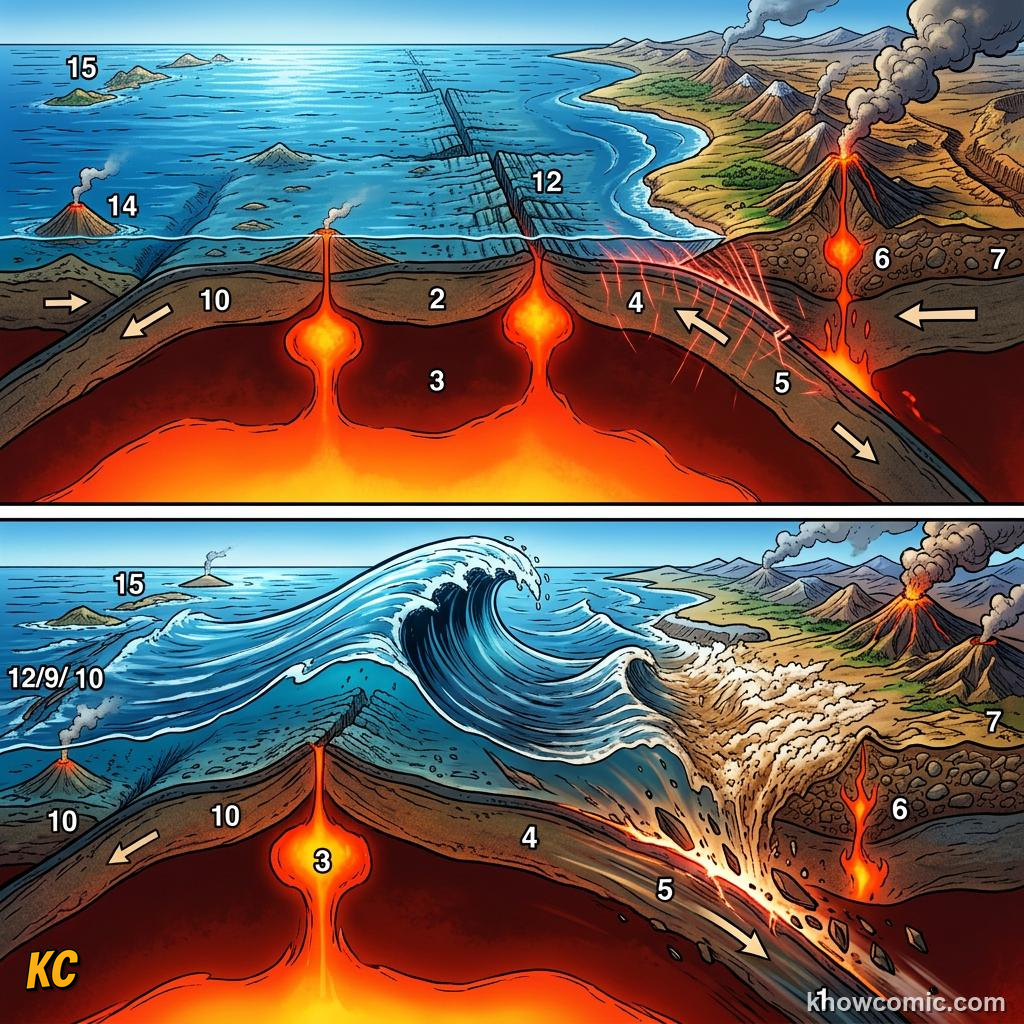
- Megathrust earthquakes at subduction zones are the leading tsunami source worldwide.
- When the locked plate boundary slips, the overriding plate can rise and push water upward.
- Large rupture area and metres of vertical slip create the biggest tsunami-generating pulses.
OTHER TRIGGERS
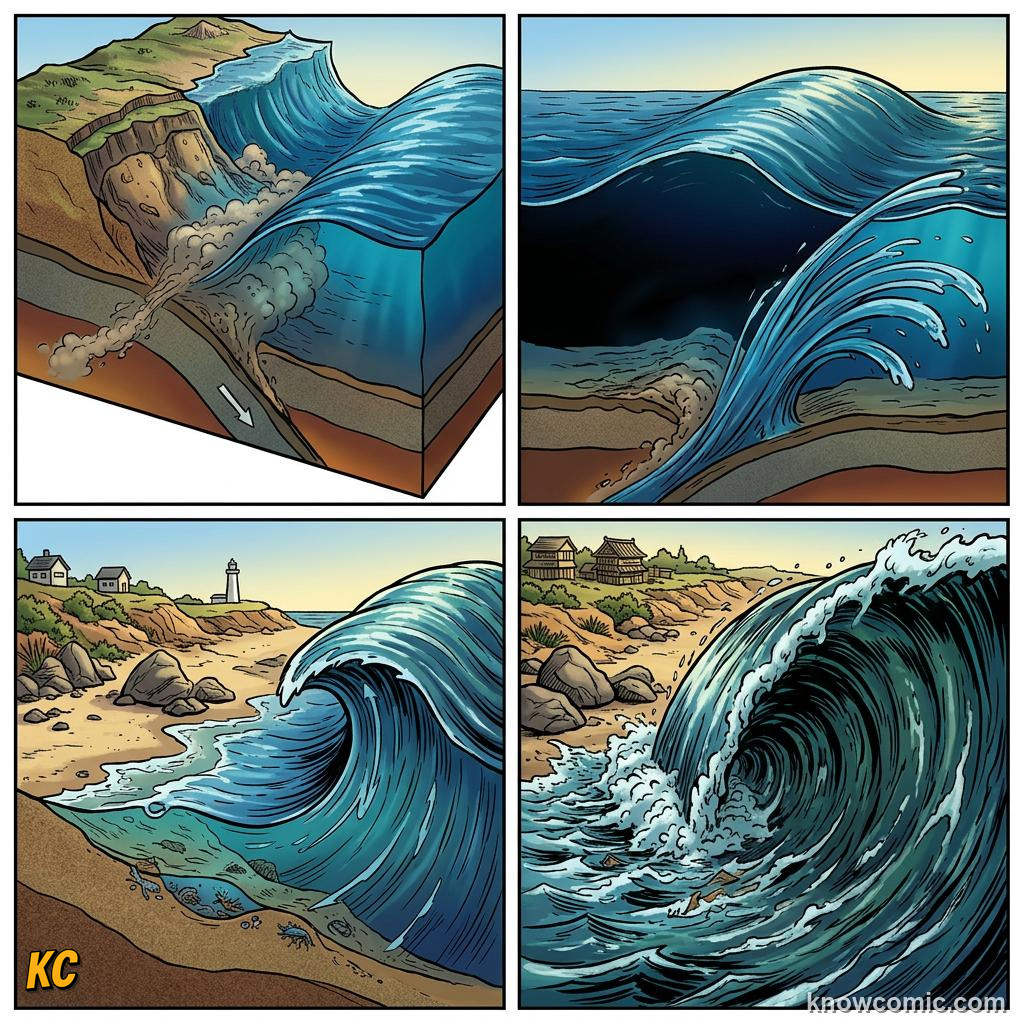
- Underwater landslides and volcanic flank collapses can also displace water and spawn tsunamis.
- These events are less common globally but can be locally devastating, as at Lituya Bay, Alaska (1958).
- Meteorite impacts could theoretically trigger tsunamis, but no confirmed modern case exists.