🪨 WEATHERING: MECHANICAL & CHEMICAL
PAGE 1 OF 5 — WEATHERING AT THE SURFACE
IN-PLACE BREAKDOWN
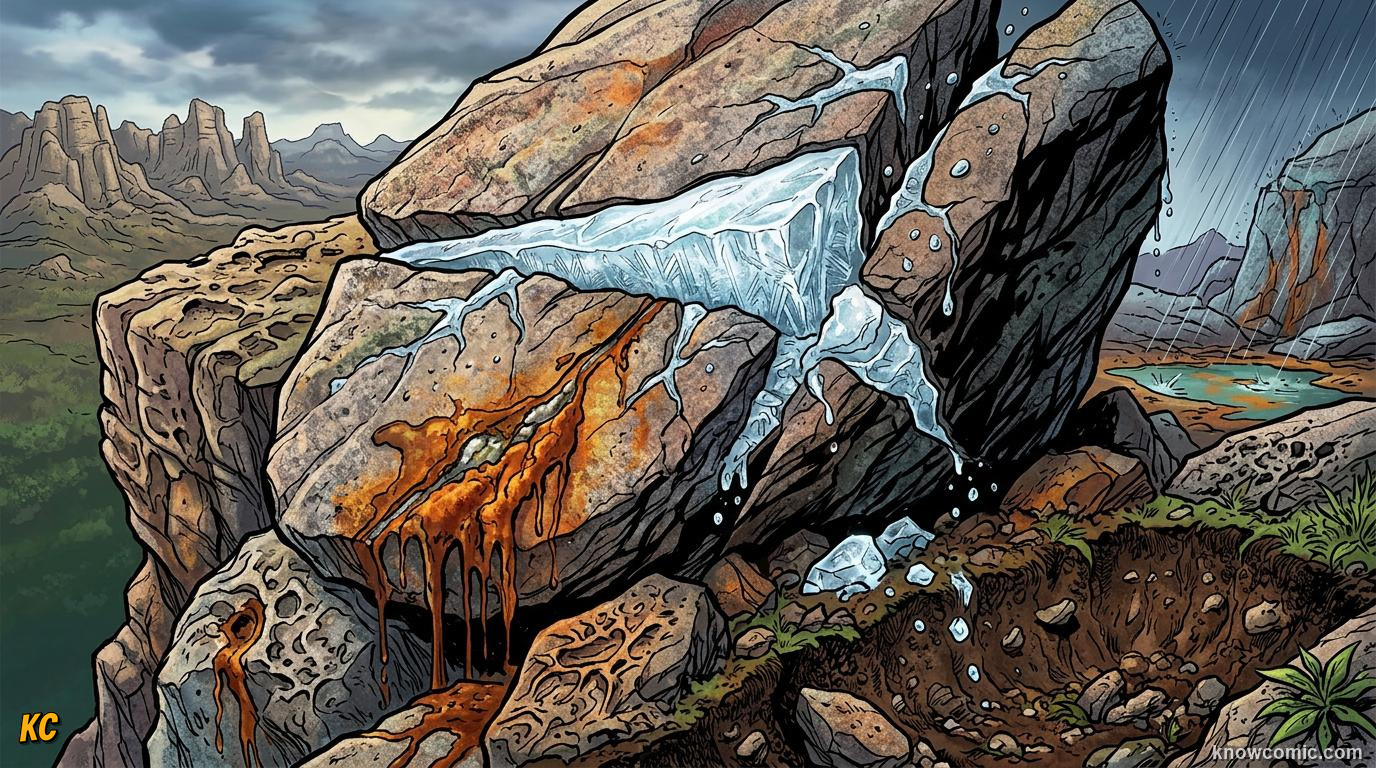
WHAT IS WEATHERING?
Weathering is the breakdown and alteration of rocks and minerals at or near Earth's surface. It happens in place: the rock stays where it formed until something else moves it. After tectonic forces build mountains in Topic 3 and volcanic rock cools in Topic 6, weathering begins reshaping those landforms. Two main types work together. Mechanical weathering (physical weathering) splits rock into smaller pieces without changing its mineral chemistry. Chemical weathering reacts minerals with water, oxygen, acids, and living organisms to form new compounds. Climate, rock type, and time control how fast each process operates. Weathering is the essential first step toward soil formation and supplies the sediment that rivers later transport, linking forward to fluvial landforms in upcoming topics.
🪨 WEATHERING VS EROSION
Weathering breaks rock down where it sits. Erosion picks up and transports that material by water, wind, ice, or gravity. Weathering prepares the debris; erosion moves it.
CRUMBLE!
FREEZE-THAW
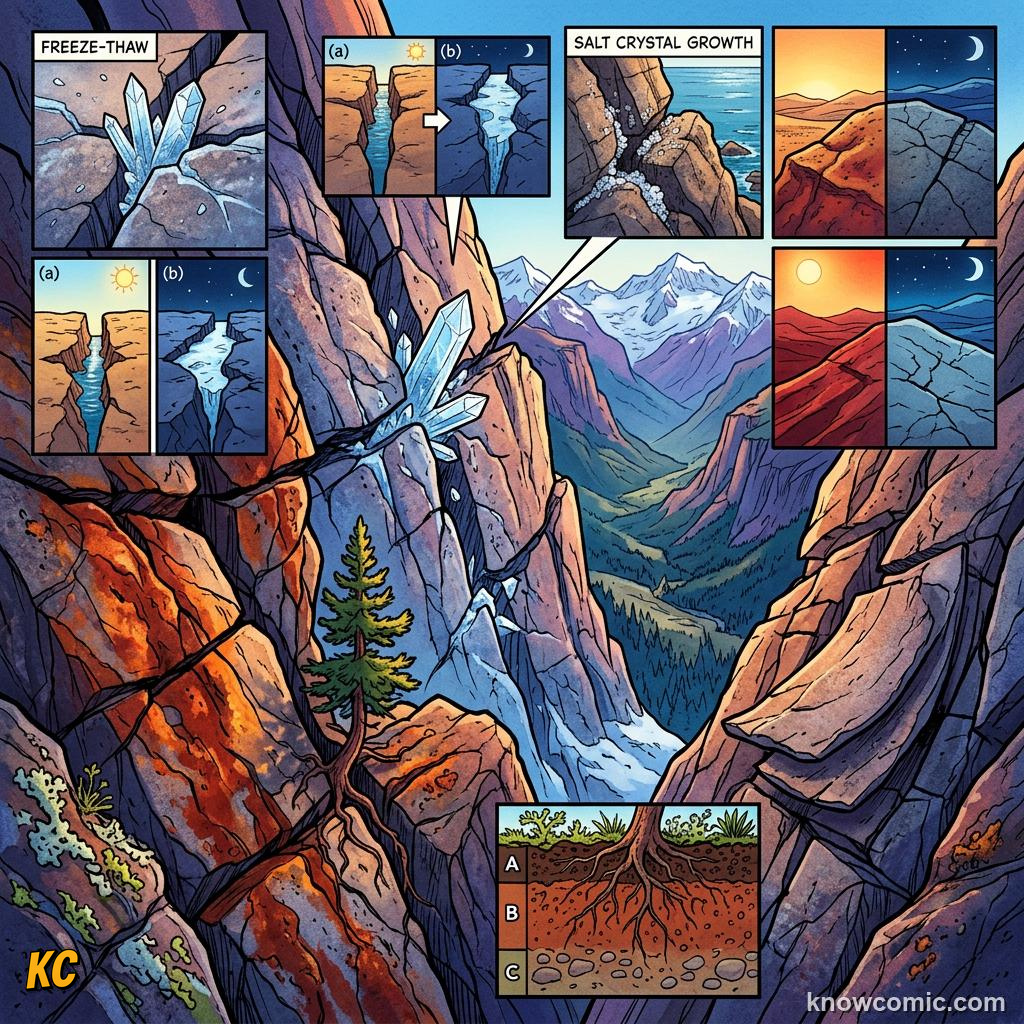
- Freeze-thaw, also called frost wedging, occurs when water enters a crack, freezes, and expands about 9% in volume.
- Repeated freeze-thaw cycles wedge rock apart, producing angular fragments and talus slopes.
- This mechanical process is most effective in temperate and alpine climates with many cycles above and below 0°C.
EROSION NEXT
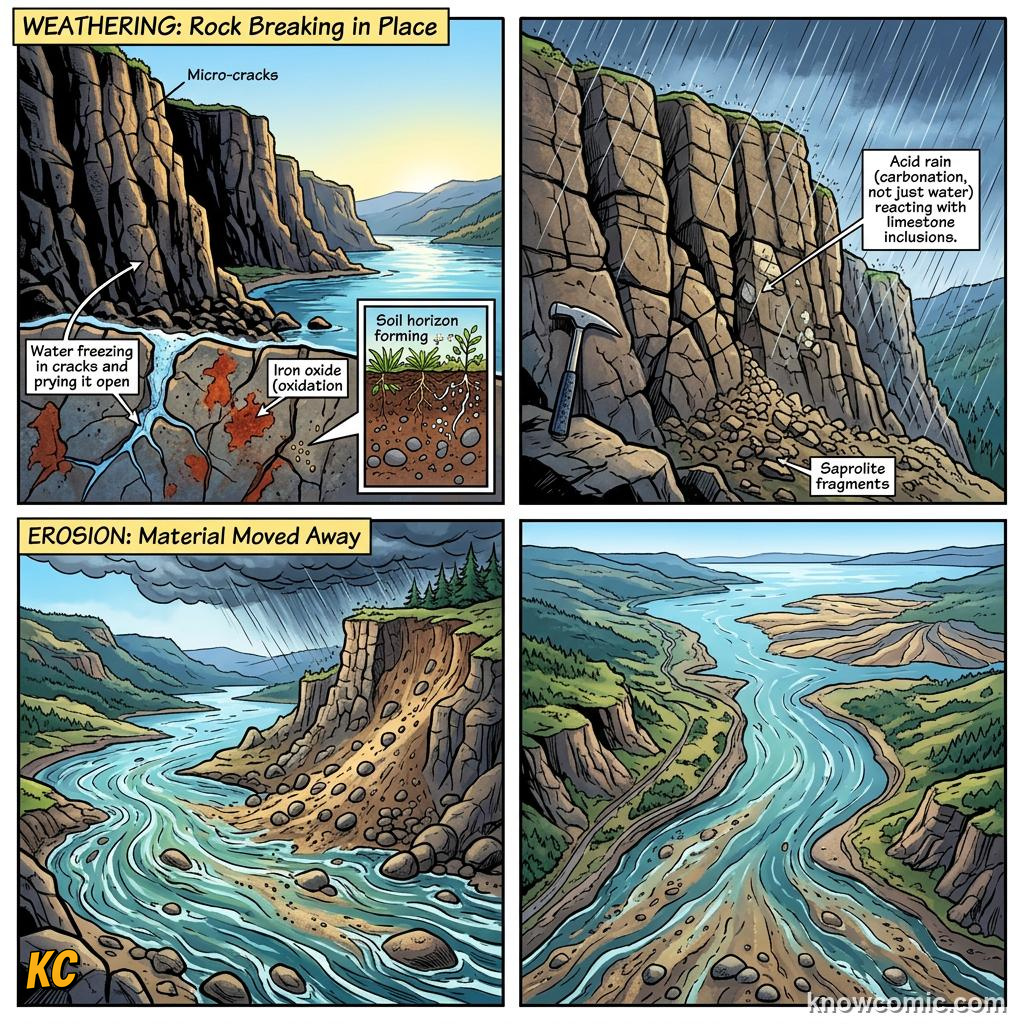
- After weathering loosens material, erosion removes it by running water, wind, glaciers, or mass movement.
- A boulder cracked by frost wedging may still sit on a slope until a river or landslide carries it away.
- Understanding both processes explains why mountain ranges round off over millions of years without vanishing instantly.