🌋 VOLCANIC HAZARDS & FORMATION
PAGE 1 OF 5 — FROM MAGMA TO ERUPTION
MOLTEN ROCK
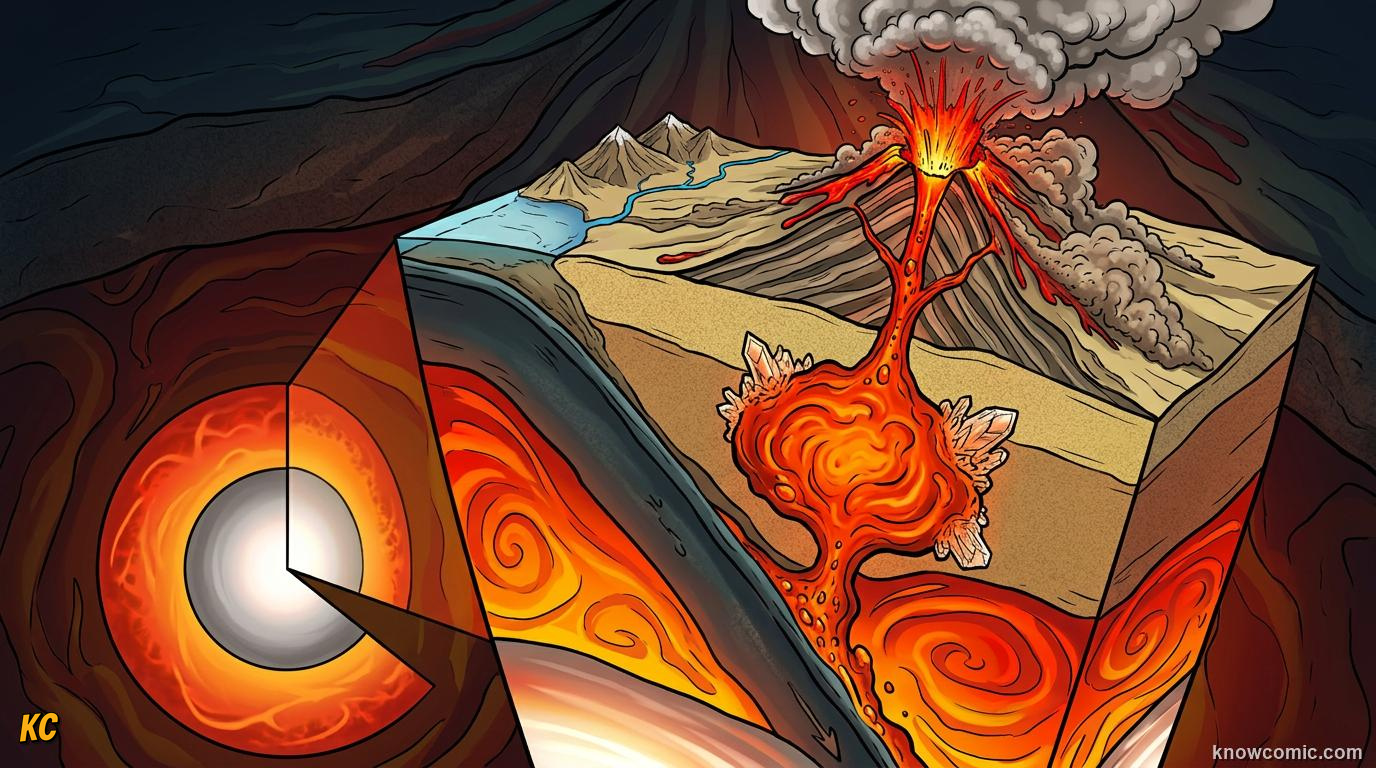
HOW VOLCANOES FORM
A volcano is an opening in Earth's crust where magma (molten rock underground) reaches the surface as lava, ash, and gas. Most dangerous volcanoes sit on convergent margins where subduction supplies water-rich magma, as you explored in Topic 3. At divergent ridges and rifts, basaltic magma rises as plates pull apart (Topic 4). Hot spots such as Hawaii can build volcanoes far from plate boundaries. Magma collects in a magma chamber, then rises through fractures and a central conduit. Gas dissolved in magma expands as pressure drops near the surface. That expansion, plus magma viscosity and silica content, controls whether an eruption is gentle and effusive or violent and explosive. Transform boundaries like those in Topic 5 rarely erupt because they lack the vertical magma supply subduction and rifting provide.
🔥 MAGMA VS LAVA
Geologists call molten rock magma underground and lava after it erupts onto the surface. The same melt changes name when it exits the vent.
RISING!
MAGMA CHAMBER
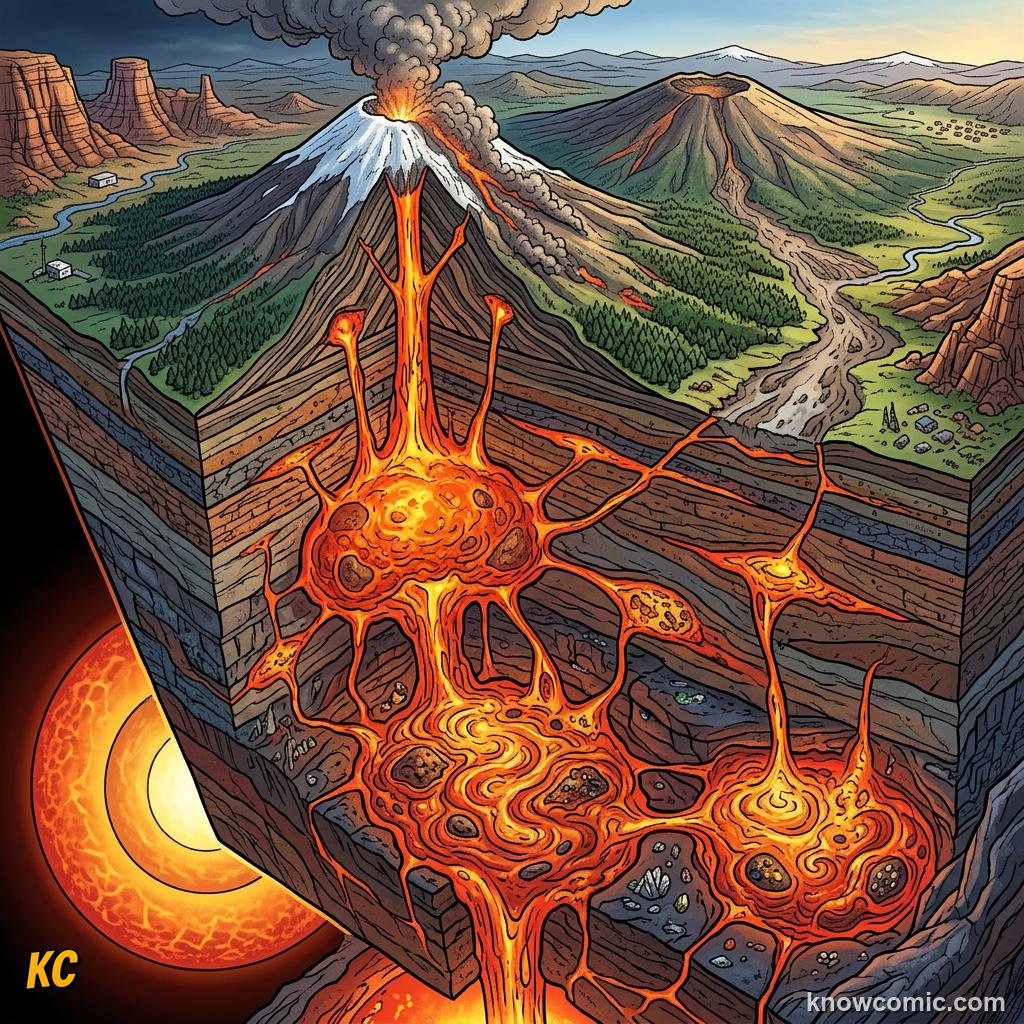
- A magma chamber is a reservoir of molten rock beneath a volcano, sometimes kilometres wide.
- Chamber pressure and gas content help forecast whether the next eruption will be lava-rich or explosive.
- Seismic tremors and ground swelling often signal magma moving upward before an eruption.
VENT & CRATER
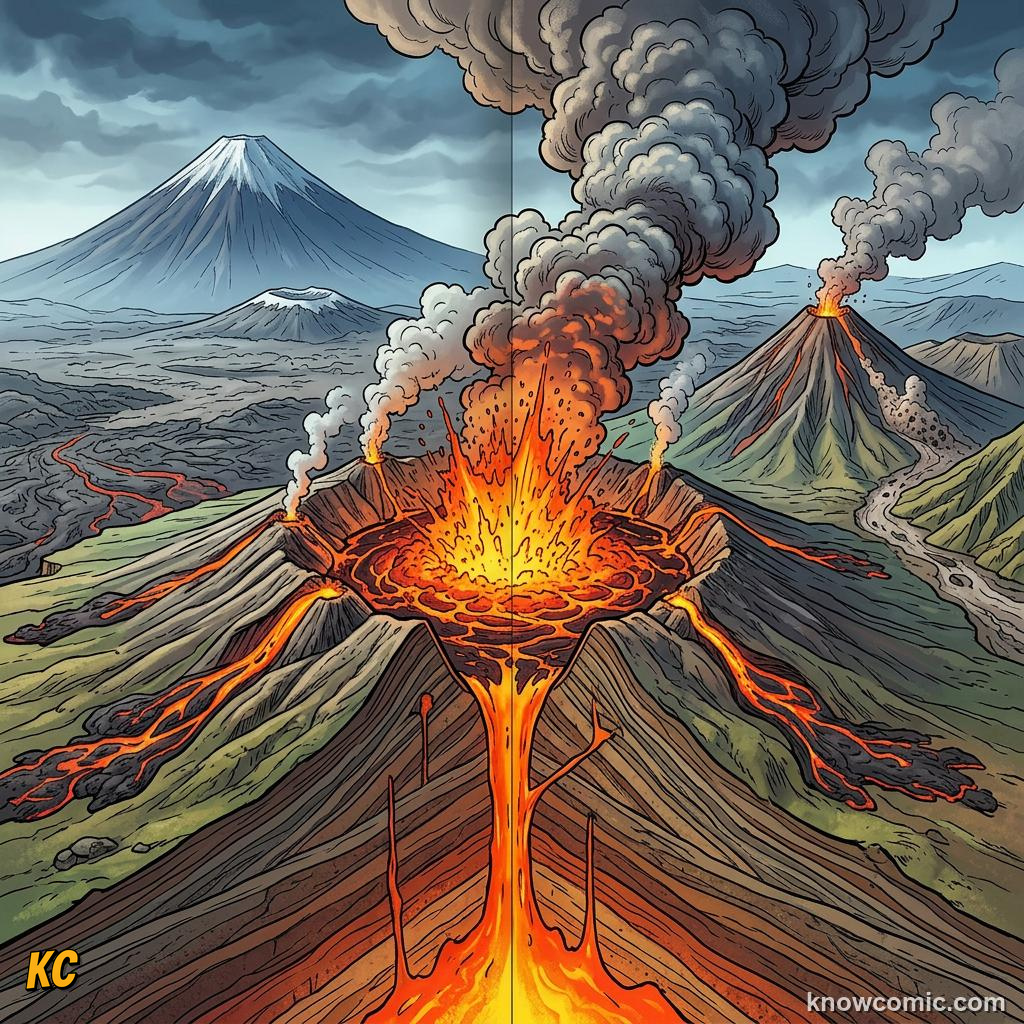
- The vent is the surface opening where magma, ash, and volcanic gases escape.
- Repeated eruptions can deepen a bowl-shaped crater or build a taller volcanic cone.
- Secondary vents and fissures can open on a volcano's flanks during large eruptions.