🦅
⚔️
🏛️
🏛️ HISTORY UNIVERSE · AGES 8–14

THE ROMAN
EMPIRE

⚔️ Gladiators · Legions · Caesars · One City That Ruled the World!

📖 200 Topics 🆓 FREE + PRO ⏱️ 5 min read 🧠 Quiz included
🐺
753 BCE
Romulus founds Rome
🏛️
509 BCE
Republic established
👑
27 BCE
Augustus, first emperor
🏟️
80 CE
Colosseum opens
🏚️
476 CE
Fall of the West
🏛️ THE ROMAN EMPIRE
TOPIC 03 · HISTORY · ANCIENT WORLD · 753 BCE, 476 CE
PAGE 1 OF 5, A CITY BUILT ON SEVEN HILLS
753 BCE · ITALY
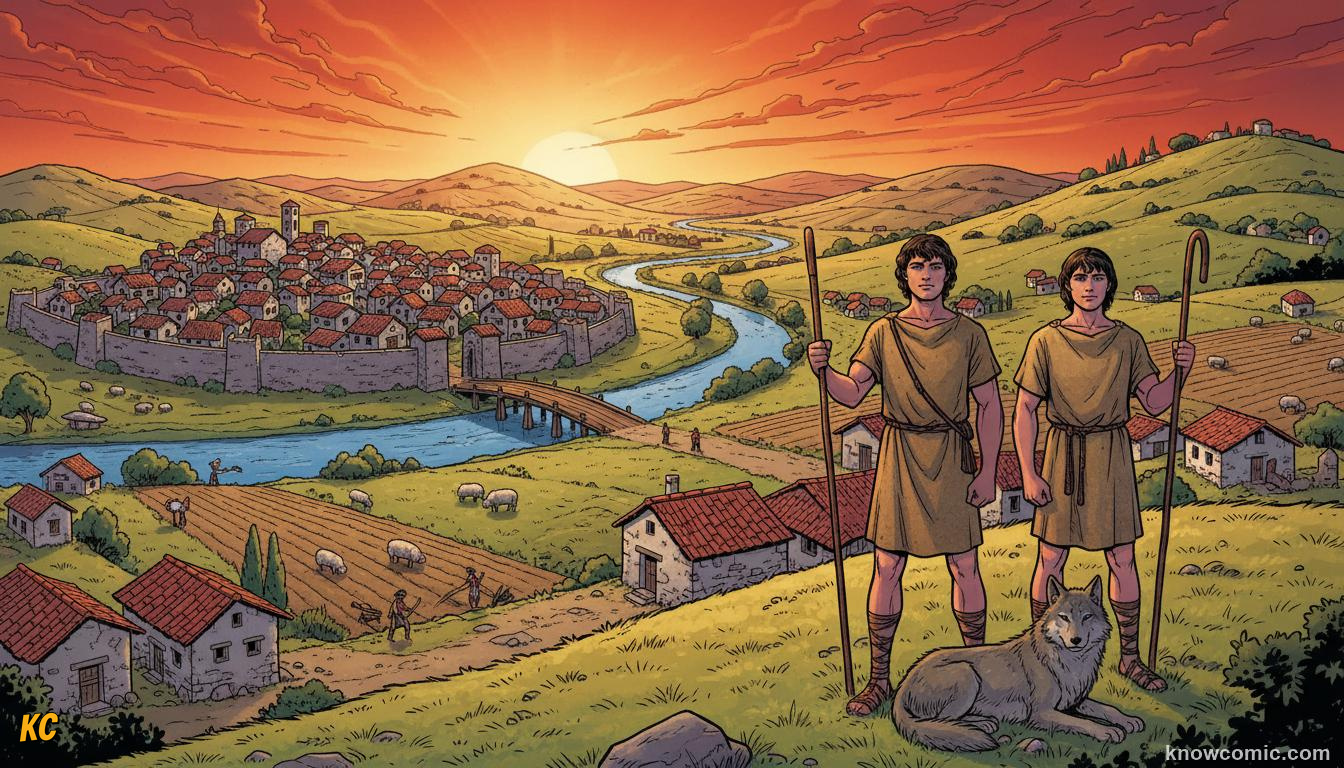
Ancient Rome city on seven hills above the River Tiber with early mud brick settlements
THE CITY ON SEVEN HILLS
According to legend, Rome was founded on 21 April 753 BCE by a pair of twin brothers, Romulus and Remus. The story says they had been abandoned as babies beside the River Tiber and rescued by a she-wolf that nursed them as if they were her own cubs. When they grew up they decided to build a new city, but could not agree on which hill to build it on, so they fought, and Romulus killed his brother. He named the city after himself: Roma. Whether the tale is true or not, archaeology shows that by around 750 BCE small villages of mud-brick huts really did dot the seven hills beside the Tiber, and those villages steadily joined up into a single walled city. Rome's location was lucky, a bend in the river made it easy to defend and easy to cross, the hills gave it high ground, and the flat plains around it were perfect for farming. That tiny hilltop settlement would one day grow into the largest and most powerful empire the ancient world had ever seen.
⚡ DID YOU KNOW?
The famous bronze statue of the she-wolf feeding baby Romulus and Remus has become the unofficial symbol of the city of Rome, and you can still see it in the Capitoline Museum today.
ROMA!
SEVEN HILLS
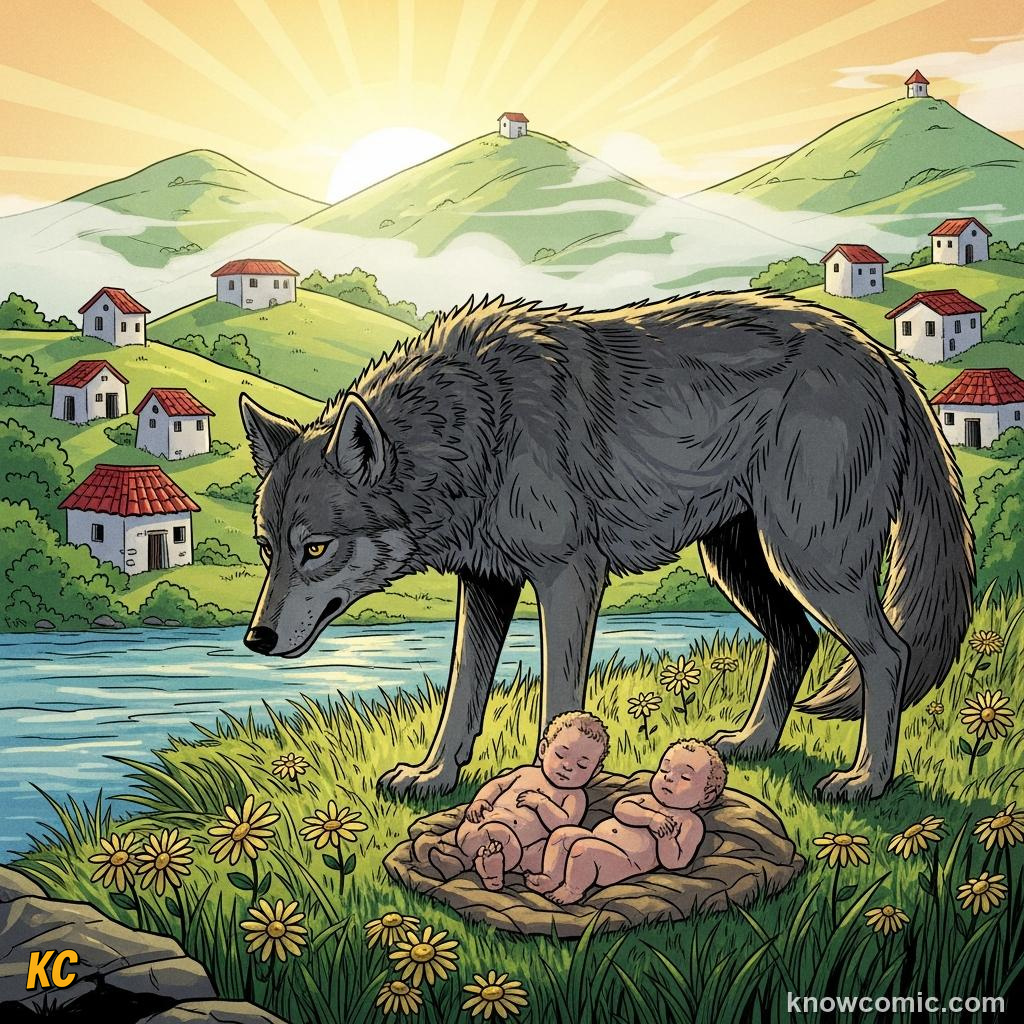
Romulus and Remus as infants being nursed by a she-wolf beside the River Tiber
🐺 Romulus, Remus & the she-wolf
🏞️ Seven hills above the Tiber
🏘️ Villages joined into one city
509 BCE · SPQR
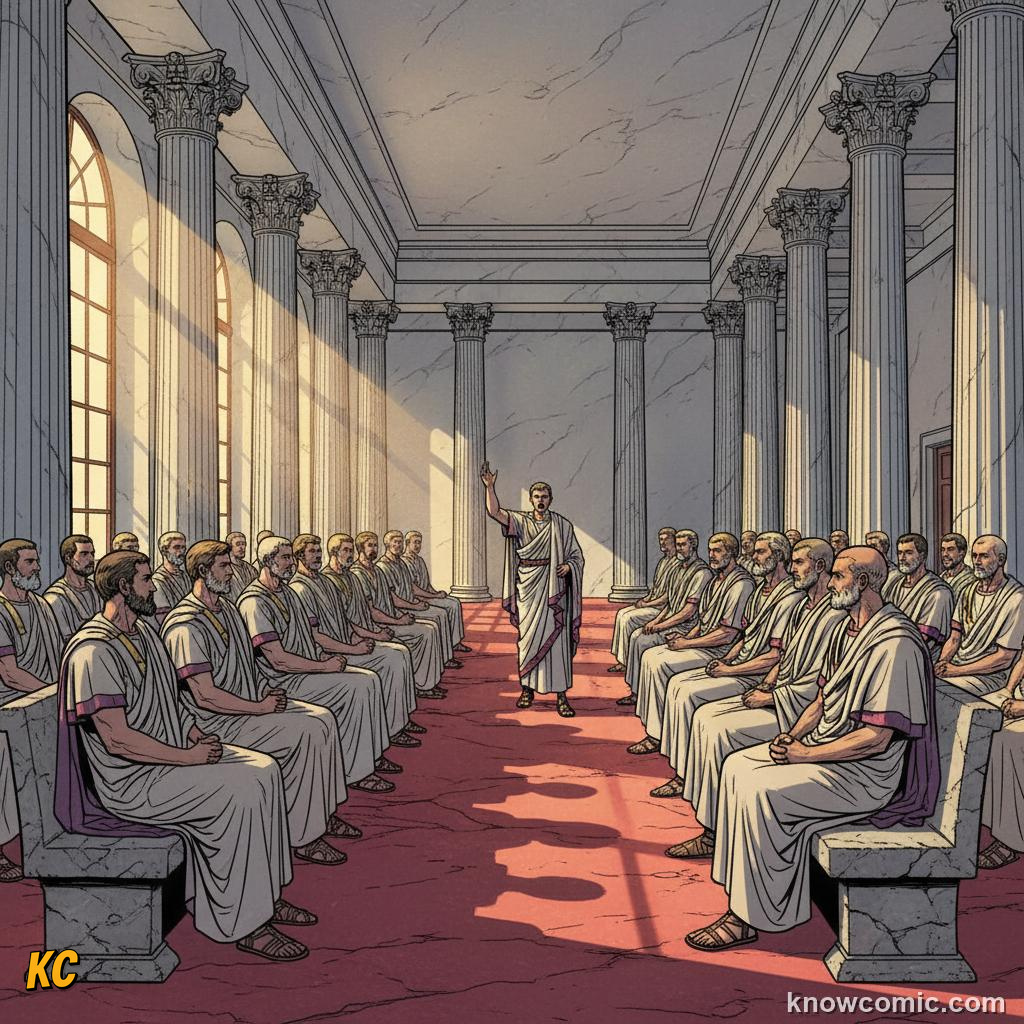
Roman senators in white togas debating law in the Senate chamber in 509 BCE
👑 Kicked out the last king
🏛️ Senators elected each year
📜 Ruled by law, not one ruler
PAGE 2 OF 5, LEGIONS, CAESAR & THE BIRTH OF EMPIRE
27 BCE · IMPERIUM
Julius Caesar leading armoured Roman legions across the Rubicon river into Rome
FROM REPUBLIC TO EMPIRE
For nearly 500 years Rome was run as a republic, two elected consuls shared power and a Senate of wealthy Romans made the laws. Backed by its ferocious citizen army, the legions, Rome steadily conquered most of Italy, then Carthage in North Africa, then Greece, Gaul (modern France), Spain and beyond. By around 50 BCE one general, Julius Caesar, had become so rich and so popular from conquering Gaul that rivals in the Senate feared him. When they tried to strip him of power, he marched his army across a little river called the Rubicon and seized Rome itself. His fellow senators stabbed him to death on 15 March 44 BCE, but it was too late, the Republic was finished. Caesar's adopted son Octavian defeated every rival in a long civil war, and in 27 BCE the Senate gave him the honorary title Augustus ("the revered one"). He became the first Roman emperor, and for the next 500 years Rome would be ruled by emperors who governed one of the largest empires in all of history.
⚔️ SPQR
Every Roman legion carried a silver eagle on a pole and banners marked with the letters SPQR, short for "Senatus Populusque Romanus", meaning "the Senate and the People of Rome". Losing your eagle in battle was the ultimate disgrace.
IMPERIUM!
LEGIONARY
Roman legionary soldier in red tunic and iron armour holding a shield and gladius sword
🛡️ Red tunic + iron armour
⚔️ Short sword called a gladius
🚶 Marched 30+ km every day
JULIUS CAESAR
Julius Caesar in military uniform addressing his troops before the Senate betrayal
⚔️ Conquered all of Gaul
🌉 Crossed the Rubicon 49 BCE
🗡️ Stabbed in the Senate 44 BCE
AUGUSTUS
Augustus Caesar in imperial robes as the first Roman emperor crowned in 27 BCE
👑 Rome's first emperor
🕊️ Began the "Pax Romana" peace
🏛️ Ruled 27 BCE, 14 CE
PAGE 3 OF 5, COLOSSEUM, ROADS & AQUEDUCTS
ROADS
Straight Roman road of layered gravel and paving stones stretching across the empire
🛣️ Over 400,000 km of roads
⚒️ Layered gravel + paving stones
💬 "All roads lead to Rome"
AQUEDUCTS
Roman stone aqueduct arches carrying fresh water across a wide valley by gravity
💧 Stone arches carried fresh water
🏞️ Flowed hundreds of km by gravity
🛁 Fed fountains, toilets & baths
80 CE · THE COLOSSEUM
The Colosseum amphitheatre packed with 50000 spectators watching gladiators battle
ARE YOU NOT ENTERTAINED?
The Colosseum was the largest amphitheatre the world had ever seen, a four-storey oval of pale stone in the heart of Rome that could hold around 50,000 roaring spectators, making it bigger than most modern football stadiums. It was opened in 80 CE by the emperor Titus with 100 days of games, and beneath its wooden arena floor lay a maze of tunnels, lifts and cages called the hypogeum. Trapdoors could suddenly drop lions, bears, rhinos and even hippos into the fight. The stars of the show were gladiators, slaves, prisoners of war and a few paid volunteers, trained in special schools to fight each other or wild beasts with swords, tridents and nets. A defeated gladiator who had fought bravely could sometimes be spared if the emperor gave the famous thumbs-up signal; a thumbs-down meant death. Rome gave its people "bread and circuses", free grain and huge public spectacles, to keep them happy, and the Colosseum was the greatest circus of them all.
🏟️ STILL STANDING
The Colosseum is still the largest amphitheatre ever built, more than 40 million tourists visit its ruins every year, 2,000 years after it opened.
FIGHT!
PAGE 4 OF 5, LIFE IN THE ETERNAL CITY
1 MILLION PEOPLE · 1 CITY
Busy ancient Rome street with toga-clad senators, merchants, and fountains in the Forum
AVERAGE DAY IN ANCIENT ROME
At its peak around 100 CE, the city of Rome was home to over a million people, no other European city would be that big again for 1,500 years. The air buzzed with life. Rich senators in white togas edged with purple strolled through gleaming marble Forums past temples, courts and huge public baths where Romans met friends, exercised, swam and argued politics. Wives and children rode to market in wooden carriages; slaves carried shopping; poets gave free performances in the Forum. Ordinary workers lived packed into six-storey apartment blocks called insulae, where the ground floor held tiny shops selling hot bread, olives, wine and street food. Kids went to school with bits of charcoal and wax tablets. Everywhere fresh water ran in fountains thanks to the aqueducts, and beneath the streets flowed the world's most famous sewer, the Cloaca Maxima. Rome truly earned its nickname: the Eternal City.
🕐 JULIAN CALENDAR
Julius Caesar introduced a 365-day calendar with an extra day every four years. With a small fix in 1582, the same Julian-Gregorian system is still the calendar you use today.
AVE!
THE PANTHEON
The Pantheon temple in Rome with its massive concrete dome and round oculus opening
🛕 Temple to all the Roman gods
🌀 Huge unreinforced concrete dome
👁️ Circular "eye" open to the sky
5 GOOD EMPERORS
Roman emperors Trajan and Hadrian during the peaceful Pax Romana era of expansion
👑 Trajan & Hadrian expanded Rome
🧱 Hadrian's Wall built in Britain
🕊️ Pax Romana, 200 years of peace
79 CE · POMPEII
Mount Vesuvius erupting violently over Pompeii covering the city in ash in 79 CE
🌋 Mount Vesuvius erupted
🏚️ Buried Pompeii in hot ash
🧑‍🔬 Frozen in time for archaeologists
PAGE 5 OF 5, FALL OF ROME & THE LEGACY IT LEFT
476 CE · THE WEST FALLS
Germanic tribes invading a burning Rome as the Western Roman Empire collapses in 476 CE
HOW EMPIRES END, AND WHAT THEY LEAVE BEHIND
By the 3rd century CE the Roman Empire was stretched too thin. A tidal wave of problems hit at once: too many enemies on its long borders, too many civil wars between rival generals, rising taxes, epidemics of plague, and wave after wave of Germanic tribes, Goths, Vandals, Franks, Huns, pushing across the Rhine and Danube rivers. In 410 CE the Visigoth king Alaric sacked Rome itself; in 455 CE the Vandals looted the city for two weeks straight. Finally in 476 CE a Germanic general named Odoacer deposed the last emperor of the West, a teenage boy called Romulus Augustulus, and sent his imperial robes back to Constantinople. The Western Roman Empire was over, but the Eastern half, known today as the Byzantine Empire, would live on for another 1,000 years. Above all, Rome left the modern world an extraordinary legacy: our alphabet, our calendar, our numerals, much of our architecture, the entire Romance family of languages (Italian, French, Spanish, Portuguese, Romanian), the very idea of a senate, a republic and written law. When you drive on a straight road, read a legal code, or see a domed building, you are living in the long shadow of Rome.
🌍 ROMAN GIFTS TO THE WORLD
Latin alphabet · Roman numerals · concrete & the arch · domed buildings · the Julian calendar · senators & republics · codified law · straight paved roads · Romance languages.
LEGACY!
INVASIONS
Visigoth and Vandal warriors sacking and looting the city of Rome in the 5th century
410 Visigoths sack Rome
455 Vandals loot the city
476 Last western emperor deposed
1453 Constantinople finally falls
REMEMBER
🏛️ KEY FACTS
Founded 753 BCE · Republic 509 BCE · Augustus first emperor 27 BCE · Colosseum 80 CE · Pax Romana 27 BCE, 180 CE · Western Rome fell 476 CE · Eastern (Byzantine) empire lasted until 1453 CE.
✅ 753 BCE, Rome founded
✅ 509 BCE, Republic
✅ 27 BCE, First emperor
✅ 476 CE, Western Rome falls
🧠 QUIZ TIME!
THE ROMAN EMPIRE · 5 QUESTIONS
QUESTION 01
According to legend, who founded the city of Rome in 753 BCE?
QUESTION 02
Who became the first Roman emperor in 27 BCE?
QUESTION 03
The huge oval arena where gladiators fought in Rome, opened in 80 CE, is called the…
QUESTION 04
What were stone-arched Roman structures that carried fresh water into cities called?
QUESTION 05
In what year did the last emperor of the Western Roman Empire lose power?
0/5
LOADING...
← TOPIC 02 📋 HISTORY HUB TOPIC 04 →