🚇
🧱
🗺️
✦ LAND TRANSPORT ✦

TRANSPORT!

🚇 Trains under the city — the hole that became a second map

📖 150 Topics ⏱️ 5 min 🧠 Quiz included
🐎
STREET
Jam
⛏️
DIG
1863
🚂
STEAM
Smoke
ELECTRIC
Tube
🌍
METRO
Cities
🚇 THE LONDON UNDERGROUND: WORLD'S FIRST METRO
TOPIC 07 · 1863 · TUNNELS · SMOKE → ELECTRIC · THE MAP & THE MOOD
PAGE 1 OF 5, LONDON'S TRAFFIC & A DITCH THAT BECAME A LINE
NOT ENOUGH SKY ABOVE THE STREET
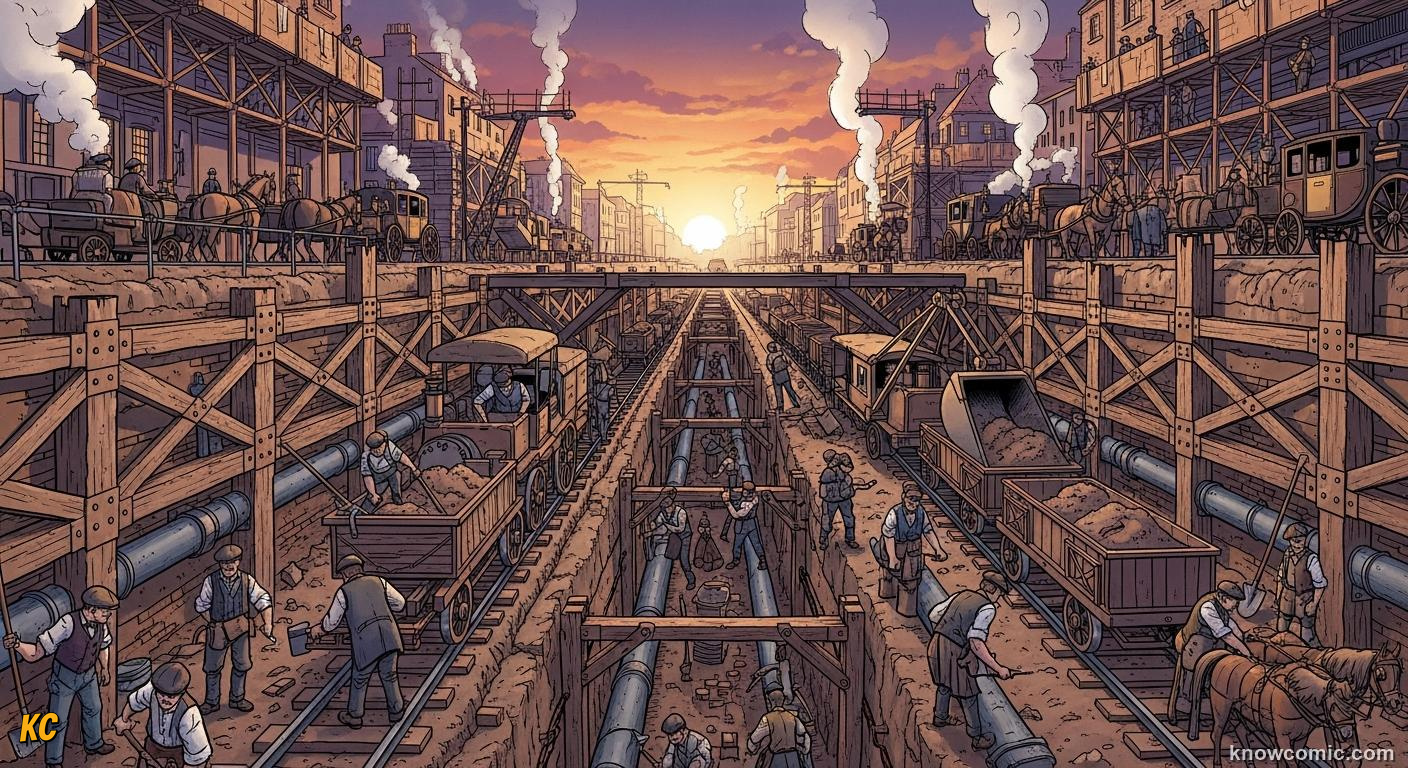
Victorian London street above the planned underground railway dig in 1863
THE METROPOLITAN: FIRST CLUE IN THE CLUE-NAME
In the 1800s, London was a giant mouth of people and horsesTopic 2's mainline railways fed the city, but inside the streets the clock ran on hooves, wheels, and patience. Engineers and inventors asked: if Topic 6-style roads are still choked, can we borrow space under the map? The Metropolitan Railway (often nicknamed the "Met", same root as metropolitanthe big city) opened in 1863 with a cut-and-cover trick: dig a trench, lay tracks, put a roof back — the world's first underground city railway of its kind for passengers (details get nerdy, but the classroom punchline is "first metro line").
📌 BIG PICTURE
Think Topic 1's wheel, but the road is a tube and the ceiling is a street.
DIG…
CLOG
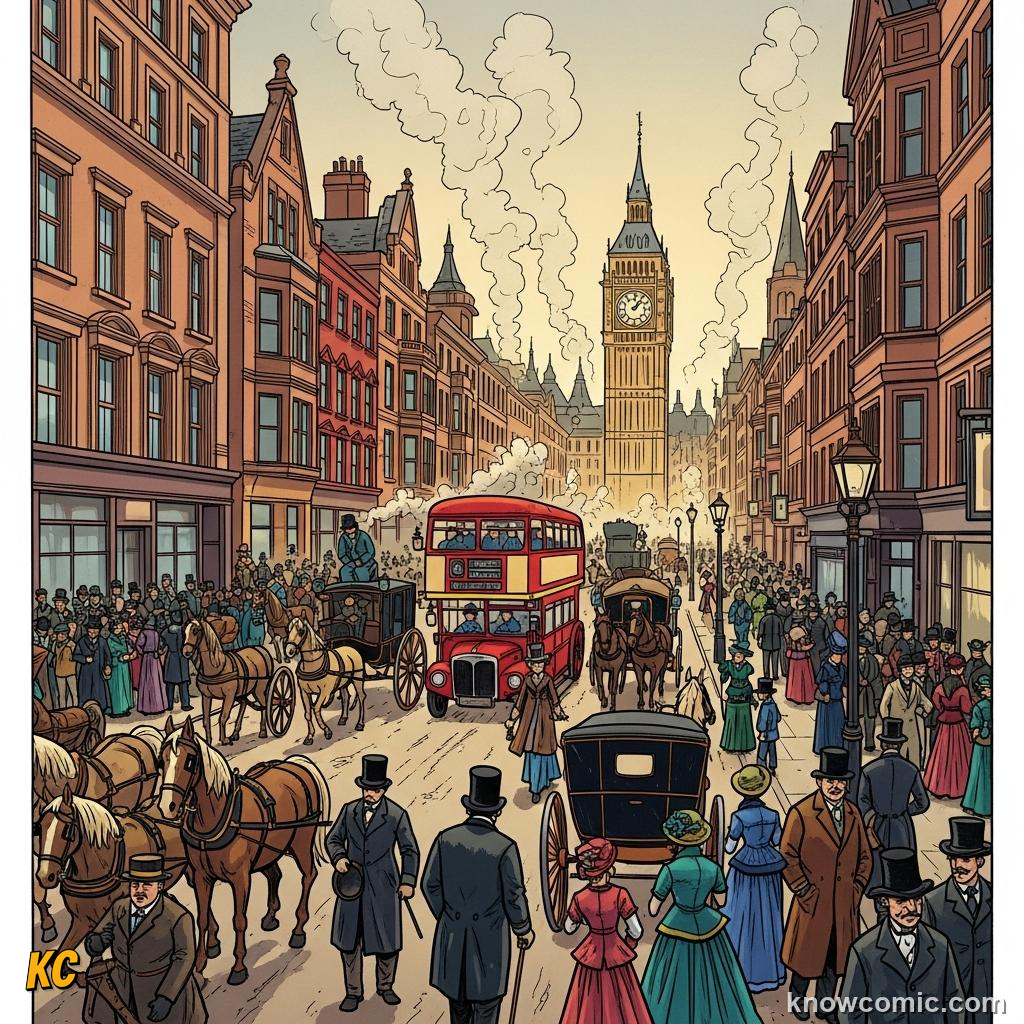
Foggy Victorian London street crowded with horses coaches and frustrated commuters
Above: fog, coaches, and temper
TRENCH
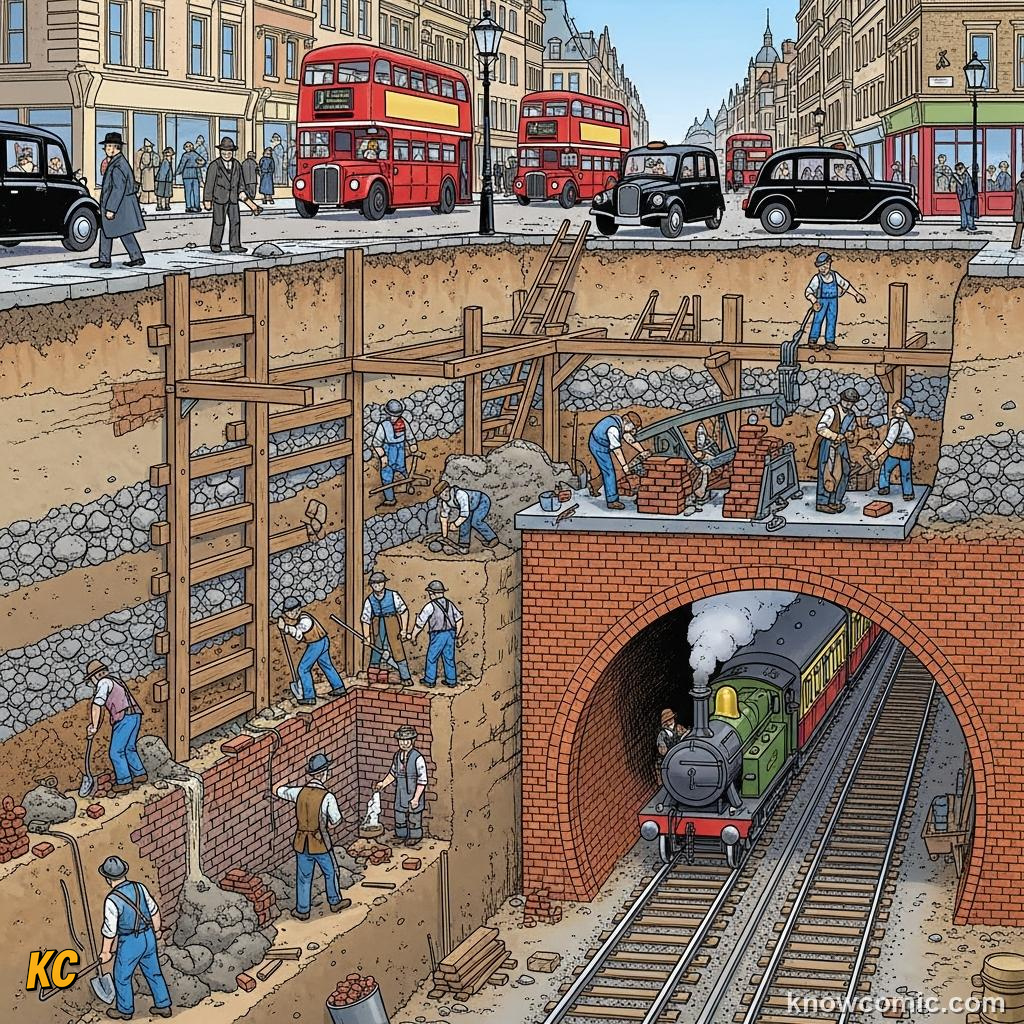
Cut-and-cover trench being excavated through London streets for the underground
Cut-and-cover: open the ground like a long sandwich
PAGE 2 OF 5, STEAM, SMOKE, & A VERY BUSY OPENING DAY
LOCOMOTIVE IN A CORRIDOR
Steam locomotive filling an underground tunnel with smoke and heat in the 1860s
"UNDERGROUND" STILL BURNED COAL (AT FIRST)
The first trains were hauled by steam locomotives — the same fire + boiler family as Topic 2 — so tunnels filled with smoke, heat, and Victorian coughing (your textbook will dramatize ventilation struggles). Still, curiosity won: on opening day, a huge crowd — often quoted around 30,000 passengers in popular accounts — wanted to ride under London like a fever dream. Gas-lit carriages looked like upgraded stagecoaches; newspapers oscillated between "wonder of the age" and "please more air, dear engineer".
CHUFF!
COAL
Steam locomotive belching fire and smoke like a dragon in a narrow tunnel
Locomotive: dragon in a hallway
CROWD
Victorian crowd queuing in long lines to ride the Underground on opening day 1863
First riders: queues like a national sport
FAN
Engineers examining ventilation fan diagrams to solve the tunnel smoke problem
Engineers: more air, more maths
PAGE 3 OF 5, DEEPER, ELECTRIC, & THE "TUBE" NICKNAME
BORE
Tunnelling shield machine boring through London clay to create deep tube tunnels
Tunnelling shield: worms of iron through clay
OHM
Third rail carrying electricity to power underground trains replacing steam
Third rail: electricity meets steel wheel
TUBE
Electric Tube train running through a deep circular tunnel beneath London
CLEANER AIR, LOUDER SQUEAL
Later deep circular tunnelsdrilled like straws through London clay — let lines run where cut-and-cover would demolish half the city. Electric traction (think wires, rails, motors) removed smoke in the carriages and turned stations into a faster pulse. Londoners said "the Tube" the way you say "the bus": not one pipe but a lattice underfoot. Private companies and Parliament had many fights about fares, noise, and where exactly to break the pavement — the same city politics every metro on Earth will reuse.
ZZAP!
PAGE 4 OF 5, MAP, ROUNDEL, AND NIGHTS UNDER STONE
THE DIAGRAM THAT LIED ON PURPOSE
Harry Beck schematic London Tube map with coloured lines and geometric design
STRAIGHT LINES ON PAPER, CURVES IN REALITY
The famous schematic "Tube map" is a design trick: it tidies geography so your brain can navigateangles and distances are not true to life, but connections are. The roundel (circle + bar) became a global icon for metros — London's red & blue language of "you are in the system now". World War II put another memory in the story: stations as shelters during air raids — a double life for tunnels meant for commutes. Escalators, tiles, and buskers are part of the show today; renovation never stops because a century of soot and vibration needs constant care.
TRANSFER!
NAV
Stylised Tube map diagram showing connections clearly rather than true geography
Stylised map: clarity > geography
LOGO
London Underground red and blue roundel logo design on a station wall
Roundel: one badge, many imitators
BUNK
Londoners sheltering on Underground station platforms during World War Two air raids
Wartime: bench + blanket + courage
PAGE 5 OF 5, A BLUEPRINT & THE NEXT: SPEED ON RAILS, ABOVE GROUND
CITIES COPIED THE HYMN
Metro systems in Paris Delhi Sao Paulo and Shanghai inspired by London Underground
PARIS, DELHI, SÃO PAULO, SHANGHAI, YOU NAME IT
Within a few decades of London's first dig, metros mushroomed on every continent (each with local pain, local pride, local tickets). The Tube is not the largest or newest — it is the famous "first in class" story in English schoolbooks. Topic 6's sprawl and Topic 5's bikes and this steel spider below are all answers to the same riddle: how a million people move in one day. The Transport hub Topic 08 (high-speed rail) is next: trains on dedicated lines that laugh at car speed on long runsanother way countries spend billions for minutes saved.
🧠 ZOOM AHEAD
Open Transport Topic 08 — High-Speed Rail on the hub when it goes live, or browse the grid.
NEXT…
MIND
Tourist tapping contactless card at a Tube station gate trying not to grin
Visitor: tap card, try not to grin
HUB
📌 KEY FACTS
1863 Met · Steam, then electric · Tube + map + roundel · Global metros · Next: high-speed rail.
➡️ Then: hub → Topic 08 (HSR) when live
🧠 QUIZ TIME!
THE LONDON UNDERGROUND: WORLD'S FIRST METRO · 5 QUESTIONS
QUESTION 01
In many English-language textbooks, the Metropolitan Railway in London opens the "first metro" story in —
QUESTION 02
On the earliest London Underground lines, passenger trains were often hauled by —
QUESTION 03
The nickname "the Tube" is tied most closely to the idea of —
QUESTION 04
Cut-and-cover building, in a simple school cartoon, means —
QUESTION 05
The famous schematic "Tube map" is designed mainly to make —
0/5
LOADING...
← TRANSPORT HUB ← TOPIC 01 (WHEEL) ← TOPIC 02 (STEAM) ← TOPIC 03 (CAR) ← TOPIC 04 (HORSES) ← TOPIC 05 (BICYCLE) ← TOPIC 06 (MOTORWAYS) MORE TOPICS ON HUB ↗